

Read the full article on KETV 7
This will be the first time that *** camera operator has been on the ice for the figure skating events at an Olympic Games, and that to me is *** huge responsibility. I get to set the standard for Olympics to come, at least I hope that this is something that we get to include in the future. As *** skater and as *** dancer, I felt very, I wanted to feel what it was like to skate and what it was like to dance, and most video shot from *** static angle. Um is missing that so by putting the camera in the hands of *** dancer or in the hands of *** skater, you can now tell the story of what you’re supposed to be feeling when someone’s doing *** specific move like *** jump or *** spin. So by being on the ice and understanding what it feels like to do those things, I think that emotion is conveyed in the frame watching at the end of Ilia’s performances those two contrasting emotions between the triumph of victory and the agony of defeat, I think. By watching, by being present myself, um, what I was feeling could possibly be coming through the camera, and I’m I’m there to tell the audience, you know, it’s going to be OK. He’s still here, you know, you finish *** program, you’re still alive, there’ll be another day, and to see Ilia’s emotion really is just part of his story.
Advertisement
The spectacle of the Olympics is often attributed to the bright lights of the Opening Ceremony, the fashion worn by the teams, and the athletes speeding, jumping or flipping down the tracks, but some course workers behind the scenes are garnering their own attention at this year’s Winter Games.Video above: Olympic skating adds backward-skating cameraman blending in to capture emotionFrom painting lines on ski courses to drying the ramps, the workers who prepare the ice, dye the tracks and broadcast the events are showcasing the talent and capability required in staging an Olympics.Curling’s ‘Michael Jackson’Curling has become more popular in recent years, with new athletes trying their hand at the sport. It may seem like they play on a simple, smooth field, or “sheet,” but the ice is actually pebbled, adding a layer to the sport of reading the ice and planning a strategy before shooting the stone.At the Milan Cortina Olympics, head ice technician Mark Callan is receiving a lot of attention while he mists the ice. Some on social media are calling Callan “the Michael Jackson of curling” due to his moonwalk-like gait as he treats the ice between matches.Callan and his team mist the ice with purified water from the Dolomites using different nozzles, so that when the droplets make contact with the ice, freezing instantly, they form pebbles of various sizes on the sheet.”If we didn’t sprinkle the water on, then the ice would be completely flat, and the stone would stick — it wouldn’t go very far,” Callan said in a video posted on The Olympic Games’ X account.After each match, the ice technicians get to work, scraping the pebbles off with a machine called the “ice boss” and misting for the next game.Additionally, Callan and his crew monitor temperatures, humidity and other conditions to prevent frost and keep the games running smoothly.The backward-skating cameramanAfter a figure skater finishes their routine, the audience watches as they express emotions ranging from triumph to regret, and all of it is broadcast to viewers and audience members by a cameraman, capturing the moment while skating backward on the ice.At the Milan Cortina Olympics, former U.S. competitive ice dancer Jordan Cowan is taking on the role of the cameraman, and he is first camera operator on figure-skating ice in the Games’ history.Cowan, a former Team USA figure skater, retired from competing in 2011 and founded On Ice Perspectives in 2018, aiming to bring new fans to the sport and deliver a new perspective of skating to audiences around the world, according to the company’s website.Working for Olympic Broadcasting Services at the Games, Cowan records skaters as they warm up and when they finish their routines, including Team USA’s Ilia Malinin, whose joy Cowan captured after the athlete completed his long program in the team competition. Cowan was also there to capture his dismay after the 21-year-old struggled in the men’s free skate final.Cowan wears an all-white tuxedo crafted by a figure skating tailor and made of a fabric that lets him move freely on the ice, according to CNN. He uses customized filming equipment that includes a microphone, giving skaters an opportunity to send a message to people in the audience.“For that brief window at the end of the program, when you get to take in the audience by yourself, by having this silent camera slowly available to you, it gives a special moment that we have never been able to capture before,” Cowan told The Associated Press.The cameraman will be recording during the closing gala, when skaters will return to the rink to put on a creative performance one last time during the Winter Olympics.Ski jump crews armed with leaf blowersSki jumpers start their performance by going down the inrun, or the ramp, aiming to gain speed before take off. It is critical to an athlete’s performance that the inrun is managed correctly, as they can accelerate to speeds reaching 90 kmh, or around 56 mph.In a Facebook post on the Olympics’ page, Sandro Pertile, FIS race director for ski jumping, explained that “blowers” use industrial leaf blowers to dry the ramp and remove ice, keeping speed “constant” for the athletes.According to an Olympics YouTube post, even small amounts of moisture can impact an athlete’s run and have dangerous consequences.Snow artists and ski route linesAs snowboarders and skiers make their way down the course, you may notice blue lines stretching across the route and down both sides of the speedway. This dye is intended to guide athletes, with the vertical lines acting as visual cues to help athletes follow the track and the horizontal lines aiding athletes’ depth perception, allowing them to more easily see changes in terrain.Before the athletes head down the speedway, snow artists wearing large backpack sprayers draw the dye lines while standing on skis, at times applying the dye while skiing backward, gliding down hills and speeding down ramps. These snow artists have drawn attention at the Games in Italy, with crowds cheering them on and social media users posting videos of them as they set up the courses.The Associated Press and CNN contributed to this report.PHNjcmlwdCB0eXBlPSJ0ZXh0L2phdmFzY3JpcHQiPiFmdW5jdGlvbigpeyJ1c2Ugc3RyaWN0Ijt3aW5kb3cuYWRkRXZlbnRMaXN0ZW5lcigibWVzc2FnZSIsKGZ1bmN0aW9uKGUpe2lmKHZvaWQgMCE9PWUuZGF0YVsiZGF0YXdyYXBwZXItaGVpZ2h0Il0pe3ZhciB0PWRvY3VtZW50LnF1ZXJ5U2VsZWN0b3JBbGwoImlmcmFtZSIpO2Zvcih2YXIgYSBpbiBlLmRhdGFbImRhdGF3cmFwcGVyLWhlaWdodCJdKWZvcih2YXIgcj0wO3I8dC5sZW5ndGg7cisrKXtpZih0W3JdLmNvbnRlbnRXaW5kb3c9PT1lLnNvdXJjZSl0W3JdLnN0eWxlLmhlaWdodD1lLmRhdGFbImRhdGF3cmFwcGVyLWhlaWdodCJdW2FdKyJweCJ9fX0pKX0oKTs8L3NjcmlwdD4=
The spectacle of the Olympics is often attributed to the bright lights of the Opening Ceremony, the fashion worn by the teams, and the athletes speeding, jumping or flipping down the tracks, but some course workers behind the scenes are garnering their own attention at this year’s Winter Games.
Video above: Olympic skating adds backward-skating cameraman blending in to capture emotion
Advertisement
From painting lines on ski courses to drying the ramps, the workers who prepare the ice, dye the tracks and broadcast the events are showcasing the talent and capability required in staging an Olympics.
Curling’s ‘Michael Jackson’
Curling has become more popular in recent years, with new athletes trying their hand at the sport. It may seem like they play on a simple, smooth field, or “sheet,” but the ice is actually pebbled, adding a layer to the sport of reading the ice and planning a strategy before shooting the stone.
At the Milan Cortina Olympics, head ice technician Mark Callan is receiving a lot of attention while he mists the ice. Some on social media are calling Callan “the Michael Jackson of curling” due to his moonwalk-like gait as he treats the ice between matches.
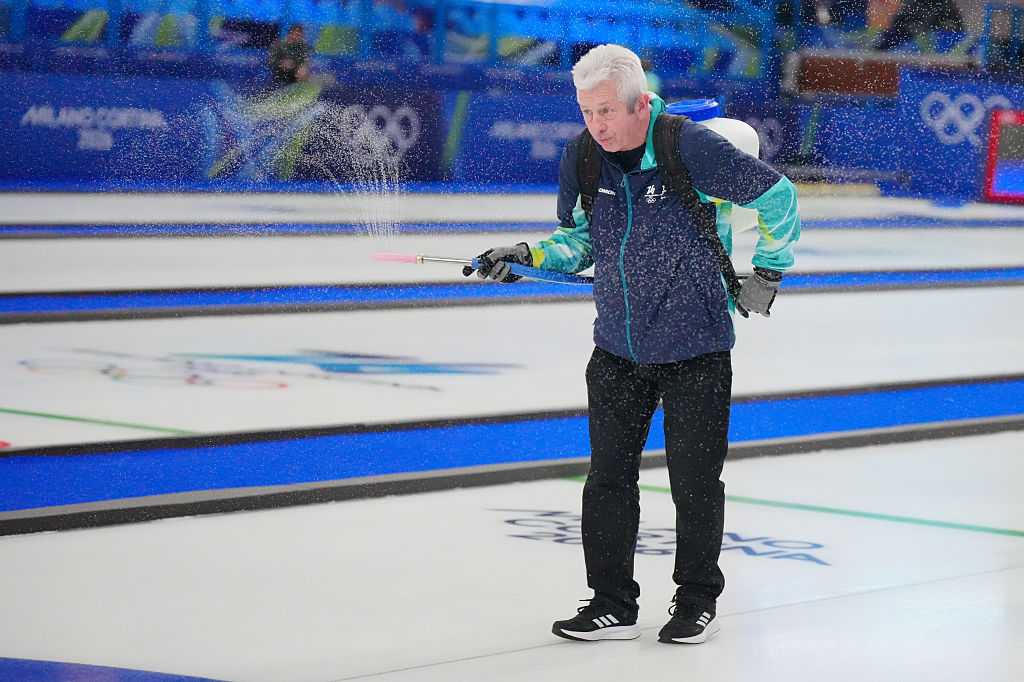
Callan and his team mist the ice with purified water from the Dolomites using different nozzles, so that when the droplets make contact with the ice, freezing instantly, they form pebbles of various sizes on the sheet.
“If we didn’t sprinkle the water on, then the ice would be completely flat, and the stone would stick — it wouldn’t go very far,” Callan said in a video posted on The Olympic Games’ X account.
After each match, the ice technicians get to work, scraping the pebbles off with a machine called the “ice boss” and misting for the next game.
Additionally, Callan and his crew monitor temperatures, humidity and other conditions to prevent frost and keep the games running smoothly.
The backward-skating cameraman
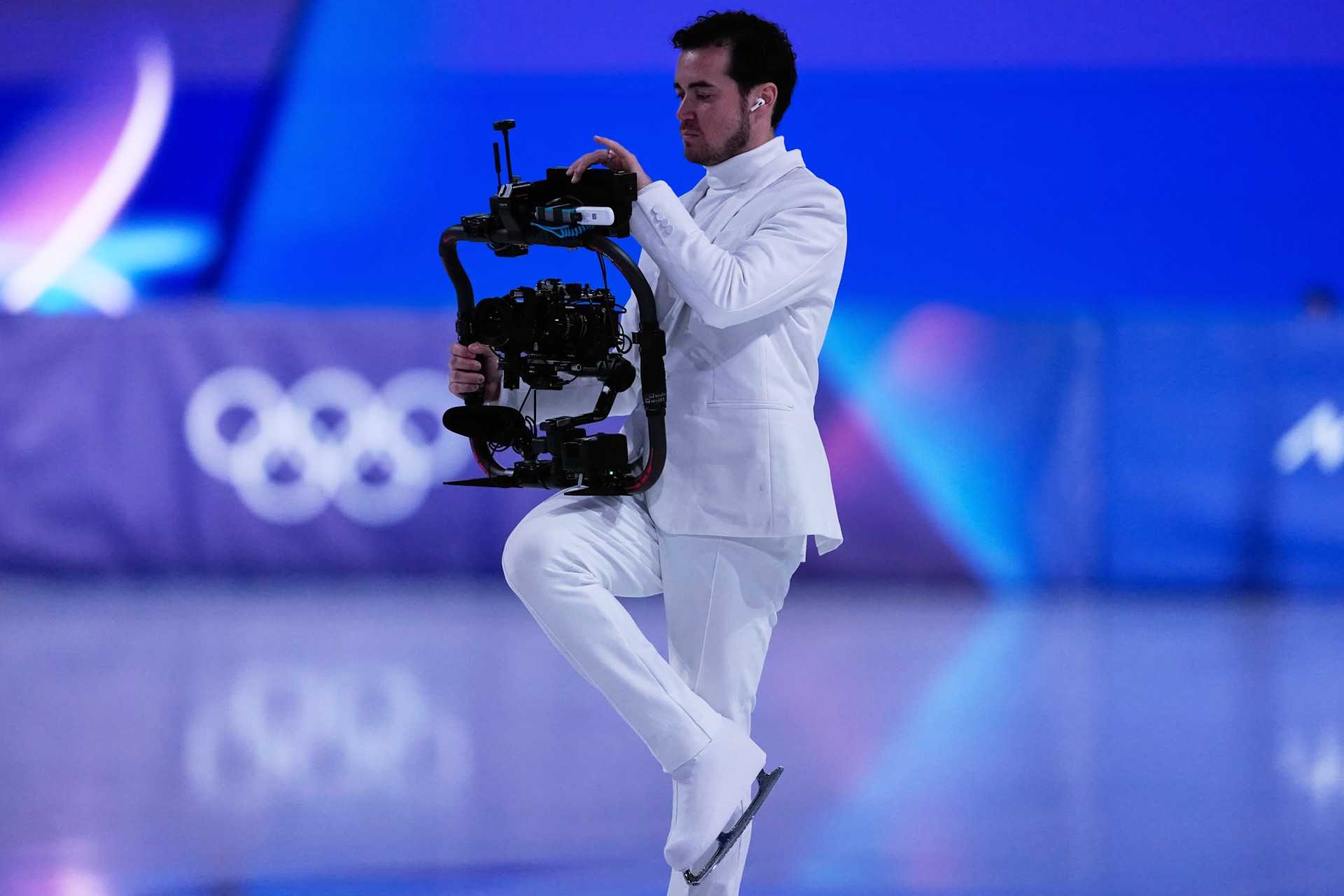
After a figure skater finishes their routine, the audience watches as they express emotions ranging from triumph to regret, and all of it is broadcast to viewers and audience members by a cameraman, capturing the moment while skating backward on the ice.
At the Milan Cortina Olympics, former U.S. competitive ice dancer Jordan Cowan is taking on the role of the cameraman, and he is first camera operator on figure-skating ice in the Games’ history.
Cowan, a former Team USA figure skater, retired from competing in 2011 and founded On Ice Perspectives in 2018, aiming to bring new fans to the sport and deliver a new perspective of skating to audiences around the world, according to the company’s website.
Working for Olympic Broadcasting Services at the Games, Cowan records skaters as they warm up and when they finish their routines, including Team USA’s Ilia Malinin, whose joy Cowan captured after the athlete completed his long program in the team competition. Cowan was also there to capture his dismay after the 21-year-old struggled in the men’s free skate final.
Cowan wears an all-white tuxedo crafted by a figure skating tailor and made of a fabric that lets him move freely on the ice, according to CNN. He uses customized filming equipment that includes a microphone, giving skaters an opportunity to send a message to people in the audience.
“For that brief window at the end of the program, when you get to take in the audience by yourself, by having this silent camera slowly available to you, it gives a special moment that we have never been able to capture before,” Cowan told The Associated Press.
The cameraman will be recording during the closing gala, when skaters will return to the rink to put on a creative performance one last time during the Winter Olympics.
Ski jump crews armed with leaf blowers
Ski jumpers start their performance by going down the inrun, or the ramp, aiming to gain speed before take off. It is critical to an athlete’s performance that the inrun is managed correctly, as they can accelerate to speeds reaching 90 kmh, or around 56 mph.
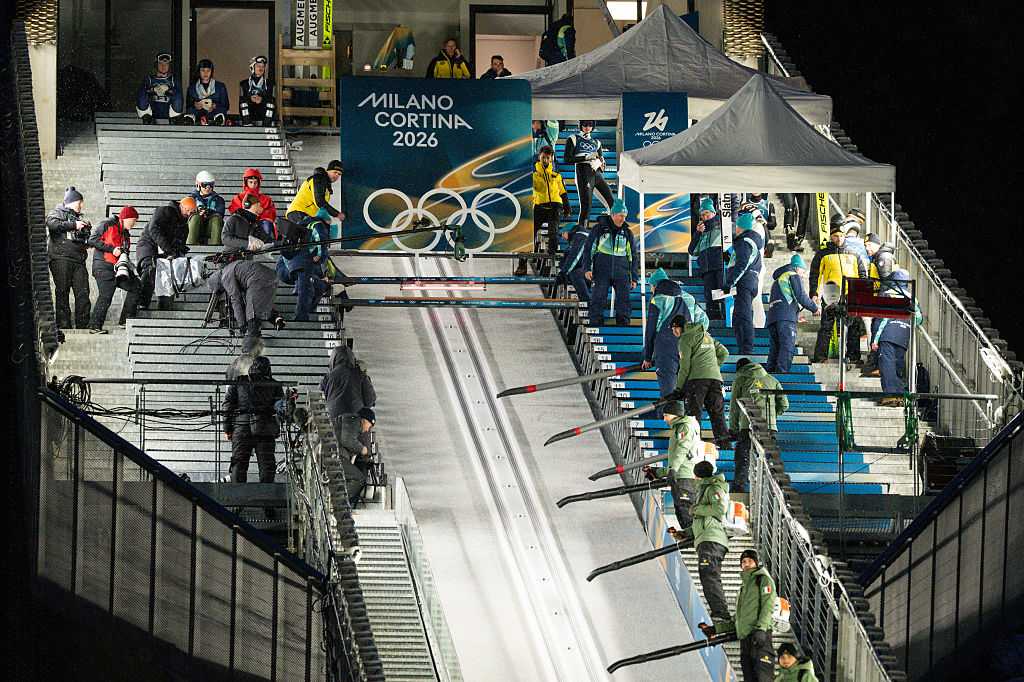
In a Facebook post on the Olympics’ page, Sandro Pertile, FIS race director for ski jumping, explained that “blowers” use industrial leaf blowers to dry the ramp and remove ice, keeping speed “constant” for the athletes.
According to an Olympics YouTube post, even small amounts of moisture can impact an athlete’s run and have dangerous consequences.
Snow artists and ski route lines
As snowboarders and skiers make their way down the course, you may notice blue lines stretching across the route and down both sides of the speedway. This dye is intended to guide athletes, with the vertical lines acting as visual cues to help athletes follow the track and the horizontal lines aiding athletes’ depth perception, allowing them to more easily see changes in terrain.
Before the athletes head down the speedway, snow artists wearing large backpack sprayers draw the dye lines while standing on skis, at times applying the dye while skiing backward, gliding down hills and speeding down ramps.
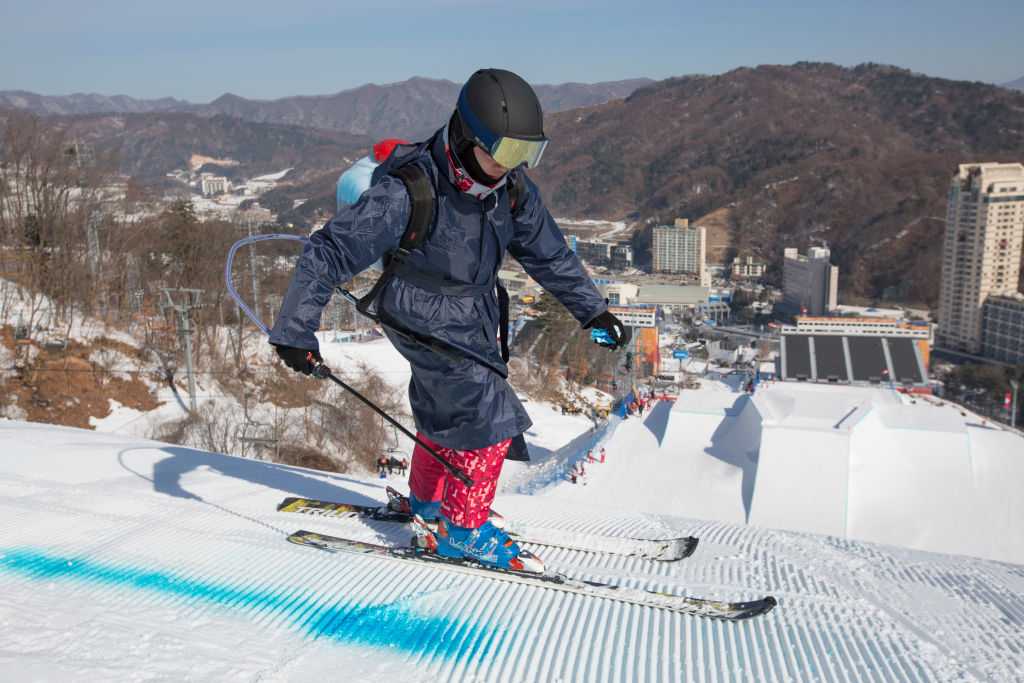
These snow artists have drawn attention at the Games in Italy, with crowds cheering them on and social media users posting videos of them as they set up the courses.
The Associated Press and CNN contributed to this report.