
Read the full article on Nebraska Examiner
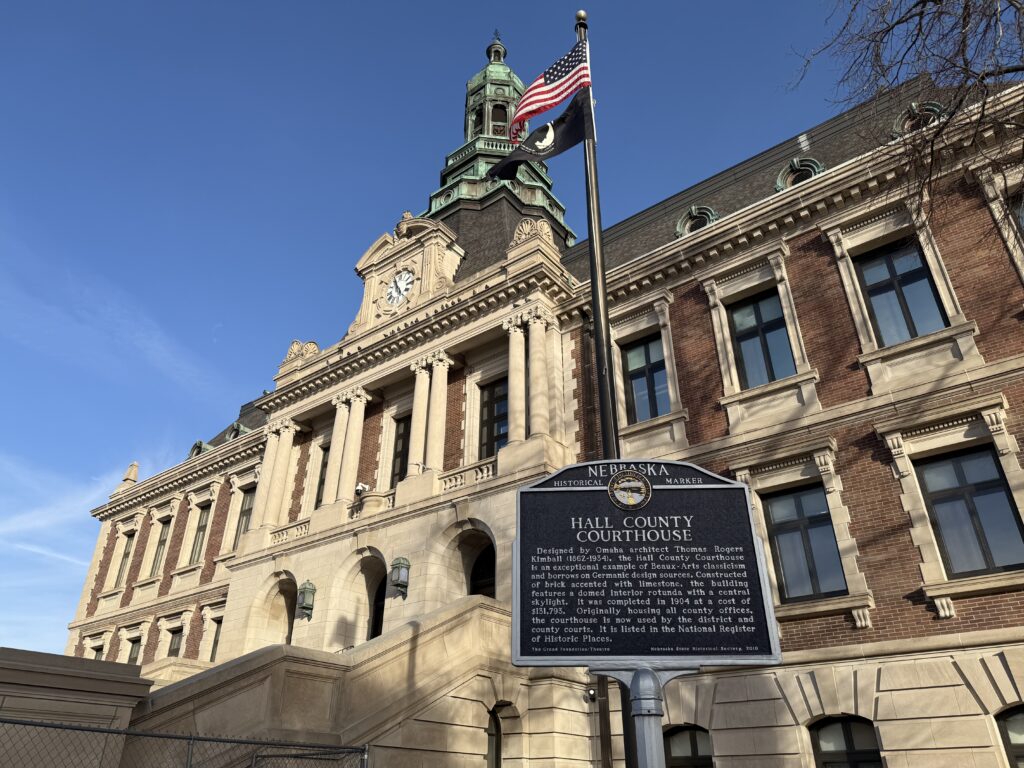
GRAND ISLAND, Neb. — The criminal trial against a notary who helped two 2024 petitions aimed at legalizing and regulating medical cannabis began Monday with a focus on what defines a proper notarization in Nebraska.
Jacy C. Todd of York, 55, faces 24 misdemeanor charges in Hall County Court related to how he carried out his duties as a notary around the Nebraskans for Medical Marijuana statewide ballot measures. The petitions overwhelmingly passed and have been law since Dec. 12, 2024.
County and state prosecutors allege that Todd, on 23 separate dates between Jan. 29 and July 2 of 2024, notarized petitions on behalf of a paid circulator from Grand Island, Michael K. Egbert, 67, who was not in Todd’s presence. The charges of “official misconduct” are Class II misdemeanors. A Class II misdemeanor carries a maximum of six months’ imprisonment or a $1,000 fine, or both.
The 24th charge relates to a broader case in Lancaster County against the medical cannabis petitions in the lead-up to the 2024 election. In a deposition for that case, Todd said he always followed his notarial duties. So prosecutors say Todd lied under oath, which would be a Class I misdemeanor. A Class I misdemeanor is punishable by up to one year in prison or a $1,000 fine, or both.
‘He messed up’
Mark Porto, Todd’s attorney, told jurors that Todd didn’t know at the time that the notary and circulator needed to be in the same place for a signature and stamp on each petition page. He said Todd made some “mistakes” but didn’t do so “knowingly.”

“He messed up,” Porto said. “He didn’t realize it at the time, but you’re supposed to do the notarization with the person still right there. It was against the technical notary rules.”
Nebraska Attorney General Mike Hilgers and Hall County Attorney Marty Klein first announced a criminal investigation into the medical cannabis petitions on Sept. 13, 2024. That was one day after prosecutors charged Egbert, the paid circulator who worked with Todd, with a Class IV felony of falsifying his circulator’s oath when he forged signatures, including by use of a phone book.
A few weeks later, on Oct. 2, 2024, prosecutors charged Todd with 24 counts of official misconduct. One of those charges was dismissed leading up to Todd’s criminal trial.
On Nov. 8, 2024, Egbert pleaded guilty to a Class I misdemeanor and paid a $250 fine for an “attempt” to falsify his circulator’s oath.
Duties of a notary
Klein said Egbert made a “terrible, criminal choice,” including admitting to using the phone book to add voters to the petition pages to get paid. Some were deceased, others used names that had been misspelled.

Related to Todd’s 23 counts of alleged official misconduct, Klein said prosecutors would clearly prove at least two charges because Egbert was not in the state on at least two dates — Feb. 26, 2024, and June 10, 2024.
In February 2024, Klein said prosecutors would prove Egbert was in Pennsylvania on a veterans retreat. He said there was a photo showing Egbert outside the Pittsburgh Post-Gazette and a flight manifest showing him on the flight to Pennsylvania. For the June occasion, Klein said Egbert and his wife were in Iowa visiting one of Egbert’s daughters.
Klein said Egbert’s wife in February and the boyfriend of another daughter in June brought the petition pages to Todd’s business to be signed in Egbert’s absence.
Because of those two instances, Klein said the other 21 charges of official misconduct were also likely true. Porto said that just isn’t the case.
“It’s very clear what the duties are for a notary public,” Klein told the jury, “and Jacy Todd did not uphold those duties as he was supposed to.”
Initial red flag
Hall County Election Commissioner Tracy Overstreet and her office discovered Egbert’s actions on their own. Overstreet, a state witness, said her staff noticed signers who had been deceased for multiple years, some dead between five and 15 years. She said it is not “atypical” for a petition to include a deceased signer, because signature gathering sometimes lasts more than a year.
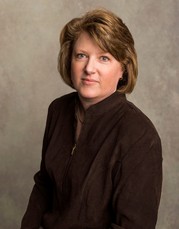
(Courtesy Hall County)
Other signers, Overstreet said, had supposedly misspelled their own names, listed incorrect dates of birth — including some off by five to 40 years — or used old addresses.
“It made me wonder if somebody had a directory of some type, like a church directory or a business directory or a phone book or something,” Overstreet said.
Egbert, his family and Todd are expected to take the witness stand Tuesday. Attorneys and Hall County Judge Alfred Corey said testimony would likely end by Tuesday evening or Wednesday morning.
Corey initially dismissed the charges against Todd on Nov. 22, 2024, finding notaries were not “public officials.” Hall County District Judge Andrew Butler ruled the opposite April 22, 2025.
In July 2025, Todd announced he would run for the 2026 GOP nomination for governor.
Core defense arguments
Porto described Todd as “one of the leaders who put democracy into action” via the petitions and that the jury would not hear that Todd forged any documents like Egbert did, that Egbert did not always sign the petition pages himself or that anyone told Egbert to act fraudulently.
Porto three times argued that unless prosecutors can prove Todd knew what he was doing was wrong, he must be found not guilty.

Assistant Attorney General Mike Jensen, co-counsel to Klein, each time pushed back. He described Porto’s argument as a “misstatement of the law.”
“Ignorance of the law is not a defense,” Jensen said. “Defense counsel is an officer of the court. He knows that.”
Corey sided with Jensen and later reminded jurors that attorneys have a duty to use all “honorable means” to protect the interests of those they’re representing.
“At the end of this, you’ll get the law, you can apply the law to the facts and then make an appropriate decision,” Corey said.
Porto stressed that he would like the jury instructed that knowledge is an essential element to the charge of official misconduct.
“There was a big spotlight shined upon that opening statement,” Porto said. “I think there needs to be an equivalent spotlight shown upon that … in the form of a curative instruction.”
Jensen said the defense counsel hadn’t proposed such jury instructions and that Porto was offering a new legal theory and adding words to the law where they don’t exist.
Corey asked Porto: “But aren’t you, by signing up as a notary, saying you’re agreeing to all of these and, whether or not you look into them or not, that’s on you as a person if you don’t do that?”
Porto said there’s a distinction between civil or administrative consequences and criminal penalties.
‘Presumptive evidence’
In addition to Overstreet, two of the prosecution’s witnesses from the Nebraska Secretary of State’s Office took the witness stand Monday: David Wilson Jr., an attorney and director of the office’s licensing division, which oversees notaries, and Deputy Secretary of State Wayne Bena, who oversees elections.
The prosecution walked Wilson through various state laws and regulations around notarizations, which serve as “presumptive evidence” that someone signing a document is who they say they are.

Notary publics take open-note tests to become notaries and are licensed for a four-year term if successful. Todd completed his notary application in June 2021 and did not renew his license last summer.
A valid notarization includes an in-person verification of the signer’s identity, Wilson testified.
“Then a third party can see that document, and they can reasonably trust that the person who signed it is who it purports to be,” Wilson said.
As an example for the jury, Jensen worked with Overstreet to symbolically notarize a blank piece of paper. He had just introduced himself to Overstreet in the hallway, so he offered his driver’s license to verify his identity before proceeding with the notarization.
In the more than 500 days since Todd was charged, medical cannabis advocates and attorneys for Todd and related defendants have said Todd is the first notary in the county to be criminally charged in this manner. Some have said they worry other Nebraska notaries for the medical cannabis petitions, or notaries for other petitions, could be targeted if Todd is convicted.
Intersection with 2024 election
Jensen said Todd’s case has nothing to do with the constitutionality of the medical cannabis laws, “overturning” a vote or being “pro” or “against” marijuana. He said it was not an “affront” to medical marijuana, a “referendum” effort or a “turning point” on what happens with the drug in the state.
“This is a criminal prosecution that is simply involving a notary public not following the rules as they’re supposed to,” Jensen said.
Jensen, whose elected boss, Hilgers, has questioned the legality of medical cannabis, said several news stories would “like this case to be much more than what it is.”
Jensen asked prospective jurors during jury selection whether any had strong feelings about medical marijuana, adding he would be the first to say, “I don’t care what you voted for.”
“It’s my duty as an attorney general to defend the Constitution, which includes the medical marijuana provisions that the voters passed,” Jensen said. “My job here is to prosecute crimes that happen in the State of Nebraska, and, in this case, the allegations involving a notary public.”
Notary criminal case timeline
Sept. 12, 2024 — The Hall County Attorney’s Office and Nebraska Attorney General’s Office charge Michael K. Egbert of Grand Island with one Class IV felony of falsely swearing to a circulator’s affidavit on two active petitions from Nebraskans for Medical Marijuana. Hall County Attorney Marty Klein and Attorney General Mike Hilgers announced the charges the next day.
Oct. 2, 2024 — Klein and Hilgers charge Jacy C. Todd of York, a notary for the medical cannabis petitions, with 24 Class II misdemeanor charges of “official misconduct” for allegedly “knowingly” violating his notarial duties. Prosecutors allege Todd illegally notarized multiple petitions outside of the presence of Egbert.
Nov. 8, 2024 — Egbert pleads guilty to his charge, which is reduced to a Class I misdemeanor for an “attempt” to falsely swear to a circulator’s affidavit. Egbert is assessed a $250 fine.
Nov. 22, 2024 — Hall County Judge Alfred Corey dismisses all charges against Todd. Corey said notaries were not “public officials” who could be accused of official misconduct.
Dec. 6, 2024 — The Hall County Attorney’s Office and Nebraska AG’s Office appeal the dismissal of criminal charges against Todd to the Hall County District Court.
April 22, 2025 — Hall County District Judge Andrew Butler allows the 24 misdemeanor charges against Todd, ruling notary publics are public officials. Butler questioned the extent of resources being used to pursue such criminal charges and the number of such charges, “when looking at the current climate of the state and voice of its residents.” But he said those decisions were left to another entity.
July 1, 2025 — Todd announces he will seek the Republican nomination for Nebraska governor in 2026 and challenge Gov. Jim Pillen in the GOP primary.
Dec. 9, 2025 — Prosecutors charge Todd with a Class I misdemeanor for allegedly making a false statement under oath. Prosecutors allege Todd lied during a deposition on a broader Lancaster County District Court case related to alleged medical cannabis petition fraud in October 2024. The presiding judge dismissed the petition fraud case, and it was appealed to the Nebraska Supreme Court.
Feb. 23, 2026 — The criminal trial begins against Todd in Hall County Court. One of the misdemeanor charges of official misconduct was dismissed before trial.
SUBSCRIBE: GET THE MORNING HEADLINES DELIVERED TO YOUR INBOX