
Read the full article on KETV 7

Gas prices have surged across the United States since the conflict in Iran began rattling global energy markets, though oil prices later pulled back sharply Monday after briefly spiking toward $120 a barrel.The national average for gasoline is nearing $3.48 per gallon, according to AAA, almost 50 cents higher than last week.Energy analysts warn that the average price of gas could still reach five dollars a gallon if disruptions worsen. The Trump administration has defended the higher oil and gas prices, describing them as a short-term trade-off for long-term security. President Trump stated on social media that short-term higher oil prices are “a very small price to pay” for safety and peace, adding that “only fools would think differently.”Oil prices briefly surged toward $120 per barrel earlier Monday, the highest level since 2022, before falling sharply back below $90 later in the day. Markets quickly reacted after President Donald Trump told CBS News that he thinks “the war is very complete, pretty much.”The Strait of Hormuz is at the center of this crisis, with one out of every five barrels of oil in the world moving through the narrow waterway. Tanker traffic has slowed sharply after Iran warned it could target ships passing through the strait.Professor Ed Hirs from the University of Houston said, “These impacts are far reaching. They’re not always obvious, but it is going to drive up, obviously, the price at the pump and the price at the electricity meter for most Americans.”The national average for a gallon of gas is nearly 50 cents higher than it was this time last week, according to AAA. Much of that increase came as oil prices surged earlier in the conflict.Experts note that for every $10 increase in the price of oil, gas prices typically rise about 25 cents per gallon.Hirs is among those who believe oil could still reach $150 a barrel if disruptions escalate, potentially pushing the national average well above five dollars a gallon. That nationwide average has only been seen once before, after Russia invaded Ukraine, when oil reached roughly $120 per barrel.The big question now is how long the disruptions will last. Experts say the longer shipping through the Strait of Hormuz remains under threat, the more likely Americans are to feel the impact not just at the pump but across the broader economy.Some energy analysts say this could become one of the largest oil supply shocks in modern history. Tanker traffic has slowed and some production across the region is also falling as exporters struggle to move crude out.Over the weekend, the military announced another U.S. soldier was killed in this war. The Pentagon identified the latest service member as Army Staff Sergeant Benjamin Pennington, a 26-year-old from Glendale, Kentucky.Officials said he died Sunday after being wounded in an attack earlier this month at Prince Sultan Air Base in Saudi Arabia. He was assigned to a space operations unit based in Colorado and is the seventh U.S. soldier killed in this war.Iran has also named a new supreme leader after the U.S. killed the previous leader in an airstrike. Mojtaba Khamenei, the son of the former leader, is a 56-year-old cleric with strong ties to Iran’s Revolutionary Guard, which plays a major role in Iran’s military and political power.His appointment signals that Iran’s hardline leadership is likely to continue during this war.
Gas prices have surged across the United States since the conflict in Iran began rattling global energy markets, though oil prices later pulled back sharply Monday after briefly spiking toward $120 a barrel.
Advertisement
The national average for gasoline is nearing $3.48 per gallon, according to AAA, almost 50 cents higher than last week.
Energy analysts warn that the average price of gas could still reach five dollars a gallon if disruptions worsen.
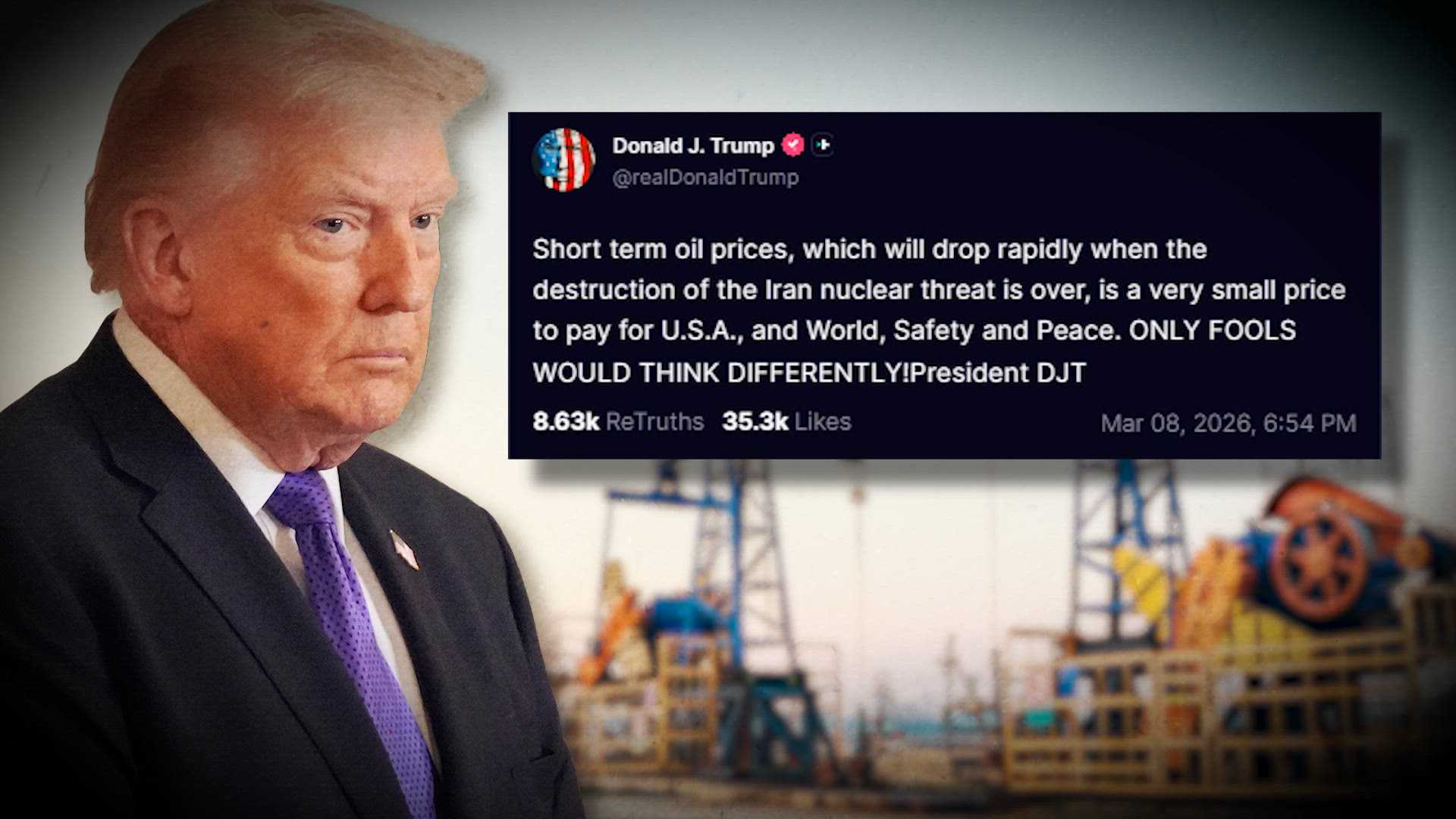
The Trump administration has defended the higher oil and gas prices, describing them as a short-term trade-off for long-term security. President Trump stated on social media that short-term higher oil prices are “a very small price to pay” for safety and peace, adding that “only fools would think differently.”
Oil prices briefly surged toward $120 per barrel earlier Monday, the highest level since 2022, before falling sharply back below $90 later in the day. Markets quickly reacted after President Donald Trump told CBS News that he thinks “the war is very complete, pretty much.”
The Strait of Hormuz is at the center of this crisis, with one out of every five barrels of oil in the world moving through the narrow waterway. Tanker traffic has slowed sharply after Iran warned it could target ships passing through the strait.
Professor Ed Hirs from the University of Houston said, “These impacts are far reaching. They’re not always obvious, but it is going to drive up, obviously, the price at the pump and the price at the electricity meter for most Americans.”
The national average for a gallon of gas is nearly 50 cents higher than it was this time last week, according to AAA. Much of that increase came as oil prices surged earlier in the conflict.
Experts note that for every $10 increase in the price of oil, gas prices typically rise about 25 cents per gallon.
Hirs is among those who believe oil could still reach $150 a barrel if disruptions escalate, potentially pushing the national average well above five dollars a gallon. That nationwide average has only been seen once before, after Russia invaded Ukraine, when oil reached roughly $120 per barrel.
The big question now is how long the disruptions will last. Experts say the longer shipping through the Strait of Hormuz remains under threat, the more likely Americans are to feel the impact not just at the pump but across the broader economy.
Some energy analysts say this could become one of the largest oil supply shocks in modern history. Tanker traffic has slowed and some production across the region is also falling as exporters struggle to move crude out.
Over the weekend, the military announced another U.S. soldier was killed in this war. The Pentagon identified the latest service member as Army Staff Sergeant Benjamin Pennington, a 26-year-old from Glendale, Kentucky.
Officials said he died Sunday after being wounded in an attack earlier this month at Prince Sultan Air Base in Saudi Arabia. He was assigned to a space operations unit based in Colorado and is the seventh U.S. soldier killed in this war.
Iran has also named a new supreme leader after the U.S. killed the previous leader in an airstrike. Mojtaba Khamenei, the son of the former leader, is a 56-year-old cleric with strong ties to Iran’s Revolutionary Guard, which plays a major role in Iran’s military and political power.
His appointment signals that Iran’s hardline leadership is likely to continue during this war.