
Read the full article on KETV 7

In bleak December, the sky falls on Ukraine — first as fog and then as a furious hail of drones and missiles.Air raid sirens and explosions have become a near-nightly routine in the capital city of Kyiv, a grinding rhythm that residents describe as relentless.“It’s just getting worse and worse and harder and harder,” said Elena Chucha, who’s helping build the Child of Light orphanage outside Kyiv. “Nightly explosions and attacks and having no electricity during the day and then going back again into a hard night.”Nearly four years after Russia’s full-scale invasion, signs of exhaustion are visible across the country.Former Nebraska state Sen. Tom Brewer has traveled to Ukraine eight times since the war began, but until now, only in the spring and summer. He said his most recent visit, in December, felt different.“This time it’s changed,” Brewer said. “You can see that, and you can feel there’s just a war fatigue. The people, they still want to win the war. They don’t want to give up. But it’s showing.”Don Hutchens, a former Nebraska agricultural leader who also visited last April, said the strain is apparent.“The clock is ticking a little faster than it was a year ago,” Hutchens said.In central Kyiv, that fatigue has spilled into public demonstrations. One afternoon, a large protest circled Independence Square. “My son died in the battle in 2024. The other son, he disappeared, missing in action,” said Nataliia, who attended the protest.Mothers, daughters, sisters, wives, sons and brothers called for answers about their loved ones who never returned from the front. “We have very short, very brief explanation from them,” Svitlana, one of the protesters, said. “We don’t have a full picture.”Relatives say battalions provide little in terms of news.“I want them to find my son or at least tell me what happened to him,” Nataliia added.They carry flags and photos, mourning without closure — not even the cold comfort of the grave.Nearby, a sprawling memorial to the war dead continues to grow.“The pain of all the losses is taking a toll on just day-to-day folks. And you see this in Kyiv,” Brewer said. “You know that as you get closer to the eastern front, it’s even stronger.”Flags form into a jungle, marking the many nations the fighters have come from. The United States is among them.“What is so moving to me is the photographs — the photographs of young men that will never have the opportunity to be married or have a family,” Hutchens said.By day, Kyiv’s streets reflect a fragile normalcy, with shoppers moving through malls and cafes open for business. By night, curfew strips the streets bare, and bomb blasts echo through the city.While others recline into restless sleep, volunteers man high-rises, scanning the skies.Dmytro, who would not give his last name, works in private security by day. Several nights a week, he climbs to the top of an apartment building to stand at a machine gun, part of a volunteer air defense team.He targets Iranian-designed Shahed drones as they approach residential areas.“For me, the more important question is how I cannot do this?” Dmytro said. When a drone is shot down, others may cheer. “For me, it’s more like, ‘Whew. I know this Shahed hasn’t killed a few families,'” Dmytro said.Outside Kyiv, the Child of Light orphanage is cruising to completion. Russian forces occupied the surrounding area in the early days of the invasion, Chucha said.“That this could have been destruction,” she said. “Now it’s a place where there’s healing, there’s future ahead.”The final requirement before opening was the construction of a government-approved bomb shelter, a reminder of both the persistent danger abroad and the safety of the facility. The orphanage will house dozens of children whose families have been shattered by the war. Supporters helping organize and fundraise for the project are based in Nebraska, linking communities thousands of miles apart.Chucha, who has lived in Lincoln for several years, said she hopes the children who pass through the home will carry something lasting with them.“Leaving this place, they will have this light burning very strongly inside of them,” she said. “And they will go and light up other parts of this country with that light.”KETV NewsWatch 7’s Capital Bureau Chief John Grinvalds took an independent trip to Ukraine in December. This is his second story in his “Winter of War” series.Make sure you can always see the latest news, weather, sports and more from KETV NewsWatch 7 on Google search.NAVIGATE: Home | Weather | Local News | National | Sports | Newscasts on demand |
In bleak December, the sky falls on Ukraine — first as fog and then as a furious hail of drones and missiles.
Air raid sirens and explosions have become a near-nightly routine in the capital city of Kyiv, a grinding rhythm that residents describe as relentless.
Advertisement
“It’s just getting worse and worse and harder and harder,” said Elena Chucha, who’s helping build the Child of Light orphanage outside Kyiv. “Nightly explosions and attacks and having no electricity during the day and then going back again into a hard night.”
Nearly four years after Russia’s full-scale invasion, signs of exhaustion are visible across the country.
Former Nebraska state Sen. Tom Brewer has traveled to Ukraine eight times since the war began, but until now, only in the spring and summer. He said his most recent visit, in December, felt different.
“This time it’s changed,” Brewer said. “You can see that, and you can feel there’s just a war fatigue. The people, they still want to win the war. They don’t want to give up. But it’s showing.”
Don Hutchens, a former Nebraska agricultural leader who also visited last April, said the strain is apparent.
“The clock is ticking a little faster than it was a year ago,” Hutchens said.
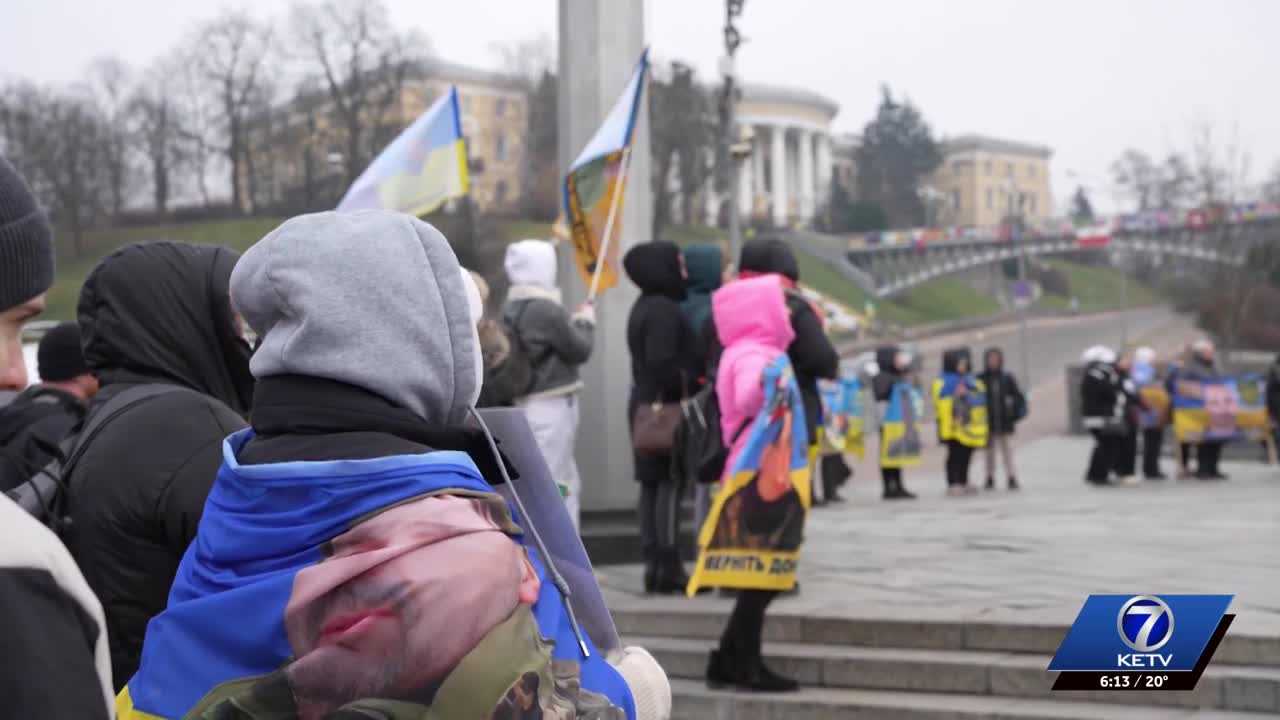
In central Kyiv, that fatigue has spilled into public demonstrations. One afternoon, a large protest circled Independence Square.
“My son died in the battle in 2024. The other son, he disappeared, missing in action,” said Nataliia, who attended the protest.
Mothers, daughters, sisters, wives, sons and brothers called for answers about their loved ones who never returned from the front.
“We have very short, very brief explanation from them,” Svitlana, one of the protesters, said. “We don’t have a full picture.”
Relatives say battalions provide little in terms of news.
“I want them to find my son or at least tell me what happened to him,” Nataliia added.
They carry flags and photos, mourning without closure — not even the cold comfort of the grave.
Nearby, a sprawling memorial to the war dead continues to grow.
“The pain of all the losses is taking a toll on just day-to-day folks. And you see this in Kyiv,” Brewer said. “You know that as you get closer to the eastern front, it’s even stronger.”
Flags form into a jungle, marking the many nations the fighters have come from. The United States is among them.
“What is so moving to me is the photographs — the photographs of young men that will never have the opportunity to be married or have a family,” Hutchens said.
By day, Kyiv’s streets reflect a fragile normalcy, with shoppers moving through malls and cafes open for business. By night, curfew strips the streets bare, and bomb blasts echo through the city.
While others recline into restless sleep, volunteers man high-rises, scanning the skies.
Dmytro, who would not give his last name, works in private security by day. Several nights a week, he climbs to the top of an apartment building to stand at a machine gun, part of a volunteer air defense team.
He targets Iranian-designed Shahed drones as they approach residential areas.
“For me, the more important question is how I cannot do this?” Dmytro said.
When a drone is shot down, others may cheer.
“For me, it’s more like, ‘Whew. I know this Shahed hasn’t killed a few families,'” Dmytro said.
Outside Kyiv, the Child of Light orphanage is cruising to completion. Russian forces occupied the surrounding area in the early days of the invasion, Chucha said.
“That this could have been destruction,” she said. “Now it’s a place where there’s healing, there’s future ahead.”
The final requirement before opening was the construction of a government-approved bomb shelter, a reminder of both the persistent danger abroad and the safety of the facility.
The orphanage will house dozens of children whose families have been shattered by the war. Supporters helping organize and fundraise for the project are based in Nebraska, linking communities thousands of miles apart.
Chucha, who has lived in Lincoln for several years, said she hopes the children who pass through the home will carry something lasting with them.
“Leaving this place, they will have this light burning very strongly inside of them,” she said. “And they will go and light up other parts of this country with that light.”
KETV NewsWatch 7’s Capital Bureau Chief John Grinvalds took an independent trip to Ukraine in December. This is his second story in his “Winter of War” series.
Make sure you can always see the latest news, weather, sports and more from KETV NewsWatch 7 on Google search.
NAVIGATE: Home | Weather | Local News | National | Sports | Newscasts on demand |