
Read the full article on KETV 7
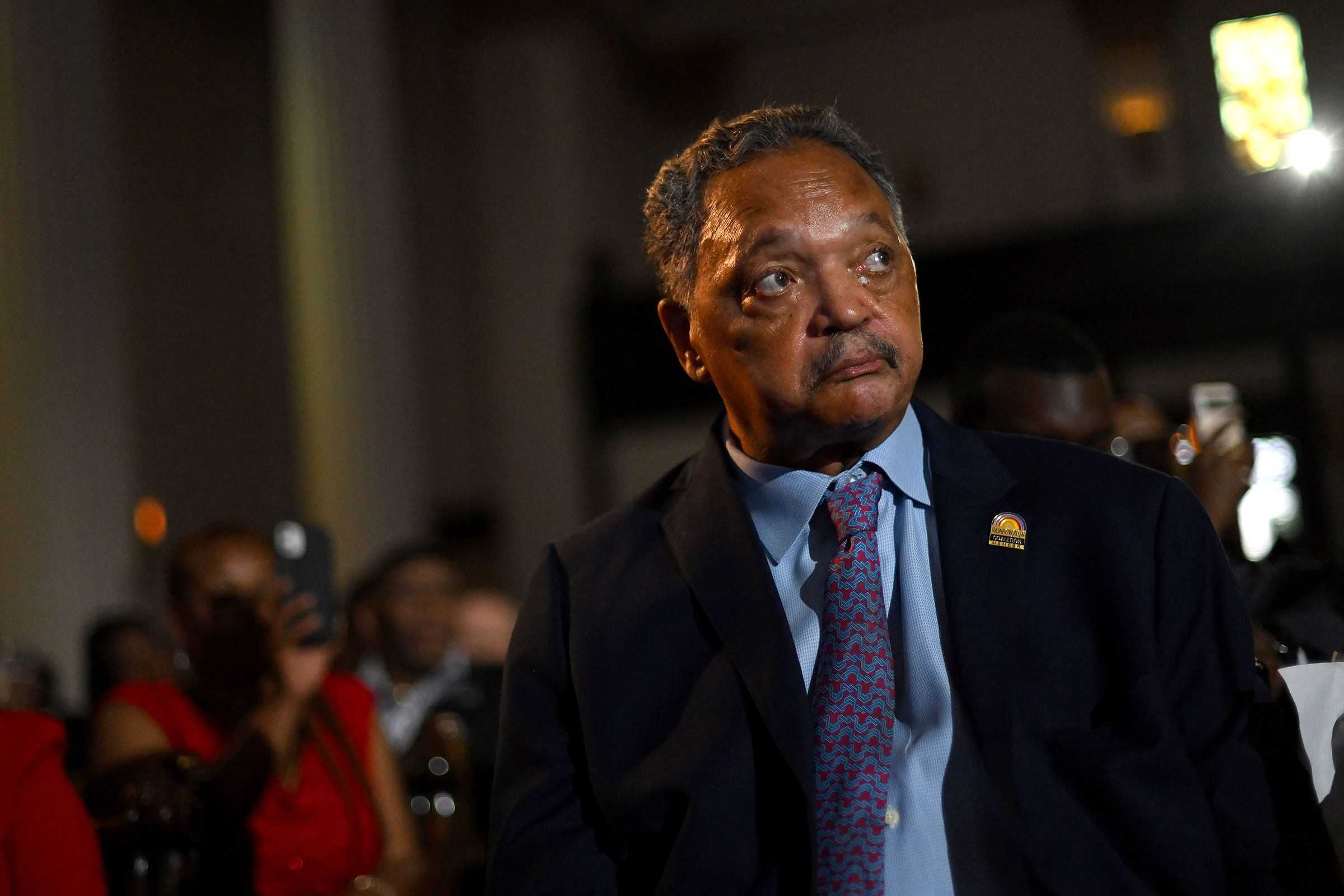
Jesse Jackson’s life was defined by *** relentless fight for justice and equality. I was born in Greenville, South Carolina, uh, in rampant radical racial segregation. Had to be taught to go to the back of the bus or be arrested. In 1965, he began working for Reverend Martin Luther King Jr. I learned so much from him, such *** great source of inspiration. Both men were in Memphis in April 1968 to support striking sanitation workers. King and other civil rights leaders were staying at the Lorraine Motel. He said, Jesse, you know, you don’t even have on *** shirt and tie. You don’t even have on *** tie. We’re going to dinner. I said, Doc, you know it does not require *** tie. Just an appetite and we laughed. I said, Doc, and the bullet hit. With King gone, his movement was adrift. Years later, Jackson formed Operation Push, pressuring businesses to open up to black workers and customers and adding more focus on black responsibility, championed in the 1972 concert Watt Stacks. Watts. The Reverend set his sights on the White House in 1984. 1st thought of as *** marginal candidate, Jackson finished third in the primary race with 18% of the vote. He ran again in 1988, doubling his vote count and finishing in 2nd in the Democratic race. At the time, it was the farthest any black candidate had gone in *** presidential contest. But 20 years later when President Barack ran, we were laying the groundwork for that season. In 2017, Jackson had *** new battle to fight, Parkinson’s disease, but it did. It stop him. Late in life, he was still fighting. He was arrested in Washington while demonstrating for voting rights. His silent presence at the trial of Ahmaud Arbery’s killers prompted defense lawyers to ask that he leave the courtroom. Jackson stayed from the Jim Crow South through the turbulent 60s and into the Black Lives Matter movement. Jesse Jackson was *** constant, unyielding voice for justice.
Advertisement
House Speaker Johnson rejects request for Jesse Jackson to lie in honor at Capitol

House Speaker Mike Johnson has denied a request for the late Rev. Jesse Jackson Sr. to lie in honor at the United States Capitol, citing past precedent over how the deaths of other high-profile figures were handled, according to sources familiar with the matter.The civil rights icon died this week at the age of 84. Jackson was praised by both Republicans and Democrats alike for his decades of activism and work in politics and international affairs. President Donald Trump repeatedly described Jackson this week as a “good man.”One of the sources told CNN that the decision to reject the request to lie in honor – which had been made on behalf of Jackson’s family – was in keeping with precedent and was not political. The source said that requests for conservative political activist Charlie Kirk and former Vice President Dick Cheney were also denied, and that the general practice is for presidents, select military officials and select government officials to lie in honor. It was last done for former President Jimmy Carter.Lying in honor generally involves laying the casket of the deceased in the Rotunda of the U.S. Capitol, where the public can come and offer final respects.Jackson’s family has announced that next week, he will lie in repose at Rainbow PUSH headquarters in Chicago. That will be followed by formal services in his home state of South Carolina and in Washington, D.C.Jackson, a fiery orator whose work shaped the Democratic Party and America, twice made a bid for the Democratic presidential nomination, inspiring Black America and stunning some with his ability to attract White voters. He rose to national prominence in the 1960s as a close aide to the Rev. Martin Luther King Jr.His Rainbow Coalition, an alliance of Blacks, Whites, Latinos, Asian Americans, Native Americans and LGBTQ people, helped pave the way for a more progressive Democratic Party.
House Speaker Mike Johnson has denied a request for the late Rev. Jesse Jackson Sr. to lie in honor at the United States Capitol, citing past precedent over how the deaths of other high-profile figures were handled, according to sources familiar with the matter.
The civil rights icon died this week at the age of 84. Jackson was praised by both Republicans and Democrats alike for his decades of activism and work in politics and international affairs. President Donald Trump repeatedly described Jackson this week as a “good man.”
Advertisement
One of the sources told CNN that the decision to reject the request to lie in honor – which had been made on behalf of Jackson’s family – was in keeping with precedent and was not political. The source said that requests for conservative political activist Charlie Kirk and former Vice President Dick Cheney were also denied, and that the general practice is for presidents, select military officials and select government officials to lie in honor. It was last done for former President Jimmy Carter.
Lying in honor generally involves laying the casket of the deceased in the Rotunda of the U.S. Capitol, where the public can come and offer final respects.
Jackson’s family has announced that next week, he will lie in repose at Rainbow PUSH headquarters in Chicago. That will be followed by formal services in his home state of South Carolina and in Washington, D.C.
Jackson, a fiery orator whose work shaped the Democratic Party and America, twice made a bid for the Democratic presidential nomination, inspiring Black America and stunning some with his ability to attract White voters. He rose to national prominence in the 1960s as a close aide to the Rev. Martin Luther King Jr.
His Rainbow Coalition, an alliance of Blacks, Whites, Latinos, Asian Americans, Native Americans and LGBTQ people, helped pave the way for a more progressive Democratic Party.