
Read the full article on KETV 7

The Trump administration’s case for war with Iran came under renewed scrutiny Wednesday as top intelligence officials were pressed on Capitol Hill over the intelligence behind the U.S. entering the war.Director of National Intelligence Tulsi Gabbard told lawmakers that Iran’s regime “appears to be intact but largely degraded.”As the war with Iran deepens, questions have arisen about whether the public case for war matched the intelligence. Independent Sen. Angus King of Maine highlighted the vulnerability of the Strait of Hormuz, a key global oil chokepoint, as senators pressed intelligence officials on what they told the president before the strikes, including whether Iran could retaliate by threatening the strait. Gabbard repeatedly staved off questions about the intelligence she had offered the Republican president.“I have not and won’t divulge internal conversations,” Gabbard said when asked if she offered an assessment on the Strait of Hormuz. “I will say that those of us within the intelligence community continue to provide the president with all of the best objective intelligence available to inform his decision.” Gabbard also faced questions over what she left unsaid. In written testimony, Gabbard said Iran had made “no efforts” to rebuild their nuclear enrichment capabilities after U.S. strikes “obliterated” the program last year. It’s a finding that appeared to contradict the administration’s more urgent public case for war.Democratic Sen. Mark Warner of Virginia asked why she did not include that point in her oral remarks, and Gabbard said she left out some sections because time was running long.Lawmakers also questioned officials on whether Iran truly posed the kind of threat that justified entering the war. CIA Director John Ratcliffe said, “I think Iran has been a constant threat to the United States for an extended period of time and posed an immediate threat at this time.”This is now colliding with rare public dissent from inside the administration, as Joe Kent, the director of the National Counterterrorism Center, resigned this week, saying he did not believe Iran posed an imminent threat to the United States. Democratic Sen. Jon Ossoff of Georgia asked, “Was it the assessment of the intelligence community that there was an imminent nuclear threat posed by the Iranian regime, yes or no?” Gabbard responded, “Senator, the only person that can determine what is and is not an imminent threat is the President of the United States.” Ossoff replied, “False.” The next test for the administration comes Thursday in the House, where officials are expected to face more questions about the case for war. In response to surging oil prices, the administration is trying to boost supply by easing restrictions on Venezuelan oil and waiving the Jones Act for 60 days, which aims to make it easier for foreign vessels to move fuel and other energy-related supplies between U.S. ports to ease short-term price pressure. A new inflation report shows wholesale prices rose more than expected last month. Experts say the Producer Price Index is often a leading indicator for prices consumers pay.Federal Reserve officials now expect somewhat higher inflation this year, though they say the broader economic effects remain uncertain and the hit to growth may be limited.
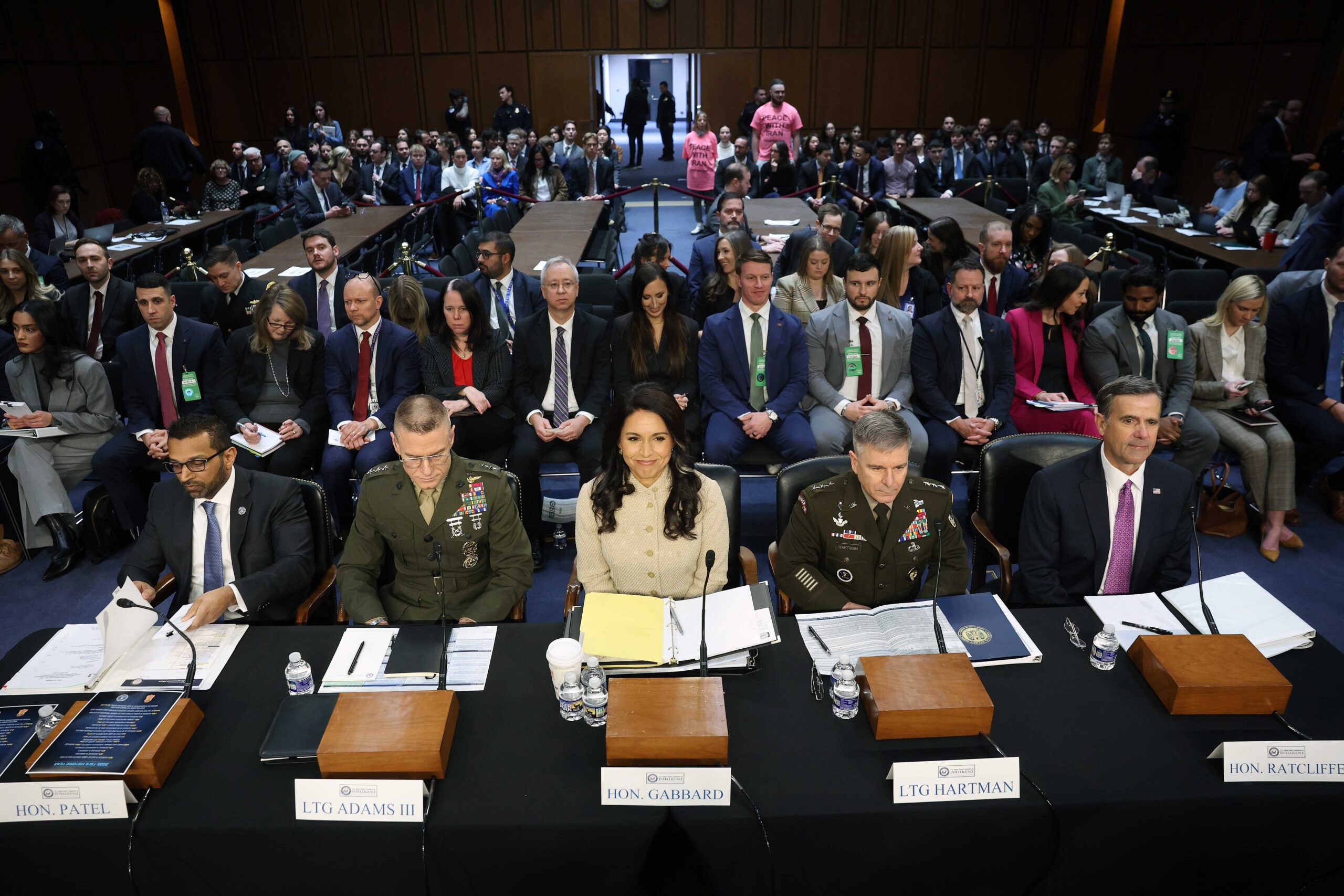
The Trump administration’s case for war with Iran came under renewed scrutiny Wednesday as top intelligence officials were pressed on Capitol Hill over the intelligence behind the U.S. entering the war.
Director of National Intelligence Tulsi Gabbard told lawmakers that Iran’s regime “appears to be intact but largely degraded.”
Advertisement
As the war with Iran deepens, questions have arisen about whether the public case for war matched the intelligence.
Independent Sen. Angus King of Maine highlighted the vulnerability of the Strait of Hormuz, a key global oil chokepoint, as senators pressed intelligence officials on what they told the president before the strikes, including whether Iran could retaliate by threatening the strait.
Gabbard repeatedly staved off questions about the intelligence she had offered the Republican president.
“I have not and won’t divulge internal conversations,” Gabbard said when asked if she offered an assessment on the Strait of Hormuz. “I will say that those of us within the intelligence community continue to provide the president with all of the best objective intelligence available to inform his decision.”
Gabbard also faced questions over what she left unsaid.
In written testimony, Gabbard said Iran had made “no efforts” to rebuild their nuclear enrichment capabilities after U.S. strikes “obliterated” the program last year. It’s a finding that appeared to contradict the administration’s more urgent public case for war.
Democratic Sen. Mark Warner of Virginia asked why she did not include that point in her oral remarks, and Gabbard said she left out some sections because time was running long.
Lawmakers also questioned officials on whether Iran truly posed the kind of threat that justified entering the war.
CIA Director John Ratcliffe said, “I think Iran has been a constant threat to the United States for an extended period of time and posed an immediate threat at this time.”
This is now colliding with rare public dissent from inside the administration, as Joe Kent, the director of the National Counterterrorism Center, resigned this week, saying he did not believe Iran posed an imminent threat to the United States.
Democratic Sen. Jon Ossoff of Georgia asked, “Was it the assessment of the intelligence community that there was an imminent nuclear threat posed by the Iranian regime, yes or no?” Gabbard responded, “Senator, the only person that can determine what is and is not an imminent threat is the President of the United States.” Ossoff replied, “False.”
The next test for the administration comes Thursday in the House, where officials are expected to face more questions about the case for war.
In response to surging oil prices, the administration is trying to boost supply by easing restrictions on Venezuelan oil and waiving the Jones Act for 60 days, which aims to make it easier for foreign vessels to move fuel and other energy-related supplies between U.S. ports to ease short-term price pressure.
A new inflation report shows wholesale prices rose more than expected last month. Experts say the Producer Price Index is often a leading indicator for prices consumers pay.
Federal Reserve officials now expect somewhat higher inflation this year, though they say the broader economic effects remain uncertain and the hit to growth may be limited.