

Read the full article on KETV 7

Major changes coming to Artemis program, NASA announces; no lunar landing for Artemis III
You are looking live at the Artemis 2 Space Launch System rocket and Orion spacecraft in the vehicle assembly building. Today we are joined by agency leadership to discuss the Artemis 2 mission and the next steps for the entire Artemis campaign. Good morning and welcome to NASA’s Kennedy Space Center. I’m George Alderman, NASA’s deputy press secretary, and I’ll be moderating today’s news conference. I’m joined by NASA Administrator Jared Isaacman, Associate administrator Amit Sharia, and Moon to Mars program manager, Laurie Glaze. Today we’ll be taking questions both in person and through our phone bridge. So media interested in asking *** question, please press one to enter the queue. And now we’ll begin with opening remarks from Administrator Isaacman. Thank you very much, George. Good morning, everyone. Appreciate it. Good morning. Appreciate everyone coming out. We’re seeing each other *** lot lately, lots of updates. Expect more of it. Um, first, I, I just want to, uh, uh, give *** lot of credit to, uh, the NASA workforce and our partners that have been working really tirelessly through, uh, the Artemis campaign. Um, it’s really, uh, especially impressive work, and, uh, and I know they’re all feeling it after we had what was *** near flawless wet Dress 2 performance that Artemis 2 is now back, uh, in the, in the vehicle assembly building, which is, which is imperfect. So, Uh, we want to give you two sets of updates. Uh, so, uh, Laurie is gonna speak with you about what we’re learning about Artemis 2 now that it is back in the VAB and what our path is back out to the pad and to launch this historic mission. But before that, I’d like to talk *** little bit about, uh, the overall Artemis program, uh, how we’re gonna achieve the president’s objective to return American astronauts to the moon. To build an enduring presence and ideally not uh wind up in some of the situations that we’ve seen recently. So let’s talk about, let’s talk about the situation. Artemis won. Launched, uh, more than 3 years ago. Uh, we had helium leaks with Artemis 1. I’m sorry, we had hydrogen leaks with Artemis 1. We had helium flow issues with Artemis 1. Artemis 2 went out to the pad. Wettress 1, we had helium or we had hydrogen leaks. Uh, and then after *** second Wettress 2 where we, we, we made *** lot of, uh, great progress, we wound up with helium flow issues, *** lot of similarities between the two. And why, uh, and why is that essentially the case? Look, uh, 3+ year launch cadence. I mean, Artemis 3 right now as it’s currently designed, won’t fly for approximately another 3 years. So launching, uh, *** rocket is important and as complex as SLS every 3 years is not *** path to success. *** component of that is when you are launching every 3 years, your skills atrophy. You lose muscle memory. Uh, we’ve got *** lot of really talented folks that have been working hard on the Artemis 2 campaign and You know, whether they’re gonna want to stick around for 3 more years after this mission is complete is ***, is *** question mark. This is just not the right pathway forward. And I’d say also, when you are experiencing some of the same issues between, uh, between launches, you probably got to take *** close look at, uh, your process for remediation. Are you truly getting the technical root cause or do you, are you getting close to it? So, uh, we’ve got issues with low flight rate. Um, and I would say, uh, ***, *** great way to exasperate that problem further is to start making, uh, changes to vehicle configuration. Uh, SLS is *** very impressive vehicle. We don’t want to turn every one of them into *** work of art. Uh, and then I would also say that, uh, having very big objectives, uh, ***, *** wide objective gap between missions is also not *** pathway to success, so. We didn’t go right to Apollo 11, right? We had *** whole Mercury program, Geminiy, Apollo, lots of Apollo missions before we ultimately landed. Right now our program is essentially set up with, uh, an Apollo 8 and then going right to the moon, and that is, that is again not *** pathway to success. So what is the right way forward here? So first. Today, we’re uh announcing *** standardization of the uh SLS fleet to what we’ll call essentially *** near block one configuration. So the idea is we want to reduce complexity to the greatest extent possible. We want to, uh, uh, accelerate manufacturing, pull in the hardware. Uh, and increased launch rate, which, which obviously has *** direct safety, uh, you know, consideration to it as well. You get into *** good rhythm launching, uh, great frequency, you get that muscle memory. Um, in order to do that, we need to rebuild and strengthen the, the workforce here at NASA. Now, this is directly in line with the workforce directive that I released several weeks ago. Uh, we have to rebuild core competencies. The ability to turn around our launch pads and launch, uh, with frequency greater than every 3 years is imperative. Some people ask me questions on that already as, uh, as we’ve talked about this, and it’s like, how are we gonna do that? How we can go from 3 years to something significantly less to what I think should actually be inside of 1 year. And I’ll point you out, I’ll point you to our history. We have *** nice infographic that’s coming out from Mercury, Gemini, Apollo through the shuttle program. I don’t think it would surprise many of the folks in the room that our average launch cadence was closer to 3 months throughout all those programs, not 3 years. In fact, if you want ***, ***, *** history tidbit, you look at the time when Apollo 7 splashed down to when Apollo 8 launched, you’re approximately 2 months apart. We need to start getting back to basics and moving in this direction. So rebuilding the civil servant workforce and restoring core capabilities. Again, that will directly contribute to NASA’s launch cadence where we’re gonna uh endeavor to get our launches inside of *** year, specifically down to potentially 10 months. And then, uh, we are gonna add missions. In fact, we’re, we’re essentially going to, uh, pull in Artemis 3 to launch in 2027 with *** revised mission profile. So instead of going directly to *** lunar landing, uh, we will endeavor to rendezvous in low Earth orbit with one or both of our lunar landers. Uh, test out integrated operations between Orion and the landers, ecosys, uh, you know, even to, to the, even to the extent possible, if we can get up development components of our XEVA suits to test out vehicle interfaces, even just getting an astronaut in *** suit, microgravity, we can learn *** lot with the idea that we should be learning, uh, and take this information back to inform, uh, hardware development, whether it’s in the, the landers or in the suits before. Artemis 4, where we will attempt to land on the moon. Uh, we are also, uh, as *** component of the strategy. Um, endeavoring to, uh, preserve up to two landing attempts in 2028. So if we get it inside of the 10 month turnaround time that we would like to see, Artemis Two will launch on its historic mission in the weeks ahead. Artemis three will have its opportunity if we can by, by mid 2027, which sets us up for an early 208, uh, and *** late 208 opportunity. So, uh, that is, uh, the approach that we are taking at *** very high level. I will tell you we didn’t, uh, we’re not surprising, uh, our, uh, industry or our stakeholders, uh, at this, at this press conference right now we’ve been having these discussions for *** long time. In fact, I give *** lot of credit to NASA and its team. Uh, you know, they, no one at NASA forgot their history books. They knew how to do this. They’ve had plans like this for *** long time. Now we’re putting it in action. We had *** chance to have these discussions across all of our industry partners, all of the prime contractors on the SLS vehicle, uh, both of our, uh, HLS landing providers. Everybody agrees. This is the only way forward, and I’ll say, uh, had similar conversations with all our stakeholders in Congress, and they’re fully behind NASA in this, uh, in this approach. Um. They know this is how NASA changed the world and this is how NASA’s going to do it again with that. I’ll hand it over to Ahmed. Thank you, sir. Let’s see, the, the, the path forward that the administrator laid out, I think is pretty clear. It reduces risk, uh, it strengthens our ability to execute these missions, um, and the, and the campaign ahead of us. Um, it, it reflects the adjustments that we need, uh, to keep our schedule credible and, uh, and our team’s focused on what matters most, which is safe and achievable missions. Uh, and, and also, I think it’s, it’s important that we, we talk *** little bit about the Artemis 2 crew. This is for them also. When, when, when they get on top of that rocket, they need to know that they’re doing it as, as part of *** step, *** part, as part of *** plan that’s gonna work. That, that they have said many times they’re doing this mission so that their teammates can walk on the moon. They need to know that they’re gonna get on top of that rocket so that we, and we’re gonna give them *** plan for the rest of the team that’s gonna be assigned, that’s gonna go do this work to actually get to the moon. So our update today reinforces that commitment to them. And when we ask them to take that risk, when we take that risk together, that they’re doing it for *** reason. So we’re gonna build that program grounded in safety, incremental learnings, technical excellence, and long-term sustainability. So I, I think it’s, you know, our commitment to flight readiness, this is not about slowing down momentum. This is about increasing it, about making sure that we are focused on the right things in terms of how we execute the program. We need to get back to doing the workforce initiative that the administrator has, has, has directed us to, to, to, uh, to implement is, is the absolute key ingredient to this. We need to get our teams working side by side. With our partners outside and get this work done. So it’s challenging, it’s ambitious, uh, but with this course correction, we are on *** more stable foundation, *** more realistic path to the milestones we have ahead. And we’re so grateful to the teams across the NASA centers, across all of industry that’s helping us. We have the entire force of American industry now helping us with the Artemis campaign. We are grateful to them for their support. They have been relentless in driving progress, and we need them to be even more relentless to achieve these missions, and this plan that we’re laying out today makes that possible.
Advertisement
NASA said Friday it’s adding an extra moon mission by Artemis astronauts before attempting a high-risk lunar landing with a crew.The shakeup in the flight lineup came just two days after NASA’s new moon rocket returned to its hangar for more repairs and a safety panel warned the space agency to scale back its overly ambitious goals for humanity’s first lunar landing in more than half a century. Artemis II — a lunar fly-around by four astronauts — is off until at least April because of rocket problems.The follow-up mission — Artemis III — had been targeting a landing near the moon’s south pole by another pair of astronauts a year or two later. But with concern growing over the readiness of a lunar lander and moonwalking suits and long gaps between flights, NASA’s new administrator Jared Isaacman announced that mission would instead focus on launching a lunar lander into orbit around Earth for practice in 2027.The new plan calls for a moon landing — potentially even two moon landings — by astronauts in 2028.Isaacman stressed that three years between flights is unacceptable and that he’d like to get it down to one year or even less. During NASA’s storied Apollo program, he said, astronauts’ first flight to the moon was followed by two more missions before Neil Armstrong and Buzz Aldrin landed on the moon.The Aerospace Safety Advisory Panel recommended this week that NASA revise its objectives for Artemis III “given the demanding mission goals.” It’s urgent the space agency do that, the panel said, if the United States hopes to safely return astronauts to the moon.Artemis IITechnicians have begun repair operations on NASA’s Artemis II Moon rocket after the fully stacked vehicle was rolled back to the Vehicle Assembly Building (VAB) on Feb. 25. The work follows an issue identified during post–wet dress rehearsal operations that interrupted the flow of helium to the rocket’s upper stage.Artemis IArtemis I launched more than three years ago and faced hydrogen leaks and helium flow issues.
NASA said Friday it’s adding an extra moon mission by Artemis astronauts before attempting a high-risk lunar landing with a crew.
The shakeup in the flight lineup came just two days after NASA’s new moon rocket returned to its hangar for more repairs and a safety panel warned the space agency to scale back its overly ambitious goals for humanity’s first lunar landing in more than half a century.
Advertisement
Artemis II — a lunar fly-around by four astronauts — is off until at least April because of rocket problems.
The follow-up mission — Artemis III — had been targeting a landing near the moon’s south pole by another pair of astronauts a year or two later. But with concern growing over the readiness of a lunar lander and moonwalking suits and long gaps between flights, NASA’s new administrator Jared Isaacman announced that mission would instead focus on launching a lunar lander into orbit around Earth for practice in 2027.
The new plan calls for a moon landing — potentially even two moon landings — by astronauts in 2028.
Isaacman stressed that three years between flights is unacceptable and that he’d like to get it down to one year or even less. During NASA’s storied Apollo program, he said, astronauts’ first flight to the moon was followed by two more missions before Neil Armstrong and Buzz Aldrin landed on the moon.
The Aerospace Safety Advisory Panel recommended this week that NASA revise its objectives for Artemis III “given the demanding mission goals.” It’s urgent the space agency do that, the panel said, if the United States hopes to safely return astronauts to the moon.
Artemis II
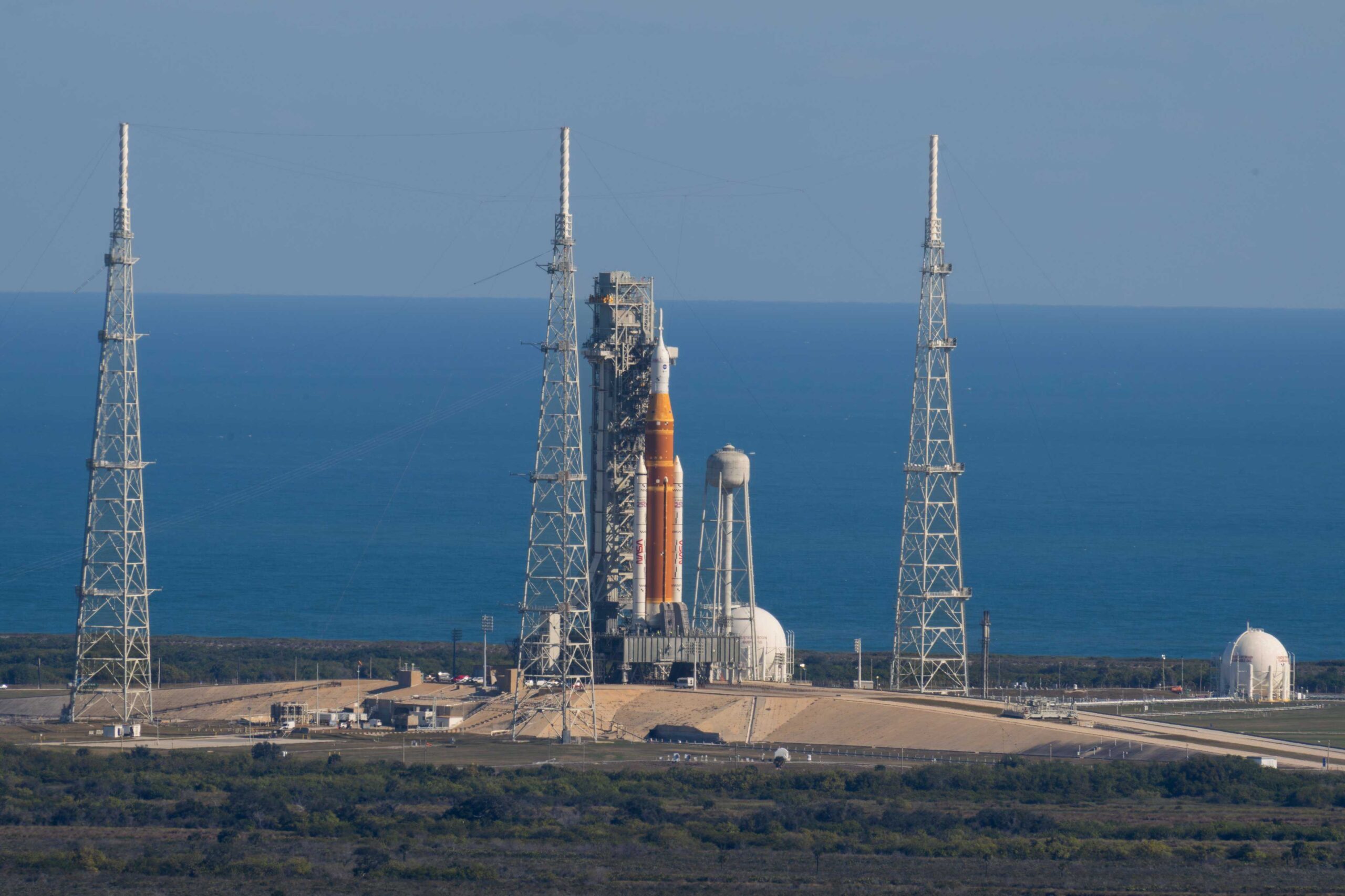
Technicians have begun repair operations on NASA’s Artemis II Moon rocket after the fully stacked vehicle was rolled back to the Vehicle Assembly Building (VAB) on Feb. 25. The work follows an issue identified during post–wet dress rehearsal operations that interrupted the flow of helium to the rocket’s upper stage.
Artemis I
Artemis I launched more than three years ago and faced hydrogen leaks and helium flow issues.