

Read the full article on KETV 7

The vast majority of states saw an increase in electricity kilowatt-hour prices in December from the year prior, according to the latest data from the U.S. Energy Information Administration.The largest spike was in the District of Columbia, where prices rose from 19 cents per kWh to 24 cents, a 27% increase. Rhode Island had the second-highest increase, with electricity prices rising by nearly 23% per kWh.The data comes from the EIA’s February release of the Electric Power Monthly report. The report provides the latest figures for December 2025.Where electricity is the most expensive and how my state compares The national average electric bill in October 2025 was $132.85, according to calculations by the National Energy Assistance Directors Association. NEADA, a policy organization that represents state governments in securing federal money, uses data from EIA to calculate average electric bills for each state. Fifteen states had average electric bills higher than the national average, with Hawaii having the priciest at $220.12. Texas and Florida were behind Hawaii, with their averages at $175 and $171.76, respectively. New Mexico had the lowest average bill at $84.23, followed by Utah at $86.72.But there isn’t one factor driving the increasing cost of electricity, said Kenny Stein, vice president of Policy for the Institute for Energy Research. The Institute of Energy Research is a not-for-profit organization that conducts research and analysis on global energy markets.Weather and geography are key factors in higher pricesThe highest electricity rates are largely in the northeastern part of the country, followed by the West Coast, said Stein. These higher rates are partly due to supply constraints and weather. New England relies on natural gas for electricity and home heating, but it doesn’t produce the resource, which becomes an issue when demand rises.Demand typically rises during the colder months, and to meet that demand, the region has to import natural gas from overseas, which drives prices higher. Prices could be lower if New England expanded its natural gas pipeline infrastructure rather than relying on imports. When the costs of natural gas or coal increase, so do electricity prices. It’s not just colder temperatures that impact costs; extreme weather does too. Hurricanes can damage infrastructure, requiring costly repairs that eventually get passed down to consumers.Inflation impact on electricity pricesInflation surged toward the end of the COVID-19 pandemic and hasn’t fully subsided, said Stein. Higher inflation raises the cost of building and maintaining power plants and infrastructure, which gets added to consumers’ bills. U.S. household heating costs are projected to rise by 11% this winter, which is more than four times the rate of inflation, according to the NEADA. State policies can lead to higher bills as well”Every state has a lot of control over how their utilities are built, how their utilities operate and how much they charge their consumers,” Stein said.Some of these policies were made five to 10 years ago, but other states have renewable portfolio mandates that have slowly increased electricity prices. These mandates either require or make it a goal for energy producers and providers to supply energy from low or zero-carbon emission sources. In short, they require moving away from coal and natural gas and using clean resources like wind and solar. PHNjcmlwdCB0eXBlPSJ0ZXh0L2phdmFzY3JpcHQiPiFmdW5jdGlvbigpeyJ1c2Ugc3RyaWN0Ijt3aW5kb3cuYWRkRXZlbnRMaXN0ZW5lcigibWVzc2FnZSIsKGZ1bmN0aW9uKGUpe2lmKHZvaWQgMCE9PWUuZGF0YVsiZGF0YXdyYXBwZXItaGVpZ2h0Il0pe3ZhciB0PWRvY3VtZW50LnF1ZXJ5U2VsZWN0b3JBbGwoImlmcmFtZSIpO2Zvcih2YXIgYSBpbiBlLmRhdGFbImRhdGF3cmFwcGVyLWhlaWdodCJdKWZvcih2YXIgcj0wO3I8dC5sZW5ndGg7cisrKXtpZih0W3JdLmNvbnRlbnRXaW5kb3c9PT1lLnNvdXJjZSl0W3JdLnN0eWxlLmhlaWdodD1lLmRhdGFbImRhdGF3cmFwcGVyLWhlaWdodCJdW2FdKyJweCJ9fX0pKX0oKTs8L3NjcmlwdD4=
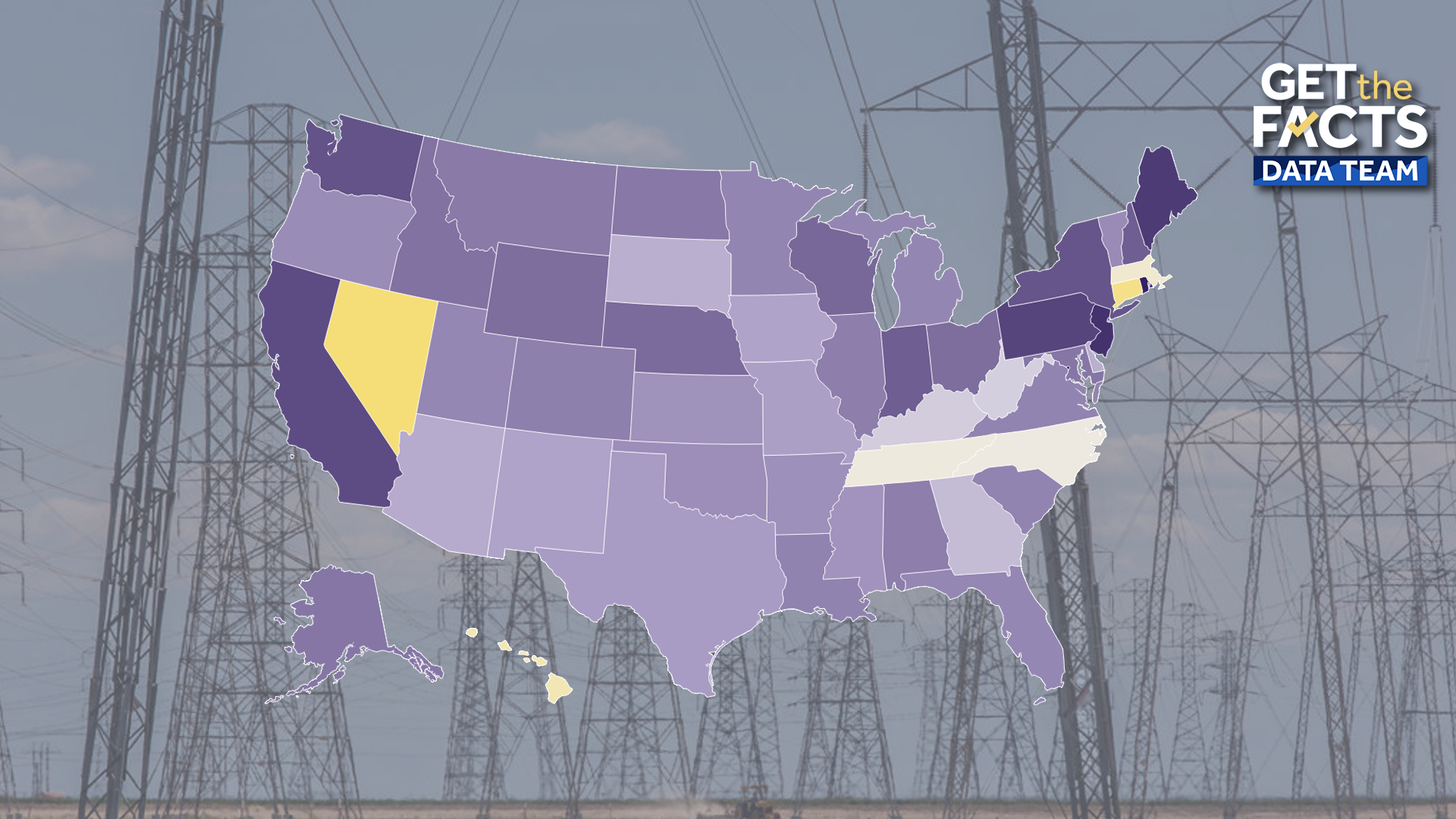
The vast majority of states saw an increase in electricity kilowatt-hour prices in December from the year prior, according to the latest data from the U.S. Energy Information Administration.
The largest spike was in the District of Columbia, where prices rose from 19 cents per kWh to 24 cents, a 27% increase. Rhode Island had the second-highest increase, with electricity prices rising by nearly 23% per kWh.
Advertisement
The data comes from the EIA’s February release of the Electric Power Monthly report. The report provides the latest figures for December 2025.
Where electricity is the most expensive and how my state compares
The national average electric bill in October 2025 was $132.85, according to calculations by the National Energy Assistance Directors Association. NEADA, a policy organization that represents state governments in securing federal money, uses data from EIA to calculate average electric bills for each state.
Fifteen states had average electric bills higher than the national average, with Hawaii having the priciest at $220.12. Texas and Florida were behind Hawaii, with their averages at $175 and $171.76, respectively.
New Mexico had the lowest average bill at $84.23, followed by Utah at $86.72.
But there isn’t one factor driving the increasing cost of electricity, said Kenny Stein, vice president of Policy for the Institute for Energy Research. The Institute of Energy Research is a not-for-profit organization that conducts research and analysis on global energy markets.
Weather and geography are key factors in higher prices
The highest electricity rates are largely in the northeastern part of the country, followed by the West Coast, said Stein.
These higher rates are partly due to supply constraints and weather. New England relies on natural gas for electricity and home heating, but it doesn’t produce the resource, which becomes an issue when demand rises.
Demand typically rises during the colder months, and to meet that demand, the region has to import natural gas from overseas, which drives prices higher. Prices could be lower if New England expanded its natural gas pipeline infrastructure rather than relying on imports.
When the costs of natural gas or coal increase, so do electricity prices. It’s not just colder temperatures that impact costs; extreme weather does too. Hurricanes can damage infrastructure, requiring costly repairs that eventually get passed down to consumers.
Inflation impact on electricity prices
Inflation surged toward the end of the COVID-19 pandemic and hasn’t fully subsided, said Stein. Higher inflation raises the cost of building and maintaining power plants and infrastructure, which gets added to consumers’ bills.
U.S. household heating costs are projected to rise by 11% this winter, which is more than four times the rate of inflation, according to the NEADA.
State policies can lead to higher bills as well
“Every state has a lot of control over how their utilities are built, how their utilities operate and how much they charge their consumers,” Stein said.
Some of these policies were made five to 10 years ago, but other states have renewable portfolio mandates that have slowly increased electricity prices.
These mandates either require or make it a goal for energy producers and providers to supply energy from low or zero-carbon emission sources. In short, they require moving away from coal and natural gas and using clean resources like wind and solar.