
Read the full article on KETV 7

The Broadview Hotel in Omaha is a former Black boarding house listed in “The Negro Motorist Green Book.”Recently, it has been added to the National Register of Historic Places. “The Negro Motorist Green Book” was a guide for Black Americans to find safe havens while traveling across the U.S. during that time.Wesley Dacus, owner of the Broadview Hotel, reflected on the challenges faced by Black travelers.”Racism stepped in, prejudice stepped in. They didn’t believe that we would stay in hotels. So, we had to come up with alternative,” Dacus said. The history of “Green Book” sites in Nebraska is extensive, with Omaha being home to 32 such locations. The Durham Museum is currently hosting the final showing of “The Negro Motorist Green Book” exhibit nationally, which features a large-scale look at these sites. Eric Ewing, who runs the Great Plains Black History Museum, explained the exhibit’s approach.”We look to look at a macro event, but then tell the micro and how what we were doing as those events were, you know, those things were happening,” Ewing said. Dacus shared memories of other boarding houses. “My aunt that ran her boarding house, Nat King Cole stayed with her here for 90 days before he got buried,” he said. He also recalled the neighborhood’s transformation. “This is the North side. At one time, we used to be a very Jewish-oriented neighborhood. And, you know, as they moved out, we moved in,” Dacus said. Ewing emphasized the importance of understanding history to shape the future. “It’s important because we need to know where we are so we can know where are we going as well,” Ewing said.Dacus has plans to commemorate the hotel’s history. “I want to get a plaque on that corner down here so when people come by, they can say, ‘Hey, let me step out and see what this really means,'” Dacus said. Scott Eastman with the Durham Museum said this exhibit had an impact on him. “Is a dark part of history, but there are incredibly uplifting and inspiring stories within it. And I find it really affecting just walking through here, seeing the way it is, sort of sectioned off with all of the signage that is exclusionary, and then these incredible welcoming sites once you get within them,” Eastman said.
The Broadview Hotel in Omaha is a former Black boarding house listed in “The Negro Motorist Green Book.”
Recently, it has been added to the National Register of Historic Places.
Advertisement
“The Negro Motorist Green Book” was a guide for Black Americans to find safe havens while traveling across the U.S. during that time.
Wesley Dacus, owner of the Broadview Hotel, reflected on the challenges faced by Black travelers.
“Racism stepped in, prejudice stepped in. They didn’t believe that we would stay in hotels. So, we had to come up with alternative,” Dacus said.
The history of “Green Book” sites in Nebraska is extensive, with Omaha being home to 32 such locations.
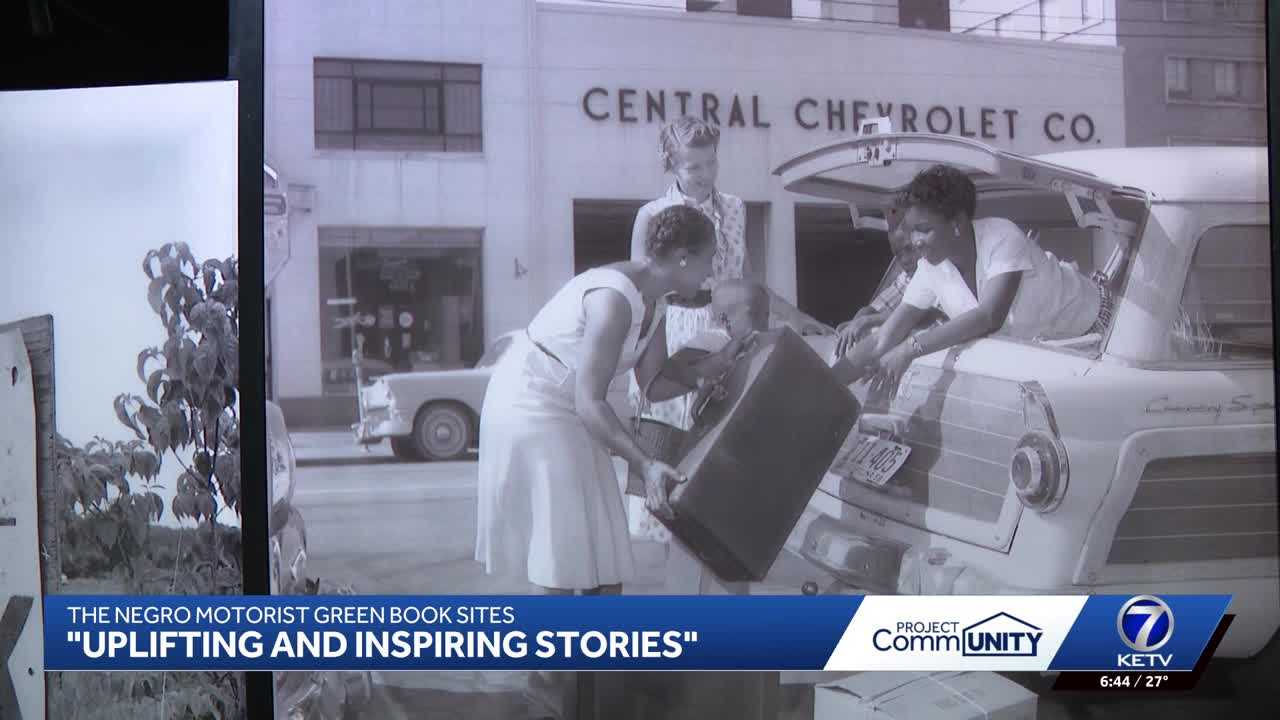
The Durham Museum is currently hosting the final showing of “The Negro Motorist Green Book” exhibit nationally, which features a large-scale look at these sites.
Eric Ewing, who runs the Great Plains Black History Museum, explained the exhibit’s approach.
“We look to look at a macro event, but then tell the micro and how what we were doing as those events were, you know, those things were happening,” Ewing said.
Dacus shared memories of other boarding houses.
“My aunt that ran her boarding house, Nat King Cole stayed with her here for 90 days before he got buried,” he said.
He also recalled the neighborhood’s transformation.
“This is the North side. At one time, we used to be a very Jewish-oriented neighborhood. And, you know, as they moved out, we moved in,” Dacus said.
Ewing emphasized the importance of understanding history to shape the future.
“It’s important because we need to know where we are so we can know where are we going as well,” Ewing said.
Dacus has plans to commemorate the hotel’s history.
“I want to get a plaque on that corner down here so when people come by, they can say, ‘Hey, let me step out and see what this really means,'” Dacus said.
Scott Eastman with the Durham Museum said this exhibit had an impact on him.
“Is a dark part of history, but there are incredibly uplifting and inspiring stories within it. And I find it really affecting just walking through here, seeing the way it is, sort of sectioned off with all of the signage that is exclusionary, and then these incredible welcoming sites once you get within them,” Eastman said.