

Read the full article on KETV 7

NASA is aiming for an April 1 launch date for a mission that will send astronauts around the moon and back as part of its ambitious lunar landing program.Four astronauts will fly aboard NASA’s Orion spacecraft, circle Earth and navigate around the moon, and confirm that the spacecraft’s systems operate in the Artemis II launch, NASA said in a news conference Thursday. The launch comes ahead of Artemis III, which will send astronauts to explore the moon’s south pole. “This mission will prove Orion’s life support systems are ready to sustain crew on future missions and allow the crew to practice operations essential to the success of Artemis III and beyond,” NASA said.The 322-foot rocket will roll out of the hangar and back to the pad next week at Florida’s Kennedy Space Center.”This is an exciting time for our entire flight operations team to fly humans around the moon for the first time in over 50 years, send them further than any humans since Apollo 13, and continue paving the road of human exploration to the moon and beyond,” Sean Quinn, exploration ground systems program manager, said in the update.NASA is continuing work on its Space Launch System (SLS) rocket and Orion spacecraft after a few issues were found during the second wet dress rehearsal. The crew should originally have taken off earlier in the year.One of the issues included an interruption of the flow of helium to the rocket’s upper stage.”We reviewed the challenges that we’ve had and how we’ve addressed them. And we talked about the work that remains, what’s left to do and how we’re going to get through all of that,” said Lori Glaze, acting associate administrator for NASA’s Exploration Systems Development Mission Directorate. “As always, we’ll always be guided by what the hardware is telling us, and we will launch when we’re ready,” she said.In February, the space agency shared a new vision for its lunar program. It’s now planning a new mission before attempting its first lunar mission in more than 50 years.Video from February below: Major changes coming to Artemis programAs part of the overall Artemis campaign, the agency aims to launch more missions more frequently before and after a moon landing. One Artemis mission, which launched in 2022, has been completed since the program was conceived nine years ago.”Launching a lunar rocket every three years is not a strategy consistent with success,” NASA Administrator Jared Isaacman said in late February on X. “This is by far the lowest launch cadence in the history of America’s space program.”The Artemis program plans to return Americans to the moon’s surface for the first time since the Apollo era ended in 1972. “In this Golden Age of exploration and innovation, the Artemis missions will allow astronauts to explore the Moon for scientific discovery, economic benefits, and help build momentum for the first crewed missions to Mars,” NASA said.
NASA is aiming for an April 1 launch date for a mission that will send astronauts around the moon and back as part of its ambitious lunar landing program.
Four astronauts will fly aboard NASA’s Orion spacecraft, circle Earth and navigate around the moon, and confirm that the spacecraft’s systems operate in the Artemis II launch, NASA said in a news conference Thursday. The launch comes ahead of Artemis III, which will send astronauts to explore the moon’s south pole.
Advertisement
“This mission will prove Orion’s life support systems are ready to sustain crew on future missions and allow the crew to practice operations essential to the success of Artemis III and beyond,” NASA said.
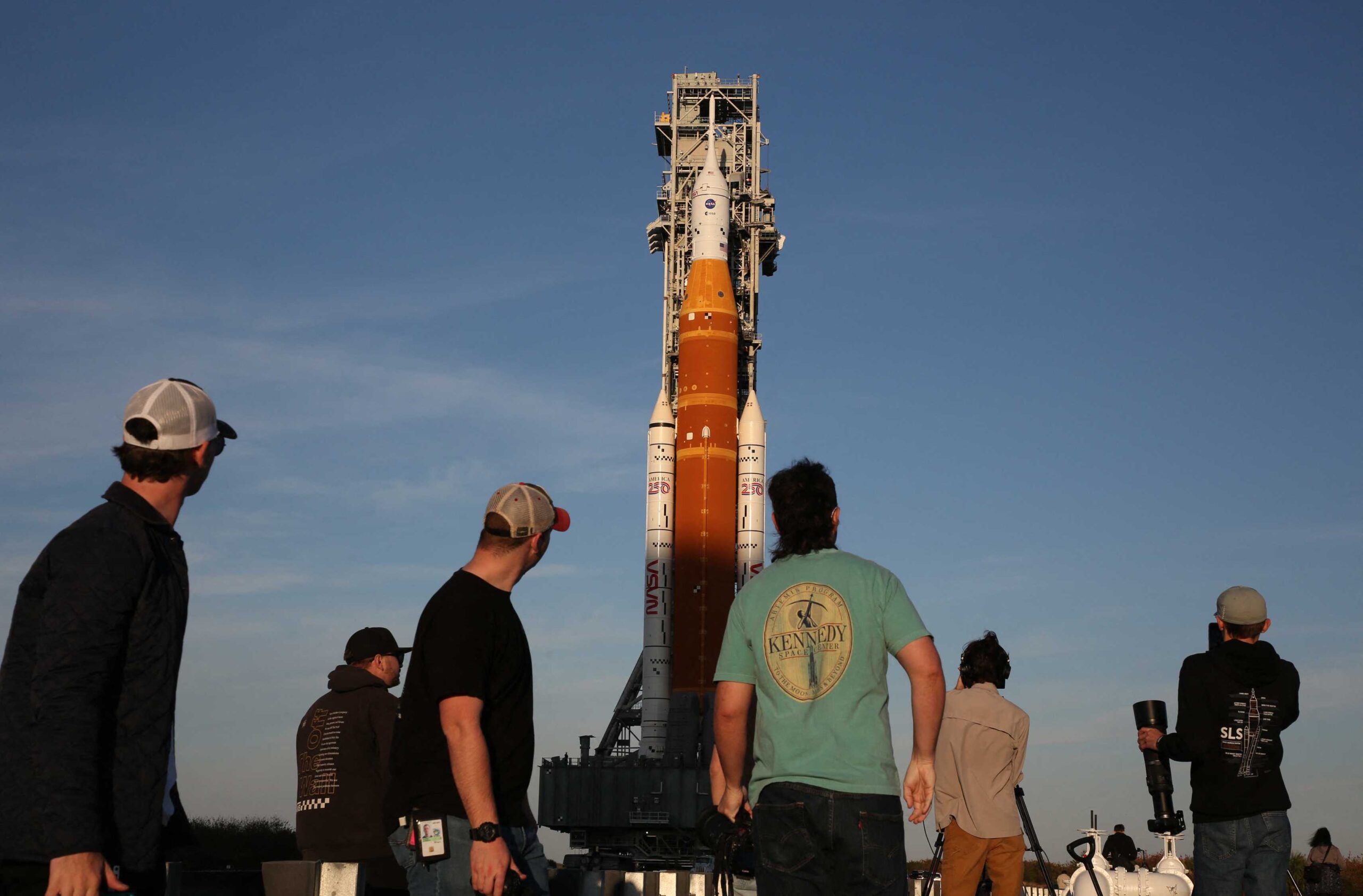
The 322-foot rocket will roll out of the hangar and back to the pad next week at Florida’s Kennedy Space Center.
“This is an exciting time for our entire flight operations team to fly humans around the moon for the first time in over 50 years, send them further than any humans since Apollo 13, and continue paving the road of human exploration to the moon and beyond,” Sean Quinn, exploration ground systems program manager, said in the update.
NASA is continuing work on its Space Launch System (SLS) rocket and Orion spacecraft after a few issues were found during the second wet dress rehearsal. The crew should originally have taken off earlier in the year.
One of the issues included an interruption of the flow of helium to the rocket’s upper stage.
“We reviewed the challenges that we’ve had and how we’ve addressed them. And we talked about the work that remains, what’s left to do and how we’re going to get through all of that,” said Lori Glaze, acting associate administrator for NASA’s Exploration Systems Development Mission Directorate.
“As always, we’ll always be guided by what the hardware is telling us, and we will launch when we’re ready,” she said.
In February, the space agency shared a new vision for its lunar program. It’s now planning a new mission before attempting its first lunar mission in more than 50 years.
Video from February below: Major changes coming to Artemis program
As part of the overall Artemis campaign, the agency aims to launch more missions more frequently before and after a moon landing. One Artemis mission, which launched in 2022, has been completed since the program was conceived nine years ago.
“Launching a lunar rocket every three years is not a strategy consistent with success,” NASA Administrator Jared Isaacman said in late February on X. “This is by far the lowest launch cadence in the history of America’s space program.”
The Artemis program plans to return Americans to the moon’s surface for the first time since the Apollo era ended in 1972.
“In this Golden Age of exploration and innovation, the Artemis missions will allow astronauts to explore the Moon for scientific discovery, economic benefits, and help build momentum for the first crewed missions to Mars,” NASA said.