
Read the full article on KETV 7

Some in Nebraska’s top industry are concerned about the U.S. decision to quadruple beef imports from Argentina.After floating the idea in October, President Donald Trump announced an executive order and trade deal with Argentina last week. He said the goal is to curb rising beef prices. The average price for a pound of ground chuck in December was $6.52, nearly a dollar more than the previous year, according to the Bureau of Labor Statistics.For a year, the U.S. is set to take 80,000 metric tons of beef from Argentina, 20,000 each quarter.Uden understands the decision to increase imports from Argentina from 20,000 metric tons to as much as 80,000 for a year.Elliott Dennis, an associate professor at the University of Nebraska-Lincoln, said that only about 1% of the beef Americans consume will come from Argentina, so there will be little to no impact on prices.”What it’s doing is it potentially provides a disincentive for producers to continue to grow the herd,” Dennis said. Despite strong demand for beef, the cattle population is near a record low. Craig Uden, the board president of Nebraska Cattlemen, does not expect the increased imports to have much impact on prices. “We’re still short of product throughout the system,” he said.Dennis said that as the cow herd increases in numbers, the market will stabilize, leading to more self-sufficiency, but that will take time. “We don’t necessarily like that we have to import,” he said. “It’s somewhat of a necessity right at the moment. We wish it had been handled a little different.”All five members of Nebraska’s congressional delegation opposed the idea of importing more beef from Argentina when Trump suggested it in October. Most have issued similar statements since last week’s update.Sen. Deb Fischer: “Nebraska produces the world’s best beef. Instead of imports that sideline American ranchers, we should be focused on solutions that cut red tape, lower production costs, and support growing our cattle herd.”Congressman Adrian Smith: “No matter the conditions, ranchers in Nebraska’s Third District lead the nation in producing high-quality, affordable beef. Now more than ever, we must deliver policies which drive confidence in the market, eliminate burdensome regulations, and lower production costs. While the United States holds historic low-inventory in cattle herds, we must focus on policies that strengthen the market and create long-term certainty for the entire supply chain.” KETV requested statements from members of the congressional delegation that didn’t appear to have already released statements. Rep. Mike Flood and Don Bacon gave statements at KETV’s request. Sen. Pete Ricketts’ office has not responded as of Wednesday evening.Flood told KETV: “While I am pleased that President Trump has secured market access for American beef to Argentina, I am concerned about the impact of bringing more Argentine beef into our country and am glad the agreement ends after one year. The solution to high beef prices in America is to support America’s cattle producers as they expand their herds, so they can raise more American beef, which is the best and the safest in the world.”Bacon told KETV: “As the only bright spot in the farm economy, the federal government should enact policies that will allow Nebraska’s ranchers to see continued success. Instead of importing foreign beef, the administration should look towards growing the national herd size, which will lead to lower prices for consumers.”Make sure you can always see the latest news, weather, sports and more from KETV NewsWatch 7 on Google Search.NAVIGATE: Home | Weather | Local News | National | Sports | Newscasts on demand |
Some in Nebraska’s top industry are concerned about the U.S. decision to quadruple beef imports from Argentina.
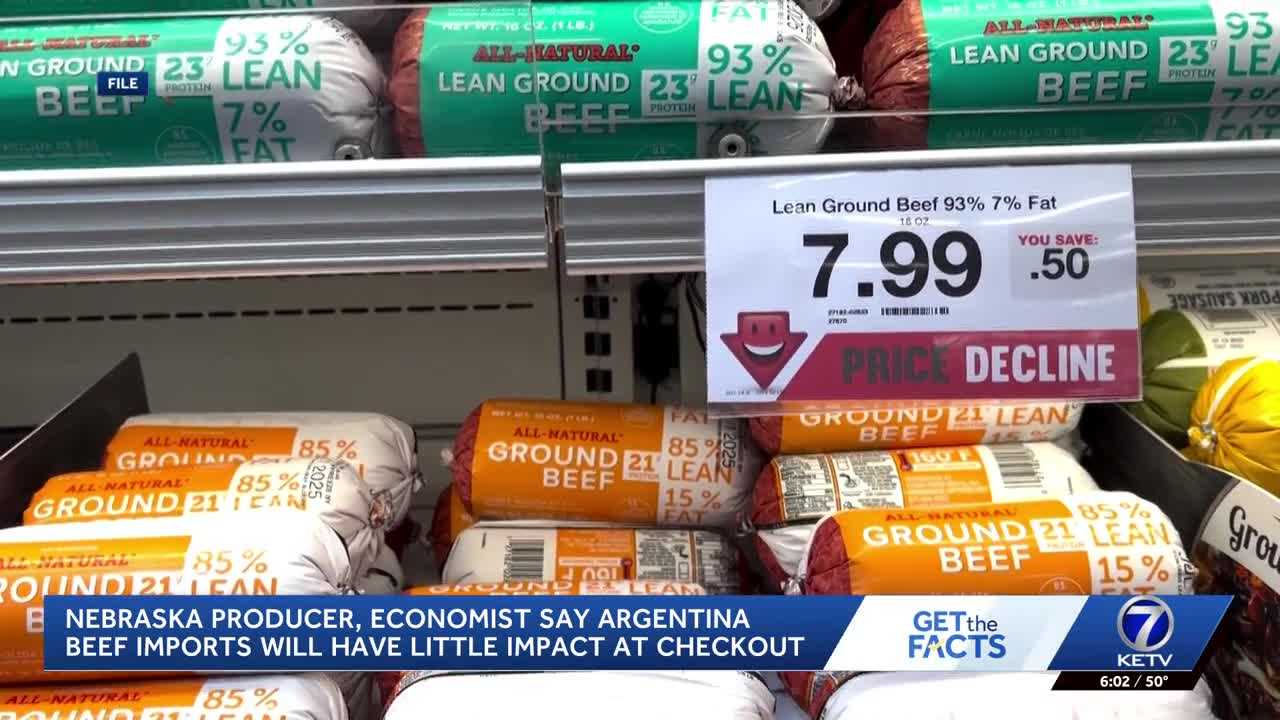
After floating the idea in October, President Donald Trump announced an executive order and trade deal with Argentina last week. He said the goal is to curb rising beef prices. The average price for a pound of ground chuck in December was $6.52, nearly a dollar more than the previous year, according to the Bureau of Labor Statistics.
Advertisement
For a year, the U.S. is set to take 80,000 metric tons of beef from Argentina, 20,000 each quarter.
Uden understands the decision to increase imports from Argentina from 20,000 metric tons to as much as 80,000 for a year.
Elliott Dennis, an associate professor at the University of Nebraska-Lincoln, said that only about 1% of the beef Americans consume will come from Argentina, so there will be little to no impact on prices.
“What it’s doing is it potentially provides a disincentive for producers to continue to grow the herd,” Dennis said. Despite strong demand for beef, the cattle population is near a record low.
Craig Uden, the board president of Nebraska Cattlemen, does not expect the increased imports to have much impact on prices. “We’re still short of product throughout the system,” he said.
Dennis said that as the cow herd increases in numbers, the market will stabilize, leading to more self-sufficiency, but that will take time.
“We don’t necessarily like that we have to import,” he said. “It’s somewhat of a necessity right at the moment. We wish it had been handled a little different.”
All five members of Nebraska’s congressional delegation opposed the idea of importing more beef from Argentina when Trump suggested it in October. Most have issued similar statements since last week’s update.
Sen. Deb Fischer: “Nebraska produces the world’s best beef. Instead of imports that sideline American ranchers, we should be focused on solutions that cut red tape, lower production costs, and support growing our cattle herd.”
Congressman Adrian Smith: “No matter the conditions, ranchers in Nebraska’s Third District lead the nation in producing high-quality, affordable beef. Now more than ever, we must deliver policies which drive confidence in the market, eliminate burdensome regulations, and lower production costs. While the United States holds historic low-inventory in cattle herds, we must focus on policies that strengthen the market and create long-term certainty for the entire supply chain.”
KETV requested statements from members of the congressional delegation that didn’t appear to have already released statements. Rep. Mike Flood and Don Bacon gave statements at KETV’s request. Sen. Pete Ricketts’ office has not responded as of Wednesday evening.
Flood told KETV: “While I am pleased that President Trump has secured market access for American beef to Argentina, I am concerned about the impact of bringing more Argentine beef into our country and am glad the agreement ends after one year. The solution to high beef prices in America is to support America’s cattle producers as they expand their herds, so they can raise more American beef, which is the best and the safest in the world.”
Bacon told KETV: “As the only bright spot in the farm economy, the federal government should enact policies that will allow Nebraska’s ranchers to see continued success. Instead of importing foreign beef, the administration should look towards growing the national herd size, which will lead to lower prices for consumers.”
Make sure you can always see the latest news, weather, sports and more from KETV NewsWatch 7 on Google Search.
NAVIGATE: Home | Weather | Local News | National | Sports | Newscasts on demand |