

Read the full article on KETV 7

Nearly two dozen families from across the state filled a conference room at the Nebraska Department of Health and Human Services office on Wednesday. The Governor’s Developmental Disabilities Advisory Committee held the meeting. Many were there to testify about inaccuracies with the new developmental disabilities interRAI assessment tool. “They put down that I’m nonverbal, which, as you can see, I’m clearly not,” 19-year-old Dylan Sorenson testified.”Most people can spend less than two minutes with my son and come to the conclusion that he has significant intellectual deficits, yet the person completing the assessment documented no intellectual delays,” Mark Rolfsmeyer said. Since implementing the tool in July, the state said 237 appeals have been filed with a 0% success rate. “They need to look at the fact that it’s not just 237 people who have appealed,” Rolfsmeyer said. “It’s 237 people that are on the higher end of needs. And their lives are going to be completely up, turned upside down.”Some people raised concerns with the assessors themselves. Guardian of a 22-year-old, Brooke Fine said the assessor only spent one minute observing him before leaving, among other issues. “He admitted to not asking us every question on the assessment, as he stated he already knew the answer and didn’t need to ask the questions,” Fine testified. It’s issues like those that DHHS said they’re addressing. “We take all of those complaints serious, and I can say that some of those have resulted in us dealing with those through personnel,” said Tony Green, the director of developmental disabilities at DHHS. DHHS said 17% of families have seen a decrease in funding since their loved one’s assessment. Rolfsmeyer’s family is one of them. He shared with KETV, his 21-year-old son, Brian, is on the autism spectrum, struggles with behavior issues and seizures, and because of his complex needs, Rolfsmeyer said he needs 100% care. “The biggest issue with Brian is elopement,” Rolfsmeyer said. However, with a decrease in funding, Rolfsmeyer said the day service his son attends may no longer be possible. “We drive from Seward to Crete to take him to this great center where he’s made friends for the first time in his life, and now we’re at risk of having to pull that away because the state is saying, no, we don’t fund you,” Rolfsmeyer said. “It would take Brian from having a one-on-one care at his day service provider to putting him in a group of five or more and, and the, the service provider. They’re not going to risk that. They’ll say we can’t watch it and I don’t blame them. I would be in the same position.”DHHS said they take the assessments providing accurate results seriously. “We have been retraining. This is a new tool that rolled out just in July of 2025,” Green said. “As with anything, there are bumps along the way sometimes. And we have done some retraining on both the tool, the interview process, and the data collection gathering. We continue to focus on ensuring that our assessments are accurate. I think we continue to focus on educating people about the entirety of the system.”DHHS reports 82% of families have experienced no changes or have received an increase in funding after their assessments. The organization also said it cannot just pause or stop the use of the interRAI tool statewide because it is mandated. Make sure you can always see the latest news, weather, sports and more from KETV NewsWatch 7 on Google search.NAVIGATE: Home | Weather | Local News | National | Sports | Newscasts on demand |
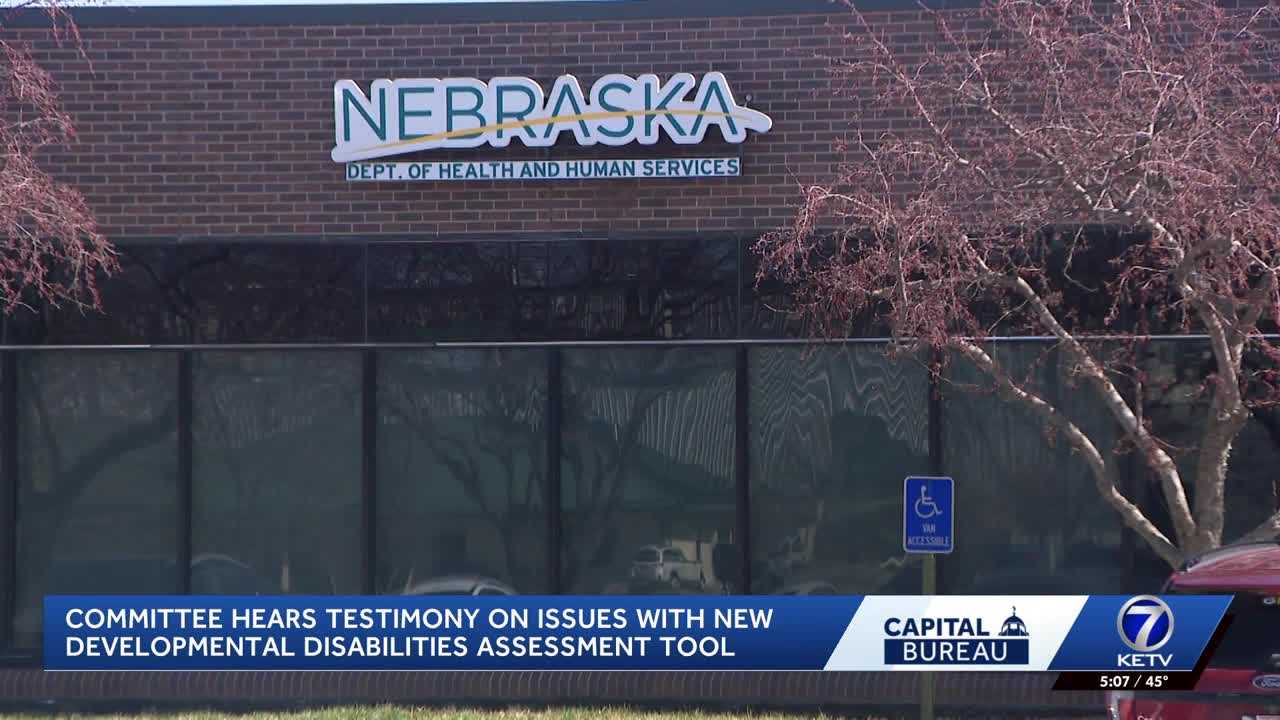
Nearly two dozen families from across the state filled a conference room at the Nebraska Department of Health and Human Services office on Wednesday.
The Governor’s Developmental Disabilities Advisory Committee held the meeting. Many were there to testify about inaccuracies with the new developmental disabilities interRAI assessment tool.
Advertisement
“They put down that I’m nonverbal, which, as you can see, I’m clearly not,” 19-year-old Dylan Sorenson testified.
“Most people can spend less than two minutes with my son and come to the conclusion that he has significant intellectual deficits, yet the person completing the assessment documented no intellectual delays,” Mark Rolfsmeyer said.
Since implementing the tool in July, the state said 237 appeals have been filed with a 0% success rate.
“They need to look at the fact that it’s not just 237 people who have appealed,” Rolfsmeyer said. “It’s 237 people that are on the higher end of needs. And their lives are going to be completely up, turned upside down.”
Some people raised concerns with the assessors themselves. Guardian of a 22-year-old, Brooke Fine said the assessor only spent one minute observing him before leaving, among other issues.
“He admitted to not asking us every question on the assessment, as he stated he already knew the answer and didn’t need to ask the questions,” Fine testified.
It’s issues like those that DHHS said they’re addressing.
“We take all of those complaints serious, and I can say that some of those have resulted in us dealing with those through personnel,” said Tony Green, the director of developmental disabilities at DHHS.
DHHS said 17% of families have seen a decrease in funding since their loved one’s assessment.
Rolfsmeyer’s family is one of them. He shared with KETV, his 21-year-old son, Brian, is on the autism spectrum, struggles with behavior issues and seizures, and because of his complex needs, Rolfsmeyer said he needs 100% care.
“The biggest issue with Brian is elopement,” Rolfsmeyer said.
However, with a decrease in funding, Rolfsmeyer said the day service his son attends may no longer be possible.
“We drive from Seward to Crete to take him to this great center where he’s made friends for the first time in his life, and now we’re at risk of having to pull that away because the state is saying, no, we don’t fund you,” Rolfsmeyer said. “It would take Brian from having a one-on-one care at his day service provider to putting him in a group of five or more and, and the, the service provider. They’re not going to risk that. They’ll say we can’t watch it and I don’t blame them. I would be in the same position.”
DHHS said they take the assessments providing accurate results seriously.
“We have been retraining. This is a new tool that rolled out just in July of 2025,” Green said. “As with anything, there are bumps along the way sometimes. And we have done some retraining on both the tool, the interview process, and the data collection gathering. We continue to focus on ensuring that our assessments are accurate. I think we continue to focus on educating people about the entirety of the system.”
DHHS reports 82% of families have experienced no changes or have received an increase in funding after their assessments. The organization also said it cannot just pause or stop the use of the interRAI tool statewide because it is mandated.
Make sure you can always see the latest news, weather, sports and more from KETV NewsWatch 7 on Google search.
NAVIGATE: Home | Weather | Local News | National | Sports | Newscasts on demand |