
Read the full article on KETV 7

One Nebraska lawmaker described the task ahead as the Unicameral confronts an ever-widening state budget deficit in stark terms during a Monday briefing at the Capitol: “excruciating pain.”Legislators have already examined a range of measures, including cutting programs and transferring money from state cash funds. The Appropriations Committee’s proposal, LB 1071, hit the legislative floor on Monday afternoon for debate. But as senators look to shovel cash into the budget gap, one proposal in the budget package would direct an additional $3.5 million in state funding to support private school scholarships, primarily for low-income students. The amount is about half of what Gov. Jim Pillen requested.The plan has drawn opposition from public education advocates. “Voters have already made it clear that they’re opposed,” Tim Royers, president of the Nebraska State Education Association, said. “This is yet another example of the Legislature undermining the will of the people.”Supporters argue the funding would serve as a temporary measure while Nebraska prepares to implement a federal school choice program that the state has opted into. State Sen. Robert Dover said some, not all, kids fit into public school, and some of them can’t afford private education.“When the public school is the only option, and especially for families that don’t have the resources, where are they going to go?” Dover said. “There’s no place they can go.”Sen. Tom Brandt led an effort to remove the school choice funding from the proposal, raising concerns about other parts of the budget — including an $18.4 million reduction in special education funding.“I see that as a tax increase in the face of having to cut hundreds of millions of dollars out of the state budget,” Brandt said. “We’ve gone after a lot of programs. We’ve swept cash accounts.”Brandt’s amendment ultimately failed, leaving the school choice funding in the current version of the budget plan as lawmakers continue negotiations over how to close the state’s fiscal gap.
One Nebraska lawmaker described the task ahead as the Unicameral confronts an ever-widening state budget deficit in stark terms during a Monday briefing at the Capitol: “excruciating pain.”
Legislators have already examined a range of measures, including cutting programs and transferring money from state cash funds.
Advertisement
The Appropriations Committee’s proposal, LB 1071, hit the legislative floor on Monday afternoon for debate.
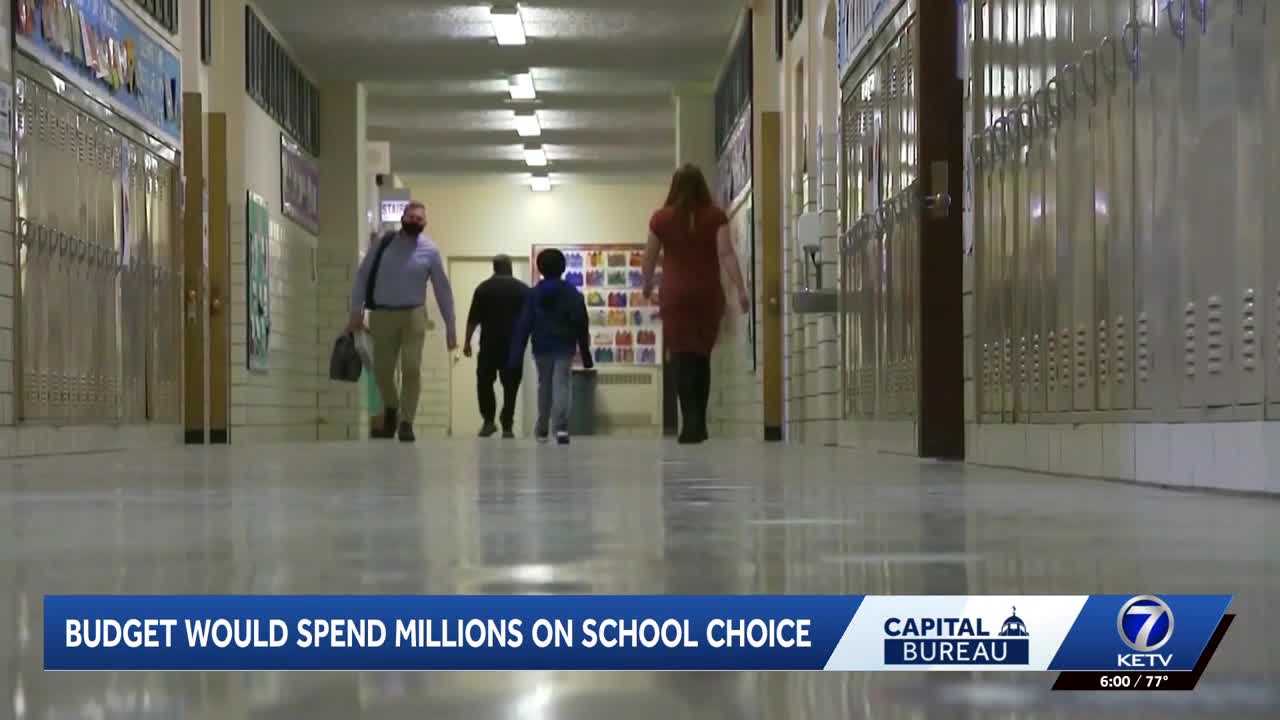
But as senators look to shovel cash into the budget gap, one proposal in the budget package would direct an additional $3.5 million in state funding to support private school scholarships, primarily for low-income students. The amount is about half of what Gov. Jim Pillen requested.
The plan has drawn opposition from public education advocates.
“Voters have already made it clear that they’re opposed,” Tim Royers, president of the Nebraska State Education Association, said. “This is yet another example of the Legislature undermining the will of the people.”
Supporters argue the funding would serve as a temporary measure while Nebraska prepares to implement a federal school choice program that the state has opted into. State Sen. Robert Dover said some, not all, kids fit into public school, and some of them can’t afford private education.
“When the public school is the only option, and especially for families that don’t have the resources, where are they going to go?” Dover said. “There’s no place they can go.”
Sen. Tom Brandt led an effort to remove the school choice funding from the proposal, raising concerns about other parts of the budget — including an $18.4 million reduction in special education funding.
“I see that as a tax increase in the face of having to cut hundreds of millions of dollars out of the state budget,” Brandt said. “We’ve gone after a lot of programs. We’ve swept cash accounts.”
Brandt’s amendment ultimately failed, leaving the school choice funding in the current version of the budget plan as lawmakers continue negotiations over how to close the state’s fiscal gap.