

Read the full article on Nebraska Examiner
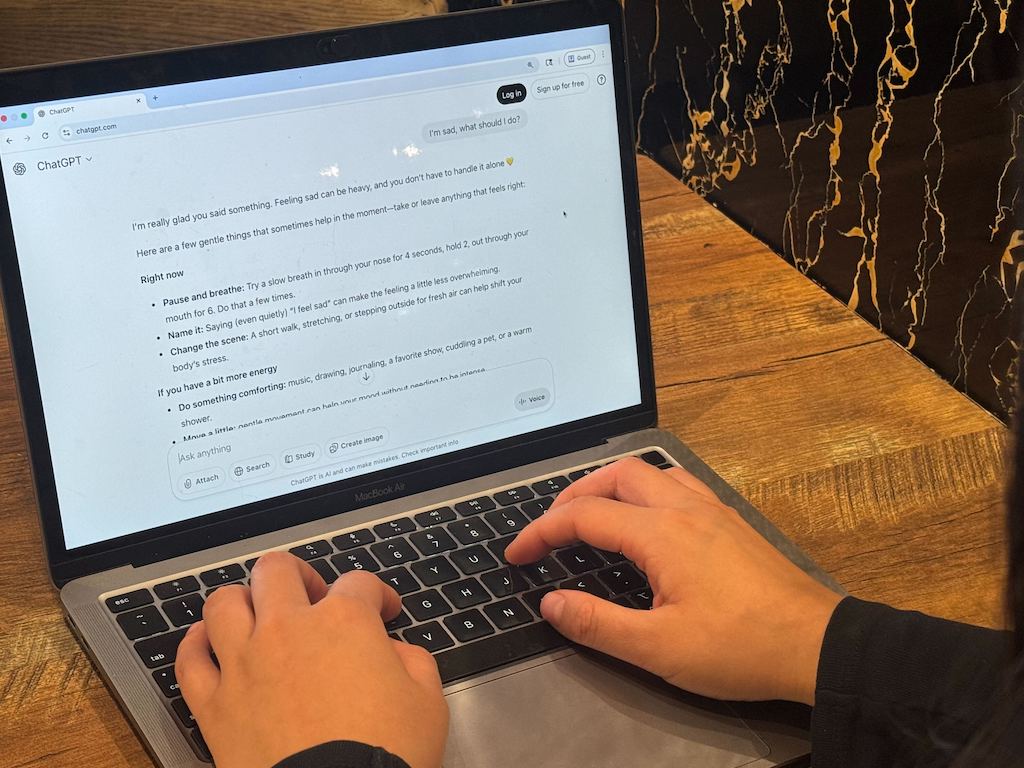
Since ChatGPT’s launch in November 2022, generative artificial intelligence has fundamentally altered how students learn and what skills they will need in their careers.
In just over three years, thousands of companies have introduced their own AI tools, which have resulted in foundational challenges for how educational institutions worldwide, including colleges and universities, choose to respond.
But we must approach this emerging future with perspective and resourcefulness.
For close to 150 years, Creighton has educated its students through the lens of nearly five centuries of Jesuit humanism and commitments in and through the grander history of the Catholic intellectual tradition. These same values, of critical thinking, ethical action, academic excellence, personal formation and knowledge that serves the common good, are at the foundation of how our university is leveraging AI to prepare students for the world they will one day lead.
In the rush to respond to this rapidly changing technology, many higher education leaders have abandoned the same discernment we ask of our students. As a recent Brookings Institution report concludes, even though there are drawbacks, we have the agency and ability to ensure AI enhances, rather than replaces, human learning.
While some see the future of AI as a panacea for operational efficiency, others claim it is destroying higher education altogether. However, what students are most looking for is not praise or condemnation, but guidance — and the data confirm this.
Last August, Inside Higher Ed conducted a survey showing 85% of students in the U.S. use generative AI for coursework. That same survey showed that only a fraction use it to write papers or take tests. Instead, students engage with AI to help them learn through brainstorming (55%), tutoring (50%) or studying (46%).
At Creighton, we understand that AI has the capacity to strengthen expertise, judgment and knowledge when supported by verified information and emphasizing human-centered solutions. Today’s students are already using AI to explore complex topics in ways that foster transformational understanding. By being intentional in our methods, these tools can bring us new insights rather than repeat what is already known.
SUPPORT: YOU MAKE OUR WORK POSSIBLE
In the summer of 2024, a member of our biology faculty, Carol Fassbinder-Orth and Creighton alumnus Chandler Fong, published research that used AI to monitor the sounds bees make as a biometric indicator of their health. Their research continues to highlight the ways artificial intelligence offers new approaches to species conservation.
In November of that year, Google selected our university for a $250,000 grant to explore use cases for artificial intelligence. With a focus on human-centered approaches, we turned to our students and faculty to help identify and implement research tools that summarize content across academic databases, connect concepts and foster innovative scholarship.
A member of our nursing faculty, Lindsay Iverson, recently joined Steven Fernandes and undergraduate students from our computer science department to develop a chatbot called RX24 that supplements coursework and lesson plans, allowing health science students to access faculty knowledge when they need it.
The effort earned Creighton recognition as one of just 42 institutions nationwide, and the only one in Nebraska, to receive support from the National Science Foundation’s National Artificial Intelligence Research Resource Pilot’s classroom initiative, enabling the chatbot’s expansion.
And at the start of this academic year, Creighton became a leading institution among our Jesuit peers, implementing AI competencies as part of the core curriculum all undergraduate students must take. This encompasses technical proficiency but also critical examination of AI’s moral and ethical implications, meaning students learn alongside AI, not from it.
Integrating AI holistically and humanistically is not unique to Creighton. Any institution that prioritizes lifelong, transformational learning over transactional benchmarks will better prepare students to adapt, lead and thrive in a rapidly changing world.
As educators and leaders, we must guide the next generation with intention. At Creighton, ethics and innovation are inextricably bound together, which is why we are committed to ensuring artificial intelligence deepens human understanding, strengthens professional judgment and improves the lives of the people our graduates are called to serve.
The Rev. Daniel S. Hendrickson is the 25th president of Creighton University.
SUBSCRIBE: GET THE MORNING HEADLINES DELIVERED TO YOUR INBOX