
Read the full article on Nebraska Examiner
LINCOLN — A handful of Nebraskans Wednesday voiced support for, and none opposed, a measure that would diminish Gov. Jim Pillen’s power to stall a state tax incentive aimed at boosting development of sports complexes and arenas.

Legislative Bill 1116, introduced by State Sen. Teresa Ibach of Sumner, calls for reforms to the Sports Arena Facility Financing Assistance Act. A public hearing was held before the Legislature’s Revenue Committee.
Among key changes in the bill:
- The governor no longer must be among the majority of the SAFFAA board that moves a project forward to other necessary hurdles. Rather, all board actions shall be by a majority vote of members present at a meeting. There are five members of the board.
- The board must make a determination on an applicant’s project within 30 days of a public hearing. If no determination is made within that time, the project would be approved. The bill is retroactive to projects that have had public hearings but received no response.
Such changes are pivotal to backers of the sports arena financing act whose applications have stalled, despite having been reviewed by the SAFFAA board and discussed during public hearings months ago.
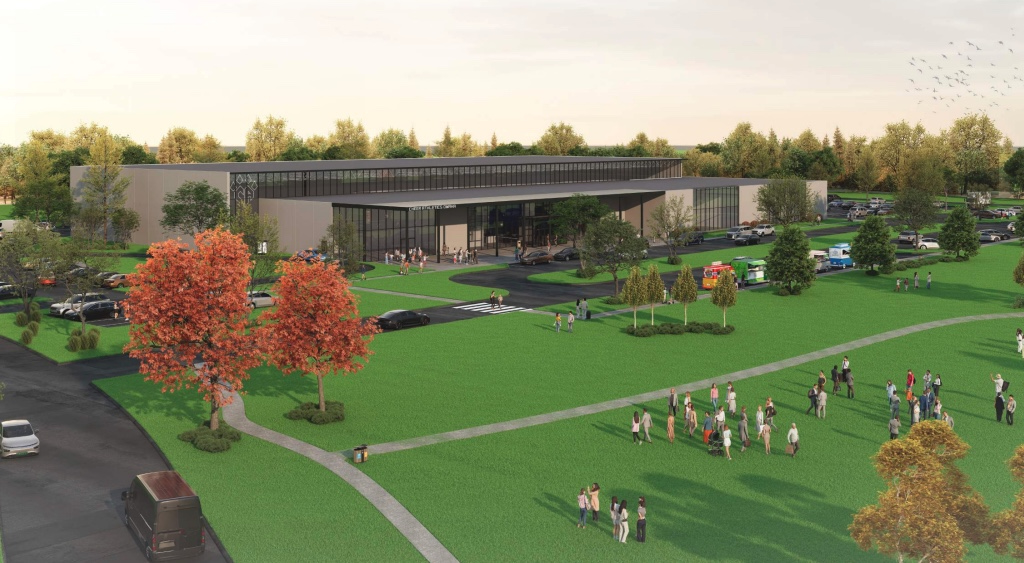
As reported previously by the Nebraska Examiner, nine groups that requested the incentive at various times last year are in limbo, drawing frustration from organizers of proposals ranging from a $63 million volleyball-focused complex in Douglas County to a $9.38 million multipurpose sports facility in Valentine. The revenue from the incentive is a key part of the groups’ funding stacks.
Nebraska sports facility projects seek state incentive but hit Pillen wall
As it stands today, the SAFFAA board does not have a set meeting schedule, and Pillen last year missed a few board meetings, inhibiting incentive applications from advancing.
Pillen told the Examiner last November that the state has been “duped” for too long in approving sales tax exemptions he believes only shift the burdens to property taxpayers. He said he will not consider approval of any SAFFAA application until June at the earliest — after lawmakers this session have a chance to pass property tax relief.
Ibach said Wednesday that she had “great respect” for Pillen, and that her bill focuses on tightening structure and ensuring decisions are made in a timely manner consistent with legislative intent.
She said some projects have waited more than a year for a board response, which she said discourages investment, increases costs and undermines local planning efforts.
“The measure adjusts the current decision-making framework,” Ibach said, regardless of who is in the governor’s seat. “By guaranteeing a clear vision within 30 days, LB 1116 ensures Nebraska communities are not left in limbo and can move forward with confidence.”

Here’s how the financing incentive generally works currently:
For bigger cities like Omaha and Lincoln, up to 70% of new state sales taxes generated within 600 yards of the sports facility goes to help pay off bonds for construction. The “new” tax revenue generated refers to sales on tickets or at retailers that sprout in the designated area for a certain time after the project is announced. In some cases, city voters must give approval.
For smaller cities, the state assistance, or turnback, can be 25% of all state sales taxes in the town for five years. Another proposed change in LB 1116 would, for certain projects in smaller cities and villages, extend the eligibility period for the state assistance from five to 10 years, or until assistance reaches $100 million, whichever comes first.
Omaha still pushing for state incentive to help build sports facilities, despite Pillen headwinds
A fiscal analysis estimated that, based upon current applications, the projects could reduce general fund revenues from smaller second-class cities by an additional $13.5 million to $15 million over the additional five-year period.
Ibach said that her proposed updates make the economic development tool “more accessible, and more responsive, particularly for underserved areas without significant new spending.”
Tony Carrow, of Nebraska Elite Volleyball was among proponents who touted economic return that more and bigger youth sports complexes would have to the state. His group’s proposed volleyball facility is among the incentive applications in limbo.
Carrow said his organization just recently hosted about 600 youth volleyball teams for its signature tournament in the Omaha area. The event generates more than $10 million in economic impact a year, he said. About 100 teams were turned away for lack of courts, Carrow said, representing what he said is an economic loss of about $3 million.
He said the most important loss is missed opportunities for youths to play and compete at a higher level. “Right here in the state of Nebraska, the volleyball state,” said Carrow.
State Sen. Brad von Gillern, chair of the Revenue Committee, said two people submitted written support for LB 1116 and one was opposed. The committee took no immediate action on the bill.
Another bill and related amendment introduced by State Sen. Danielle Conrad of Lincoln proposed similar changes, and committee members suggested the two lawmakers discuss combining the bills.
SUBSCRIBE: GET THE MORNING HEADLINES DELIVERED TO YOUR INBOX