

Read the full article on KETV 7

The Trump administration wants to protect oil shipments from Iranian missiles amid new threats to commerce in the region.The spike in oil prices is affecting financial markets globally, with concerns that the ongoing conflict could disrupt the worldwide flow of oil and natural gas for an extended period. An Iranian official said Tuesday the country would not allow “even a single liter” of oil to be shipped to its enemies.There is fear Iran may start placing mines in the Strait of Hormuz, a crucial waterway off its coast where approximately one-fifth of the world’s oil is transported. Although President Donald Trump stated there are no reports of such mining occurring yet, the U.S. military reported it destroyed over a dozen Iranian vessels on Tuesday that were capable of laying mines in the path of traveling ships. The president escalated threats, stating that if Iran places mines and they are not removed, “the military consequences to Iran will be at a level never seen before.””I think this is the nightmare scenario that we’ve been concerned about for three decades that the Strait of Hormuz would get shut down as a consequence of a major issue within the Straits. That’s 18 million barrels of oil every single day that are not coming to market. There’s another six million barrels that are actually being shut in right now,” American Petroleum Institute CEO, Mike Sommers said. To try and get the Strait back open, the Trump administration is providing ship reinsurance and offering for the U.S. Navy to escort oil tankers through the Strait if necessary. However, as of Tuesday, those escorts haven’t happened yet.If the war drags on, CEO of Maersk Vincent Clerc said there will be major global disruptions.”We are clearly in uncharted territory,” Clerc said. “I think the big problem that we have to solve now is with the Strait being closed. There is enough oil in the world, but there is not enough oil everywhere in the world.”Analysts caution that oil prices could rise significantly if the Strait of Hormuz remains largely closed, potentially leading to further increases in U.S. gas prices. According to AAA, the current national average for a gallon of gas is $3.58 as of Wednesday. That amount was $2.98 on Feb. 28, when the U.S. started bombing Iran. The White House maintains the price increase is temporary.”The recent increase in oil and gas prices is temporary and this operation will result in lower gas prices in the long term,” White House Press Secretary Karoline Leavitt said. “Once the national security objectives of Operation Epic Fury are fully achieved, Americans will see oil and gas prices drop rapidly, potentially even lower than they were prior to the start of the operation.”On Wednesday, the G7 leaders, representing the world’s seven largest economies, are set to meet to discuss the energy situation in the Middle East and explore strategies to mitigate the economic impact of the conflict.Keep watching for the latest from the Washington News Bureau:
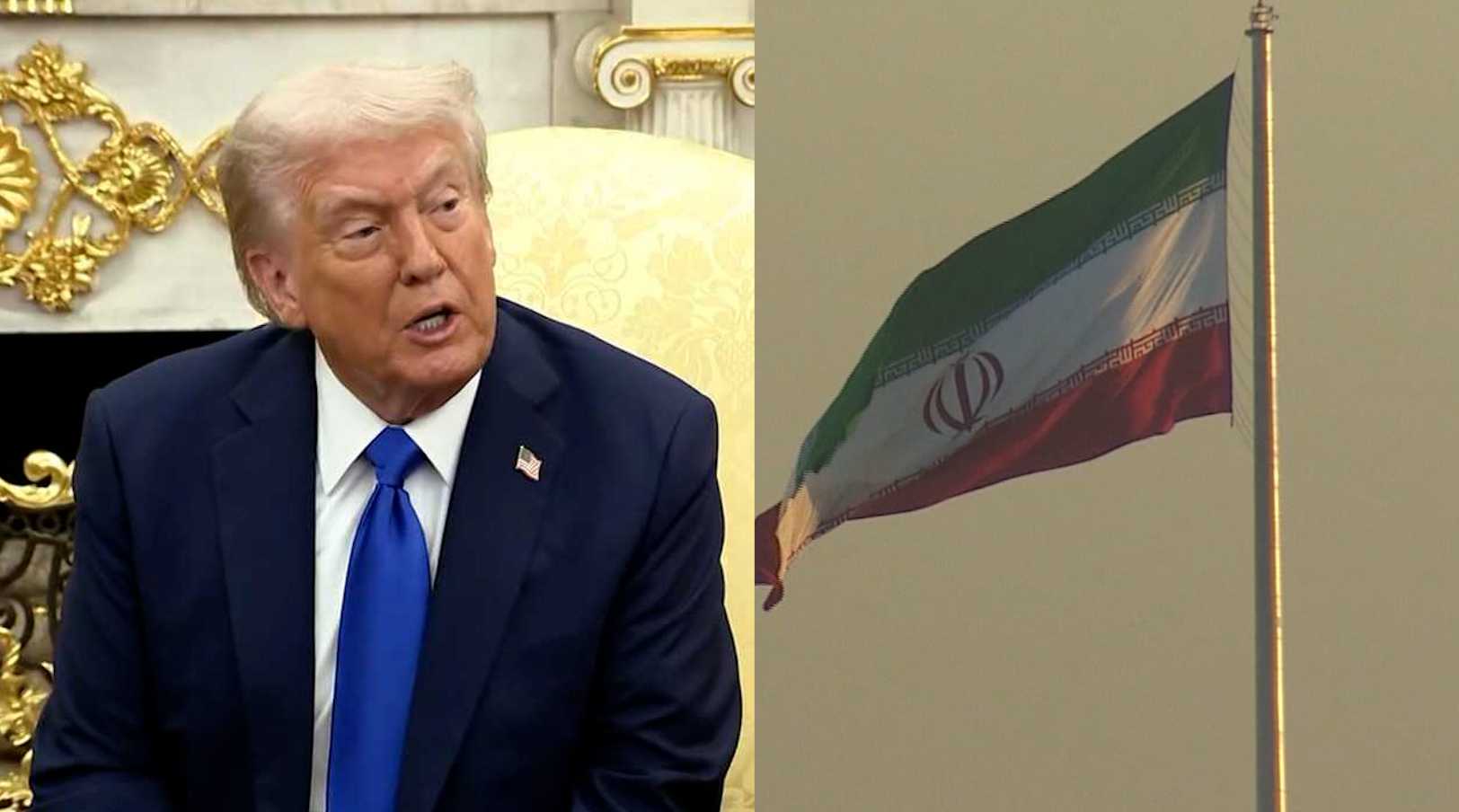
The Trump administration wants to protect oil shipments from Iranian missiles amid new threats to commerce in the region.
The spike in oil prices is affecting financial markets globally, with concerns that the ongoing conflict could disrupt the worldwide flow of oil and natural gas for an extended period.
Advertisement
An Iranian official said Tuesday the country would not allow “even a single liter” of oil to be shipped to its enemies.
There is fear Iran may start placing mines in the Strait of Hormuz, a crucial waterway off its coast where approximately one-fifth of the world’s oil is transported.
Although President Donald Trump stated there are no reports of such mining occurring yet, the U.S. military reported it destroyed over a dozen Iranian vessels on Tuesday that were capable of laying mines in the path of traveling ships.
The president escalated threats, stating that if Iran places mines and they are not removed, “the military consequences to Iran will be at a level never seen before.”
“I think this is the nightmare scenario that we’ve been concerned about for three decades that the Strait of Hormuz would get shut down as a consequence of a major issue within the Straits. That’s 18 million barrels of oil every single day that are not coming to market. There’s another six million barrels that are actually being shut in right now,” American Petroleum Institute CEO, Mike Sommers said.
To try and get the Strait back open, the Trump administration is providing ship reinsurance and offering for the U.S. Navy to escort oil tankers through the Strait if necessary. However, as of Tuesday, those escorts haven’t happened yet.
If the war drags on, CEO of Maersk Vincent Clerc said there will be major global disruptions.
“We are clearly in uncharted territory,” Clerc said. “I think the big problem that we have to solve now is with the Strait being closed. There is enough oil in the world, but there is not enough oil everywhere in the world.”
Analysts caution that oil prices could rise significantly if the Strait of Hormuz remains largely closed, potentially leading to further increases in U.S. gas prices.
According to AAA, the current national average for a gallon of gas is $3.58 as of Wednesday. That amount was $2.98 on Feb. 28, when the U.S. started bombing Iran.
The White House maintains the price increase is temporary.
“The recent increase in oil and gas prices is temporary and this operation will result in lower gas prices in the long term,” White House Press Secretary Karoline Leavitt said. “Once the national security objectives of Operation Epic Fury are fully achieved, Americans will see oil and gas prices drop rapidly, potentially even lower than they were prior to the start of the operation.”
On Wednesday, the G7 leaders, representing the world’s seven largest economies, are set to meet to discuss the energy situation in the Middle East and explore strategies to mitigate the economic impact of the conflict.
Keep watching for the latest from the Washington News Bureau: