
Read the full article on KETV 7

The Supreme Court struck down one of President Donald Trump’s most frequently used trade tools on Friday, and his backup plan could face roadblocks on Capitol Hill.Trump wasted no time announcing a 10% global tariff after the high court found that the president illegally used an emergency powers law to impose sweeping import taxes without approval from Congress. The 6-3 ruling struck down his so-called reciprocal tariffs, announced on virtually all U.S. trading partners last year, plus levies on China, Mexico, and Canada that relied on the International Emergency Economic Powers Act, or IEEPA. Tariffs imposed through other legal authorities remain in place, including sector-specific tariffs on steel, aluminum, copper, cars and kitchen cabinets. Trump condemned the ruling but vowed to use other strategies to keep his trade agenda intact. “It’s a little more complicated. The process takes a little more time, but the result is going to get us more money, and I think it’s going to be great,” Trump said. Trump quickly signed an executive action to impose a 10% tax on imports from around the world, “over and above our normal TARIFFS already being charged.” The levies will rely on a law called Section 122, which limits the duration of tariffs to 150 days unless lawmakers pass an extension. House Speaker Mike Johnson said Friday that Congress and the Trump administration will determine the best path forward in the coming weeks.”No one can deny that the President’s use of tariffs has brought in billions of dollars and created immense leverage for America’s trade strategy and for securing strong, reciprocal America-first trade agreements with countries that had been taking advantage of American workers for decades,” Johnson said. A tariff vote could be politically tricky for Republicans ahead of the midterm elections this fall, largely focused on affordability. In an AP-NORC poll conducted after the president announced worldwide tariffs last April, 76% of Americans said the policies would increase the cost of consumer goods. Those tensions were laid bare earlier this month when six House Republicans joined Democrats to vote for a resolution against Trump’s tariffs on Canada.”The conservative position here is that tariffs are bad economics, bad politics, and we should defend that,” Rep. Don Bacon, a Republican from Nebraska, told CNN after the ruling. “Many Republicans opposed tariffs. They don’t wanna go against the president’s signature economic plan, though they themselves don’t think it’s wise.”Some other Republicans joined Democrats in celebrating the Supreme Court’s ruling on Friday. Senator Mitch McConnell, who previously led the Republican caucus, said in a statement, “Congress’ role in trade policy, as I have warned repeatedly, is not an inconvenience to avoid. If the executive would like to enact trade policies that impact American producers and consumers, its path forward is crystal clear: convince their representatives under Article 1.”Asked on Friday if he plans to ask Congress to take additional action on tariffs, Trump said, “I don’t need to. It’s already been approved. I mean, I would ask Congress and probably get it.” Alongside the 10% global tariff announced on Friday, Trump said that his administration is also initiating several national security investigations, which could pave the way for additional tariffs. Meanwhile, some lawmakers and business groups are calling on the Trump administration to refund businesses for previously paid tariffs. Two Democrats, Congressman Steven Horsford of Nevada and Congresswoman Janelle Bynum of Oregon, introduced legislation that would require automatic refunds to small and independent businesses within 90 days of enactment. If passed, it would apply to covered tariffs collected since January 1, 2025. The Supreme Court’s ruling didn’t address whether and how the government should go about returning the billions it collected from importers. In his dissent, Justice Brett Kavanaugh said the process “is likely to be a ‘mess.'” Indeed, many companies have already lined up in court to demand refunds. Trump predicted it would take years of litigation to resolve the issue.
The Supreme Court struck down one of President Donald Trump’s most frequently used trade tools on Friday, and his backup plan could face roadblocks on Capitol Hill.
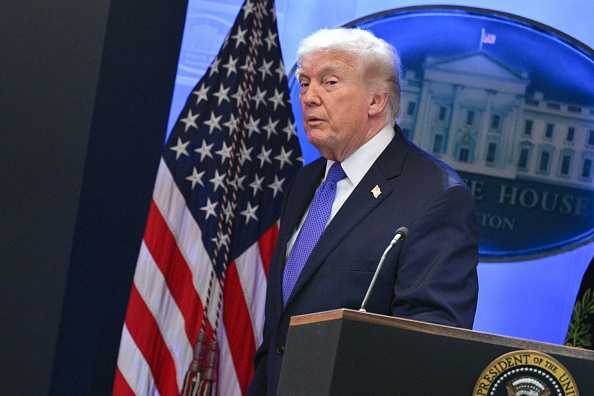
Trump wasted no time announcing a 10% global tariff after the high court found that the president illegally used an emergency powers law to impose sweeping import taxes without approval from Congress.
Advertisement
The 6-3 ruling struck down his so-called reciprocal tariffs, announced on virtually all U.S. trading partners last year, plus levies on China, Mexico, and Canada that relied on the International Emergency Economic Powers Act, or IEEPA. Tariffs imposed through other legal authorities remain in place, including sector-specific tariffs on steel, aluminum, copper, cars and kitchen cabinets.
Trump condemned the ruling but vowed to use other strategies to keep his trade agenda intact.
“It’s a little more complicated. The process takes a little more time, but the result is going to get us more money, and I think it’s going to be great,” Trump said.
Trump quickly signed an executive action to impose a 10% tax on imports from around the world, “over and above our normal TARIFFS already being charged.” The levies will rely on a law called Section 122, which limits the duration of tariffs to 150 days unless lawmakers pass an extension.
House Speaker Mike Johnson said Friday that Congress and the Trump administration will determine the best path forward in the coming weeks.
“No one can deny that the President’s use of tariffs has brought in billions of dollars and created immense leverage for America’s trade strategy and for securing strong, reciprocal America-first trade agreements with countries that had been taking advantage of American workers for decades,” Johnson said.
A tariff vote could be politically tricky for Republicans ahead of the midterm elections this fall, largely focused on affordability. In an AP-NORC poll conducted after the president announced worldwide tariffs last April, 76% of Americans said the policies would increase the cost of consumer goods.
Those tensions were laid bare earlier this month when six House Republicans joined Democrats to vote for a resolution against Trump’s tariffs on Canada.
“The conservative position here is that tariffs are bad economics, bad politics, and we should defend that,” Rep. Don Bacon, a Republican from Nebraska, told CNN after the ruling. “Many Republicans opposed tariffs. They don’t wanna go against the president’s signature economic plan, though they themselves don’t think it’s wise.”
Some other Republicans joined Democrats in celebrating the Supreme Court’s ruling on Friday.
Senator Mitch McConnell, who previously led the Republican caucus, said in a statement, “Congress’ role in trade policy, as I have warned repeatedly, is not an inconvenience to avoid. If the executive would like to enact trade policies that impact American producers and consumers, its path forward is crystal clear: convince their representatives under Article 1.”
Asked on Friday if he plans to ask Congress to take additional action on tariffs, Trump said, “I don’t need to. It’s already been approved. I mean, I would ask Congress and probably get it.”
Alongside the 10% global tariff announced on Friday, Trump said that his administration is also initiating several national security investigations, which could pave the way for additional tariffs.
Meanwhile, some lawmakers and business groups are calling on the Trump administration to refund businesses for previously paid tariffs.
Two Democrats, Congressman Steven Horsford of Nevada and Congresswoman Janelle Bynum of Oregon, introduced legislation that would require automatic refunds to small and independent businesses within 90 days of enactment. If passed, it would apply to covered tariffs collected since January 1, 2025.
The Supreme Court’s ruling didn’t address whether and how the government should go about returning the billions it collected from importers. In his dissent, Justice Brett Kavanaugh said the process “is likely to be a ‘mess.'”
Indeed, many companies have already lined up in court to demand refunds. Trump predicted it would take years of litigation to resolve the issue.