
Read the full article on KETV 7

After four years of full-scale war, fighting in eastern Ukraine remains brutal and grinding, with Russian forces slowly pressing along parts of the front line as drone warfare reshapes the battlefield.The conflict, which began with Russia’s invasion in February 2022, has evolved into what soldiers describe as a relentless contest of technology, endurance and survival. Unmanned aerial vehicles now dominate the skies over cities, towns and trenches, tracking troop movements and delivering explosives with precision.“This is different than any war that I’ve been a part of,” said Tom Brewer, a former Nebraska state senator and retired Army colonel who has traveled to Ukraine eight times since 2022 to observe the fighting.“It’s a violent war,” Brewer said. “It’s become a war of drones.”On a frigid December night, a frontline drone unit prepared for reconnaissance near the eastern front. The pilot, who goes by the call sign “Grim,” described the psychological strain of constant aerial surveillance and attack.“Sometimes, it’s scary. Sometimes, it’s not. But we are just living and trying our best,” Grim said.Drone teams serve as the eyes and ears of the Ukrainian army, scanning for Russian troop movements and guiding artillery. Winter conditions complicate their missions. Moisture can condense and freeze on camera lenses mid-flight, grounding aircraft and stalling reconnaissance at critical moments.“It’s pretty active because we don’t have stable weather, and everybody wants to catch that moment,” Grim said, referring to the narrow windows when units rotate positions, repair vehicles or reposition artillery. “To change the infantry position, to go in there and repair the vehicles, to change artillery.”Those transitions are among the most dangerous moments for troops. Yevhen, a veteran drone pilot who now trains recruits and conceals his face for security, said Russian forces often target units during rotations.“It’s the most challenging for us to stay alive because it’s a lot of attacks during our rotations,” Yevhen said. “They know when we’re rotating.”One unit manning Vampire drones was struck while returning from the front, according to a pilot named Viktor. A drone hit their vehicle, he said, setting it on fire and wounding several soldiers.The pilots describe their work in stark terms. They drop explosives day and night, often at close range.“You just know if you don’t kill them, they kill someone else,” Grim said. “That’s all. Don’t think about their wives, their mothers. We have work to do.”Asked how many Russian soldiers he had killed, Yevhen answered without hesitation: “Fifty, plus or minus.”Even interviews can be interrupted by the hail of drones. During one conversation, a Russian drone buzzed overhead, sending soldiers scrambling for cover inside a warehouse.“You must be very careful,” Grim said. “What’s behind you? What’s above you? What is in front of you? And do whatever it takes to make you safe.”While technology has transformed the battlefield, other aspects of war remain unchanged: the physical and psychological toll.“All of us here is traumatized obviously,” said Father Vladimir, a military chaplain who ministers to troops near the front. “It’s not something you can escape.”Chaplaincy teams and therapists work with soldiers coping with loss, injury and exhaustion. They encourage troops to hold onto faith and purpose amid devastation.“You have to concentrate on the light that comes from within so it can help guide you through this darkest time,” Father Vladimir said.For many soldiers, the motivation to fight centers on family and country.“The future of my kids — that my kids will live in a better world than this,” said Valentyn Mikhailovich, a soldier serving in the east.The war has also reshaped the physical landscape. Nets strung above roads and positions to guard against drones now stretch across parts of eastern Ukraine, a visible reminder of how omnipresent the threat has become.Brewer warned that Americans should not ignore the lessons of the conflict.“I think we’ll feel a lot of American body bags because we failed to learn the lessons,” he said. “Any country who’s enjoying democracy should be somehow in the fight here, helping them, because once this island of democracy is taken, then everyone is in jeopardy.”
After four years of full-scale war, fighting in eastern Ukraine remains brutal and grinding, with Russian forces slowly pressing along parts of the front line as drone warfare reshapes the battlefield.
The conflict, which began with Russia’s invasion in February 2022, has evolved into what soldiers describe as a relentless contest of technology, endurance and survival. Unmanned aerial vehicles now dominate the skies over cities, towns and trenches, tracking troop movements and delivering explosives with precision.
Advertisement
“This is different than any war that I’ve been a part of,” said Tom Brewer, a former Nebraska state senator and retired Army colonel who has traveled to Ukraine eight times since 2022 to observe the fighting.
“It’s a violent war,” Brewer said. “It’s become a war of drones.”
On a frigid December night, a frontline drone unit prepared for reconnaissance near the eastern front. The pilot, who goes by the call sign “Grim,” described the psychological strain of constant aerial surveillance and attack.
“Sometimes, it’s scary. Sometimes, it’s not. But we are just living and trying our best,” Grim said.
Drone teams serve as the eyes and ears of the Ukrainian army, scanning for Russian troop movements and guiding artillery. Winter conditions complicate their missions. Moisture can condense and freeze on camera lenses mid-flight, grounding aircraft and stalling reconnaissance at critical moments.
“It’s pretty active because we don’t have stable weather, and everybody wants to catch that moment,” Grim said, referring to the narrow windows when units rotate positions, repair vehicles or reposition artillery. “To change the infantry position, to go in there and repair the vehicles, to change artillery.”
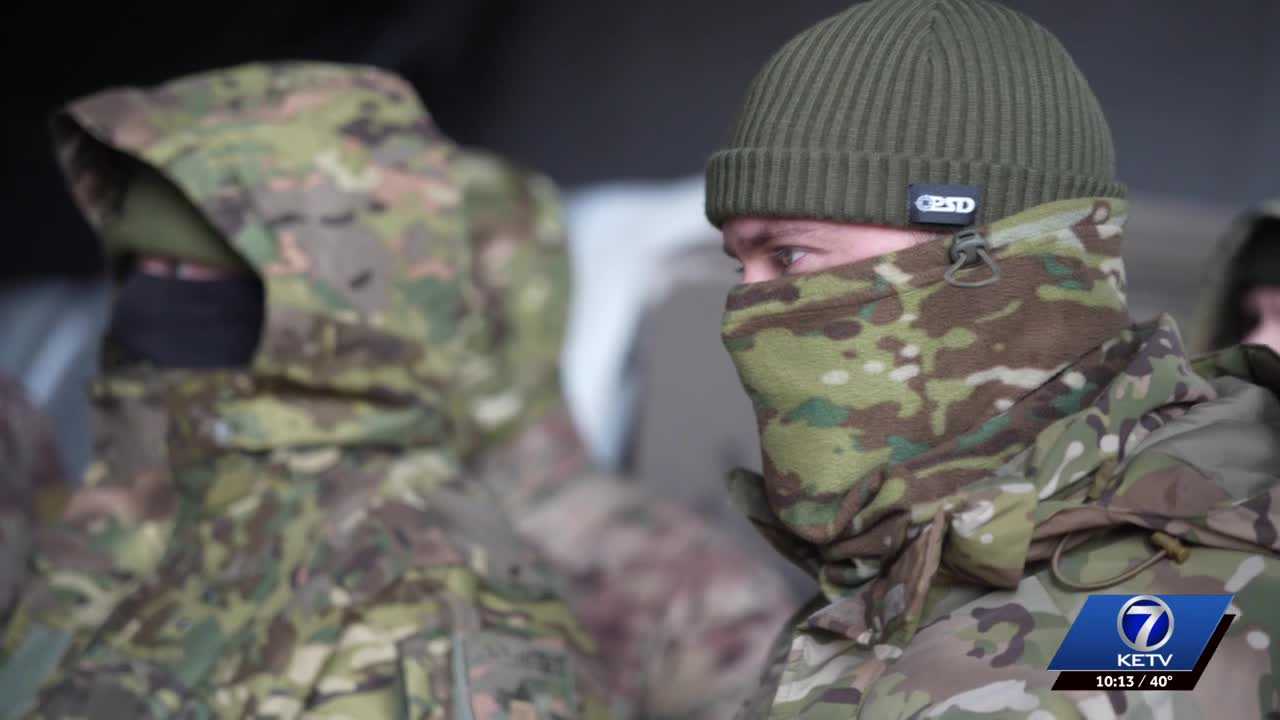
Those transitions are among the most dangerous moments for troops. Yevhen, a veteran drone pilot who now trains recruits and conceals his face for security, said Russian forces often target units during rotations.
“It’s the most challenging for us to stay alive because it’s a lot of attacks during our rotations,” Yevhen said. “They know when we’re rotating.”
One unit manning Vampire drones was struck while returning from the front, according to a pilot named Viktor. A drone hit their vehicle, he said, setting it on fire and wounding several soldiers.
The pilots describe their work in stark terms. They drop explosives day and night, often at close range.
“You just know if you don’t kill them, they kill someone else,” Grim said. “That’s all. Don’t think about their wives, their mothers. We have work to do.”
Asked how many Russian soldiers he had killed, Yevhen answered without hesitation: “Fifty, plus or minus.”
Even interviews can be interrupted by the hail of drones. During one conversation, a Russian drone buzzed overhead, sending soldiers scrambling for cover inside a warehouse.
“You must be very careful,” Grim said. “What’s behind you? What’s above you? What is in front of you? And do whatever it takes to make you safe.”
While technology has transformed the battlefield, other aspects of war remain unchanged: the physical and psychological toll.
“All of us here is traumatized obviously,” said Father Vladimir, a military chaplain who ministers to troops near the front. “It’s not something you can escape.”
Chaplaincy teams and therapists work with soldiers coping with loss, injury and exhaustion. They encourage troops to hold onto faith and purpose amid devastation.
“You have to concentrate on the light that comes from within so it can help guide you through this darkest time,” Father Vladimir said.
For many soldiers, the motivation to fight centers on family and country.
“The future of my kids — that my kids will live in a better world than this,” said Valentyn Mikhailovich, a soldier serving in the east.
The war has also reshaped the physical landscape. Nets strung above roads and positions to guard against drones now stretch across parts of eastern Ukraine, a visible reminder of how omnipresent the threat has become.
Brewer warned that Americans should not ignore the lessons of the conflict.
“I think we’ll feel a lot of American body bags because we failed to learn the lessons,” he said. “Any country who’s enjoying democracy should be somehow in the fight here, helping them, because once this island of democracy is taken, then everyone is in jeopardy.”