
Read the full article on Nebraska Examiner
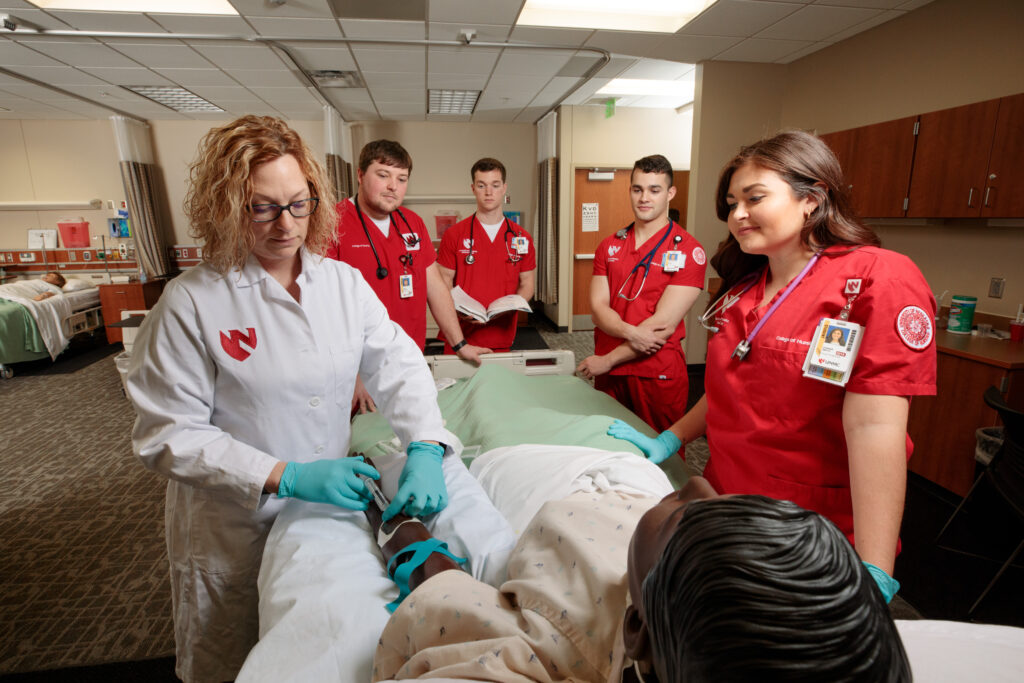
OMAHA — To help respond to a Nebraska rural nurse shortage, the University of Nebraska Medical Center plans to award 30 full scholarships with federal funding it secured for its new Rural Nebraska Nursing Fellowship.
The awards will cover tuition, fees and books for a two-year Bachelor of Science degree in nursing at UNMC’s Scottsbluff, Kearney and Norfolk campuses, plus a $5,000 living expense stipend each semester, according to a statement from UNMC, the state’s only public academic health science center.

To qualify, students must meet competitive qualifications — and commit to at least two years working in nursing in either long-term care or acute care in rural Nebraska settings upon graduation.
Lepaine Sharp-McHenry, dean of UNMC College of Nursing, cited a 2025 report that showed nine Nebraska counties without nurses. UNMC officials note that the Nebraska Center for Nursing biennial report found the Panhandle Economic Region was hardest hit, with more than one in four “crucially needed” nursing positions left unfilled.
“These data points and others are what drive us to seek ways in which we can address the state’s nursing workforce needs,” Sharp-McHenry said. “This grant will allow us to specifically prepare nurses for our rural communities. It is our hope that this grant will create a model that can be supported and sustained to continue bolstering the nursing workforce in rural Nebraska.”
No state funding was used to create the fellowships, according to the UNMC statement. The project is supported by a nearly $4 million grant from the U.S. Department of Health and Human Services’ Health Resources and Services Administration.

The fellowship program includes peer and professional mentoring, access to a graduate tutor and more than 80 hours of rural specific long-term and acute care supplemental learning.
Applicants must have completed two years of undergraduate general education requirements and nursing prerequisites. Applications for 2026 can not be accepted after April 1.
“This is a major opportunity to strengthen the rural [nursing] workforce, collaborate with rural long term and acute care institutions in Nebraska and provide debt-free education,” said associate dean Joachim Voss.
SUBSCRIBE: GET THE MORNING HEADLINES DELIVERED TO YOUR INBOX