

Read the full article on KETV 7
Dr. Anthony Fauci has testified before Congress numerous times. Why take the Fifth now?

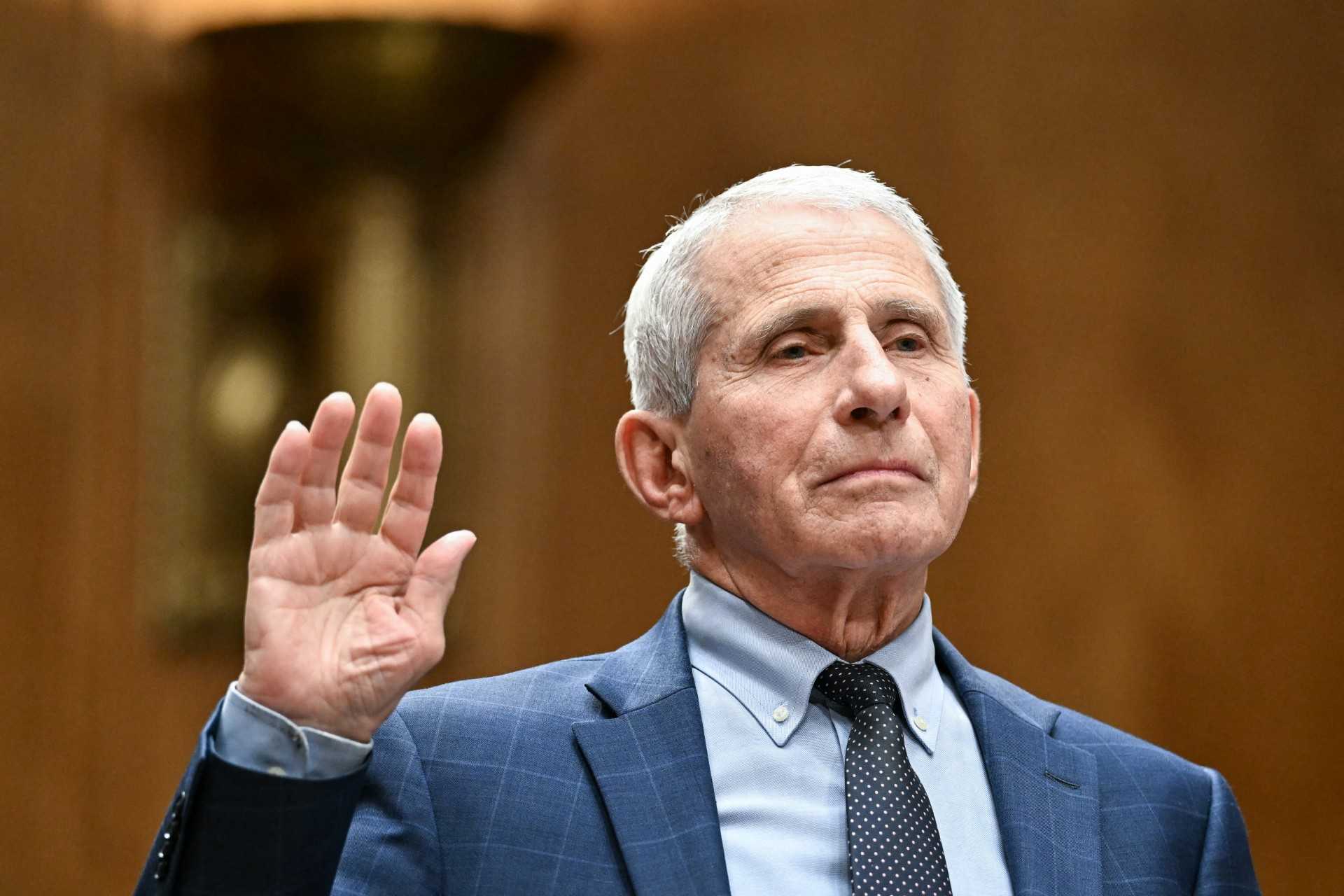
Dr. Anthony Fauci sat for a contentious hearing with the Senate Homeland Security Committee about his key role in responding to the COVID-19 pandemic starting in 2020. But most of what Fauci said July 29, regardless of the question, was identical: “On the advice of counsel, I respectfully decline to answer based upon my rights under the Fifth Amendment to the Constitution.”
This story was originally published on PolitiFact.com.
Advertisement
He used the phrase more than 100 times over the three-hour hearing. In a brief opening statement, Fauci said his decision to take the Fifth — the constitutional protection against self-incrimination — was driven by a concern that the panel’s chairman, Sen. Rand Paul, R-Ky., would twist his answers into fodder for prosecuting him.
In his opening statement, Paul reiterated his claim that on Fauci’s watch, the U.S. funded Chinese research that caused the pandemic and lied about it to Congress. (Fauci disputes this.)
“Frankly the American people deserve an apology,” Paul said.
At the hearing, Paul’s Republican colleagues spotlighted discrepancies between Fauci’s public comments and his diary entries, which Paul released in the days before the hearing. PolitFact has previously factchecked many Republican assertions about COVID-19, ivermectin and whether, as Wisconsin Sen. Ron Johnson falsely said, COVID-19 vaccines are gene therapy.
In his opening remarks, Fauci said he had testified before Congress more than 200 times. But he said given Paul’s “obsession with calling for my prosecution, his repeated slanderous comments about me, and recently his publicly releasing my unredacted personal diary aimed at embarrassing and intimidating me, the only conclusion I can reach is that the sole reason he is calling me before this committee is to get me to say something that could vindicate his repeated public pledges that I end up, in his words, ‘behind bars.’”
Fauci’s lawyer, David Schertler, tried to address the hearing, but Paul told security to remove him, saying he had not been invited to testify. “The accusations that Chairman Paul continues to propagate are false and disgraceful, and we will examine all options to hold him accountable,” Schertler said in a statement after the hearing.
President Joe Biden preemptively pardoned Fauci shortly before leaving office. Legal experts said Republicans could try to pursue contempt charges against Fauci, which Paul said he is considering. But they added that the legal risks to Fauci would have been greater if he had declined to invoke the Fifth.
“I likely would have counseled Fauci to invoke the Fifth Amendment today because Sen. Paul clearly wants to use the hearing today to develop a basis for Fauci’s prosecution,” Michael J. Gerhardt, a University of North Carolina law professor, said.
For Fauci, experts said, the biggest immediate downside of invoking the Fifth may be the public relations fallout that could follow.
“Pleading the Fifth in a civil proceeding, such as a congressional hearing, does not preclude people from making negative inferences from his refusal to answer the questions posed to him,” Gerhardt said.
But the alternative for Fauci would have been worse, said Tracey Maclin, a University of Florida law professor and author of the forthcoming book on the Fifth Amendment.
“You know what looks worse than taking the Fifth? A perjury trial,” Maclin said.
Why Fauci took the Fifth
Many legal experts believe Biden’s pardon only covers actions before the date of the pardon: Jan. 19, 2025. That would mean anything Fauci says or does after that date would not be covered by the pardon — including alleged perjury during the July 29 congressional hearing.
Frank O. Bowman III, a University of Missouri emeritus law professor, said in years past, he would have recommended that Fauci not take the Fifth, but the climate is different today.
At the congressional level, “I have no doubt that Paul and like-minded Republican colleagues would comb anything Fauci said for the slightest hint of error or inconsistency and refer him for prosecution,” he said. That’s already happened to Jack Smith, who was the special prosecutor tasked with investigating Trump before his second victory.
Once a referral reaches the Justice Department, it would be taken up by officials with a second-term track record of going after Trump’s political enemies, such as former FBI director James Comey and former Federal Reserve Board chairman Jerome Powell.
Biden’s pardon, like any presidential pardon, is valid for federal violations. The likelihood of Fauci facing a state prosecution is small, but it does add to his legal exposure.
Florida Attorney General James Uthmeier, a Republican, made clear he was watching the hearing. On X, he criticized Fauci’s “lack of candor.” He said his office was launching an investigation, without specifics.
What can Paul do next?
Paul threatened to pursue contempt charges against Fauci, which could be either civil or criminal, with penalties ranging from fines to incarceration.
Prosecuting Fauci could be a heavy legal lift for his critics. “I think there is a serious question about whether the Senate can punish someone who is exercising a constitutional right,” Gerhardt said.
Paul’s past statements about punishing Fauci could complicate a prosecution, Bowman said. In 2024, for example, Paul said of Fauci, “For his dishonesty, frankly, he should go to prison.”
“How does a federal prosecutor argue that a witness refusing to answer based on the Fifth Amendment does not have a well-justified fear of prosecution?” Bowman said.
A more practical downside of pursuing contempt charges for Republicans, Bowman said, is that it would set a precedent that would aid Democrats seeking to restrain the Trump administration if they take over the House or the Senate in the midterm elections.
The closest recent precedent to a Fauci prosecution involves two former aides to President Donald Trump — Peter Navarro and Steve Bannon — who were convicted of contempt misdemeanors after they refused to testify before the congressional committee investigating the Capitol riot on Jan. 6, 2021.
However, the former Trump aides didn’t just refuse to answer questions; they refused to appear at all, either for depositions or a public hearing. “They easily could have done exactly what Dr. Fauci did” and not faced prosecution, said Bradley Moss, a partner at the Law Office of Mark S. Zaid who specializes in whistleblower defense and other government-related cases.
One way to get Fauci to testify would be to grant him immunity, Moss said. “I doubt they will do so, because these hearings aren’t about getting facts,” Moss said. “The endless headlines are what matters.”
This story was originally published on PolitiFact.com.
It is republished here as part of a reporting and fact-checking partnership between PolitiFact and Hearst Television.