
Omaha Schools Had Shock Gloves for Years. The School Board Found Out on the News.
Shock gloves were in Omaha-area schools for three years before parents and board members learned of them from a news report. OPS has since opted out — but Westside, Millard, Elkhorn and two OPS schools still carry them.
When a parent sends their child to school, there are likely a few things foremost on their mind. “Is my child learning? Is my child behaving? Is my child safe?” These important questions are why communication and transparency is paramount for any functional parent-teacher or parent-school relationship. It is the fundamental impetus behind the parent teacher conference, or the publicity of school board meetings. If any of the three aforementioned questions is found lacking, a parent would rightfully exercise their right to protest such a lapse in the school’s responsibilities. What, however, would a parent do if the school faculty themselves were found blindsided by a discrepancy in student safety?
On August 18th, 2026, according to an article from WOWT First Alert 6, Omaha’s police chief Todd Schmaderer reported that school resource officers at Omaha Public Schools will refrain from carrying their controversial new shock G.L.O.V.E. equipment (Generated Low Output Voltage Emitters). Bellevue police officers confirmed two recent incidents where G.L.O.V.E.s were used in a school setting, though details regarding those incidents are scant. Bellevue Police told First Alert 6 the first incident occurred during the 2022-2023 school year and the second during the 2024-2025 school year, marking approximately three years to date in which School Resource Officers (SROs) have had access to G.L.O.V.E.S. The chief concern of parents and the community? That they are only now finding out about it.. On the evening of August 17th, an OPS board meeting was held where parents, students and community advocates spoke out against shock gloves being used by school resource officers. Almost all protestors in attendance expressed unified displeasure at the fact that they discovered shock gloves were being deployed for use on their children on the news. As one concerned parent, Jessica Tworek, stated in a phone interview with WOWT, “Especially when there is this lack of transparency, now that this is coming out after the fact and it was not explained, like we were not all aware of this before. It just makes me feel not super secure, I guess. [sic]”
No one from the public spoke favorably about the shock gloves at the board meeting, with Spike Eickholt from Nebraska’s American Civil Liberties Union exclaiming at the podium, “These are intended for children,” espousing his displeasure at the perceived brutality of such implements being utilized for juvenile discipline.
Questions mount further in regards to who actually was aware of the implementation of G.L.O.V.E. technology in schools, along with how such a decision was allowed to fly so far under the radar, as members of the OPS school board itself expressed great surprise regarding the silent implementation of the new police technology. As an example, Representative of Subdistrict 2, Brianna Full, half a week prior to the board meeting, posted on her Facebook garnering community awareness of the issue and encouraged students, family and faculty to attend the board meeting on the 17th if they shared her surprise about the news.
During the meeting itself, other notable board members, such as OPS Vice President Kimara Snipes, spoke up and expressed great displeasure with how the city and the police department handled this situation with the school district. During the board meeting Snipes said, “If OPD decided to place a new use-of-force device inside our schools, I don’t understand how that could happen without a formal conversation with the superintendent or the elected board responsible for these schools. I was livid when I found that out.” Snipes added that the news raised issues regarding school discipline and safety, and that she wants to see more clarity on the discipline data from the district. Board member Gini Magnuson stated that the issue of the gloves never came to the board as a vote or in a contract, but despite this, it does not absolve [the board] of responsibility. She pointed to a press conference with the chief of police the prior Friday where it was stated they were testing out the gloves in schools, remarking on the matter that, “I personally am sickened to learn our schools have been used as a test bed for a new law enforcement technology.”
In a joint statement, both Chief Schmaderer and Mayor Ewing addressed the public on the afternoon of the 17th, stating that, “In response to public concern about G.L.O.V.E. technology, we are offering public school districts the opportunity to learn more about how it works and why it was chosen as a tool for the Omaha Police Department School Resource Officer (SRO) program. Omaha police are willing to demonstrate the technology, discuss protocols, explain officer training and answer questions. It’s important for the public to know why OPD had previously selected this technology and how it’s been used in the past. We believe the tool to be a less impactful option than other force tools like the taser. First, the SRO program in Omaha is over 30 years old and is there to keep students, faculty, staff and all who occupy a school building and grounds safe first by building positive relationships. OPD has 34 SROs, and 29 currently trained and authorized to use G.L.O.V.E. in the city of Omaha’s four public school districts: Omaha, Elkhorn, Millard and Westside. Second, we are constantly seeking ways to keep the public and police officers safe through innovations like G.L.O.V.E. We believe it is the safest use-of-force option in the rare times when it is used.”
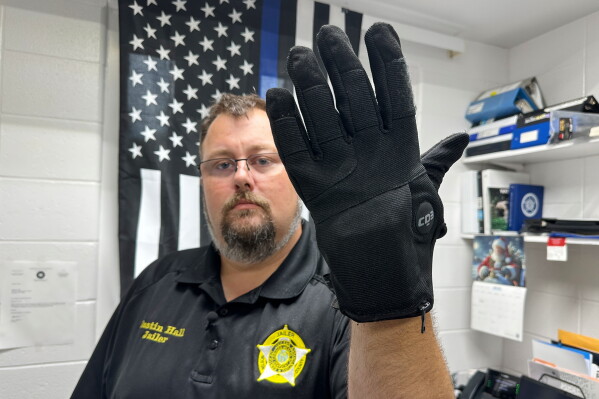
On Tuesday following the board meeting, Mayor Ewing made an updated statement, confirming that OPS was given the option to opt out of G.L.O.V.E. usage, and the city honored it. OPS Superintendent Matthew Ray stated the G.L.O.V.E. technology would hurt the district’s relationship with law enforcement and emphasized student safety. The decision followed community opposition and reports that the gloves were used in two school incidents where students declined medical support. Schmaderer defended the SRO program and officers’ positive relationships in schools but later conversely assented that school resource officers will stop carrying the controversial G.L.O.V.E. shock-glove equipment in Omaha Public Schools after OPS Superintendent Matthew Ray requested it. However, in a quote, he remarks “OPD officers will forever carry standard-issued equipment, including tasers, OC spray, batons, and firearms, to ensure the protection of others and themselves.”
This statement from the police chief does shine a light on two notable questions: who are these shock gloves meant to protect? And who might they be harming in the process? A student from Central High School, Lux Tipton, testified during an interview with WOWT that she has a twin brother with autism. She expressed her concern that an outburst could put his safety at risk, and that tools like the G.L.O.V.E. are most likely to be used on someone like him. As touched upon in the Episode 11, Season 5B episode of the First Sky Omaha podcast featuring Brother Qasim, many harsh disciplinary methods, such as these new shock gloves, find themselves disproportionately affecting students and children with mental disabilities. For example, in Nebraska, the use of seclusion rooms in public schools remains legal, largely unregulated, and disproportionately directed at students with disabilities. In the podcast episode, a Lincoln Journal Star investigation published on August 2, 2026 by Livia Ziskey was referenced detailing how families across the state have watched their children confined in small rooms, alternatively named “quiet rooms,” “alternative learning environments,” or “safe rooms,” for behaviors related to disability, communication challenges, or general noncompliance. The state requires districts to report seclusions only if they meet a specific definition: involuntary confinement alone in a room or area from which the student is physically prevented from leaving. The article centered on Dylan Zephier, a young man with autism and Down syndrome who was secluded hundreds of times across five Nebraska school districts. His story, along with those of other families, both in the article as well as those presently impacted by the G.L.O.V.E. situation, reveal a system in which oversight is minimal, reporting is unreliable, and the burden of advocacy falls almost entirely on parents and the community.
Returning to Mayor Ewing and Chief Schmaderer, the latter half of their joint statement reads as follows: “The intent of the technology is to provide a less impactful alternative. A taser emits higher voltage – up to 1,000 volts – via metal probes that latch onto the body. SROs also are equipped with batons, firearms and pepper spray – which have higher potential for harm.
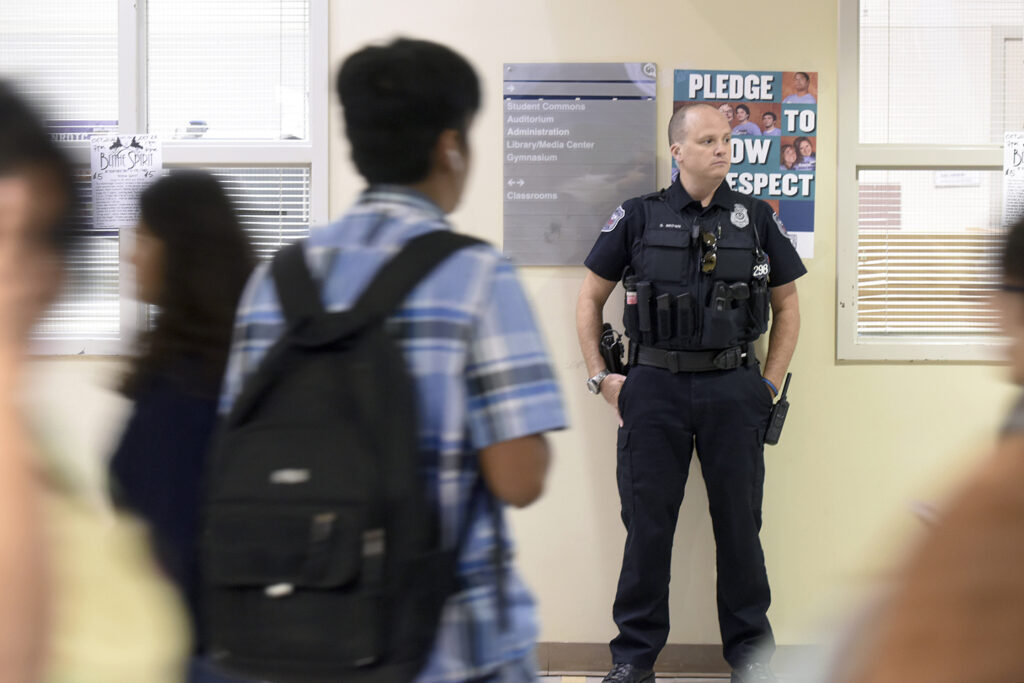
We know use of force in a school environment is serious. That is why officers are trained in the school environment and instructed to use force sparingly. It is also why OPD intended to provide officers with the necessary tools, training and resources to best respond to situations in our schools. The presence of an SRO in a school is intended to enhance safety, and having appropriate equipment available allows officers to respond to a variety of situations while seeking to minimize the potential for injury. The Omaha Police Department considers any use of the G.L.O.V.E. to be a use-of-force incident. As with other uses of force or responses to resistance, officers are required to document the use and the circumstances surrounding it. Those incidents are then subject to review through the department’s established use-of-force review process. We ultimately believe the G.L.O.V.E. technology, combined with OPD training and protocols, offers a less-forceful tool for SROs to use on the rare times it might be needed.”
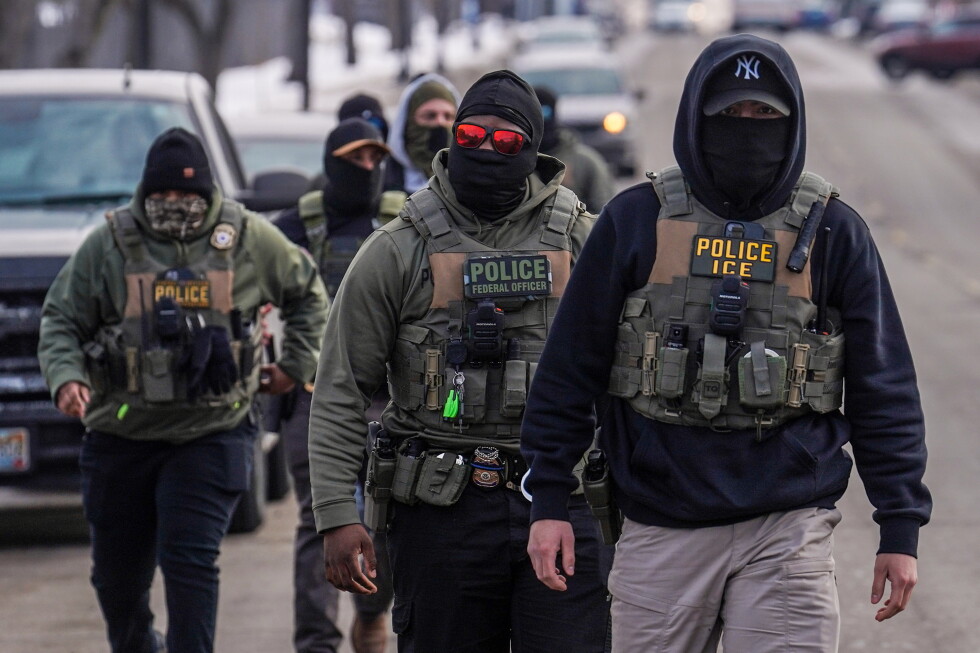
The summation of the statement frames the concept of police and their use of force in schools not only as a given necessity on its face, but in addition, even despite the mayor’s concession to OPS’s opting out of the G.L.O.V.E. program, that this technology was meant to be a lighter, or more humane option in comparison to its alternatives. This claim stands in inauspicious tandem with a report from CBS News from the same month, noting that U.S. Immigration and Customs Enforcement (ICE) has awarded a $16.7 million no-bid contract to purchase 6,000 electric shock gloves, according to contract paperwork released Thursday on a federal database. Notably, the instruction manual from Compliant Technologies (manufacturers of the G.L.O.V.E.) states that users should “always give the subject(s) a reasonable opportunity to comply before force is used,” which is in line with the mayor and chief’s assurances, yet explicitly states the devices should not be used to punish people or on the elderly, pregnant women, small children, or “the severely handicapped.” In this particular case with OPS, high school students are considered by OPD to fall within the acceptable parameters of use, alongside migrant targets of ICE and other criminal detainees.
According to a CBS article updated on August 27th, Democratic senator Catherine Cortez Masto of Nevada, alongside 15 other Democratic senators, called on ICE to cancel the purchase. They warned that a device able to deliver electric shocks during civil immigration arrests raised concerns regarding proportionality, medical safety, constitutional rights, and oversight. The senators wrote that “a device capable of delivering an electrical shock through direct contact with an individual presents substantial risks if deployed during civil arrests,” adding that those risks would be greater without clear limits, sufficient training, and thorough oversight. Lawmakers also demanded that ICE disclose its rules for authorized uses, its safeguards, and its procedures for reviewing future deployments. Despite that’s been discussed, according to a spokesperson for the Omaha Police Department, school resource officers still carry the shock gloves in the Westside Community Schools, Millard Public Schools and Elkhorn Public Schools districts, as well as OPS’s Bryan middle and high schools. If G.L.O.V.E. technology used by ICE draws concern and calls for reevaluation from state and federal Democrats regarding safety and proportionality; there is much to consider on behalf of the community regarding how and why such tools were inserted into the arsenal of SRO’s with little to no warning or oversight. In addition, the question remains as to why they still linger in Nebraska schools today amidst such fervent community protest.