

Read the full article on Nebraska Examiner
Nebraskans sometimes enjoy the reputation of having common sense … as if the gods, Prudence and Perception, tilted the coasts and a whole bunch of wisdom and wit tumbled into Middle America. The lexicographers at Merriam-Webster say as much, defining common sense as “sound and prudent judgment based on a simple perception of the situation or facts.”
Now “common sense” — Thomas Paine’s pamphlet notwithstanding — has become a political touchstone, the phrase often bandied about by a Nebraska congressman and more recently a spokesperson for someone who wants to be one. “Common sense solution” has also become a favorite iteration of the construct, appealing to our practicality so as to avoid getting too far into the weeds trying to solve prickly problems or right listing ships.
There is, however, this little, semi-popular chestnut: “Common sense is not so common,” an observation so pragmatic that it surely came from a common sense, pragmatic Nebraskan or similarly situated Middle American.
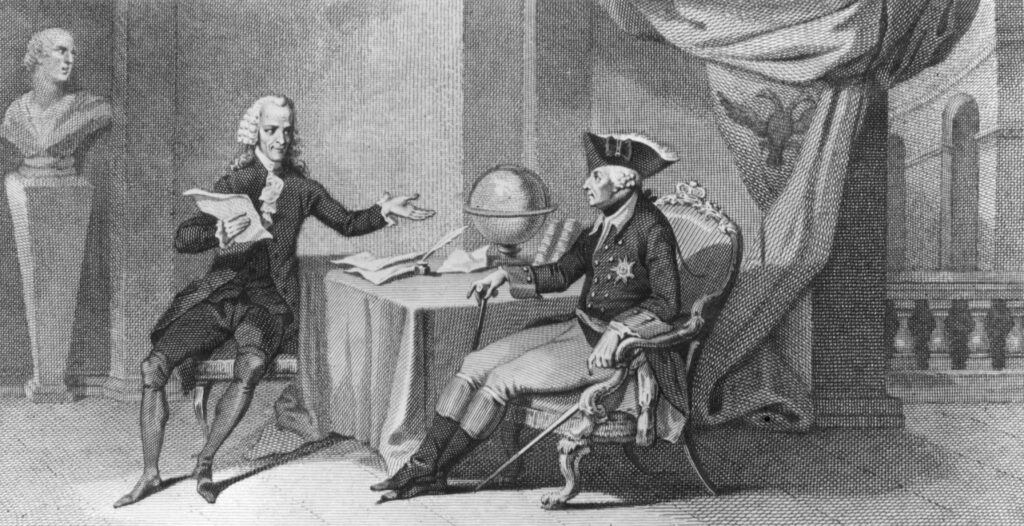
But that would be off by almost 5,000 miles and three centuries. French Enlightenment writer and philosopher Voltaire is credited with giving us “Common sense is not so common.” While a tireless advocate for individual rights, Voltaire was hardly a utilitarian or pragmatist, preferring the company of monarchs and aristocrats like himself.
He was on to something with his wry observation, however.
Contemporary examples are instructive. To wit: As I’m sure some of you have, I’ve stopped eating leafy green salads. No Caesars or Wedges or Clubs for me as the diarrhea-producing cyclospora parasite is making its way around the country. Health officials have said that the culprit is likely fresh produce. Yeesh!
As of this writing, 1,645 confirmed cases and 5,100 probable cases of cyclospora are under investigation across 34 states, including Nebraska. The CDC said about 10% of cases usually require hospitalization. The symptoms – diarrhea, low-grade fever, aches and fatigue – can last a few days and even a few months if untreated.
While no one has ever accused me of always making “sound and prudent judgment based on a simple perception of the situation or facts,” wouldn’t common sense dictate we should have kept an eye on that nasty little bugger? Seriously. We used to do just that until the HHS Secretary Robert Kennedy Jr. thought we could skip the mandatory monitoring of food products for six of eight sickening pathogens, cyclospora among that sextet. Nor did budget and personnel cuts to the agency help. The rest – or more accurately, the result – is explosive diarrhea history.
Wait, there’s more. The Epstein Files Transparency Act passed by unanimous consent in the Senate on Nov. 19, 2025 and by 427-1 in the House the next day. Would a senator be using common sense to vote to confirm an attorney general nominee who is largely responsible for slow-walking, outing victims and generally defying the act passed by both houses of Congress?
Closer to home, while we should view new political entities or parties as democracy in action, common sense may lead us to wonder if we are racing toward a time in Nebraska when we have more political parties than we do good ideas or solutions to problems. As a lifelong Independent, I welcome other points of view, even party platforms. The trick for voters will be distinguishing one party from another, which, ironically may also be a hurdle for the parties themselves.
The most challenging hurdle to clear in the common sense sweepstakes has to do with the phrase’s first word. We seem to have less in common with each other than we used to … or so we’ve been told. Even common sense’s cousin, common knowledge, has taken a hit. We often have a difficult time agreeing on a common set of facts, a phenomenon fueled by an ocean of disinformation and conspiracy theories sloshing from one end of the social media universe to the other, among the legacy media as it fights for relevance and now even presented in prime time.
Many adherents to the digital world’s “wild, wild west” motif preach bigger, faster, stronger, especially in the employ of artificial intelligence, lest our humanity slow us in the AI race to somewhere no one can seem to determine. The result? An obfuscation of the facts and an undermining of common knowledge.
The rampant conspiratorial nonsense reminds me that our Francophone friend, Voltaire, also famously said, “Those who can make you believe absurdities can make you commit atrocities.”
The hope is that we do indeed find “common sense solutions” to our problems and when we do, they carry the trappings of shared benefits and diminished disadvantages.
Before that happens, however, we should start with a list of what we have in common.