

Read the full article on KETV 7
The biggest rocket ever is coming to Florida’s Space Coast | Here’s a look at it
Digital Content Producer

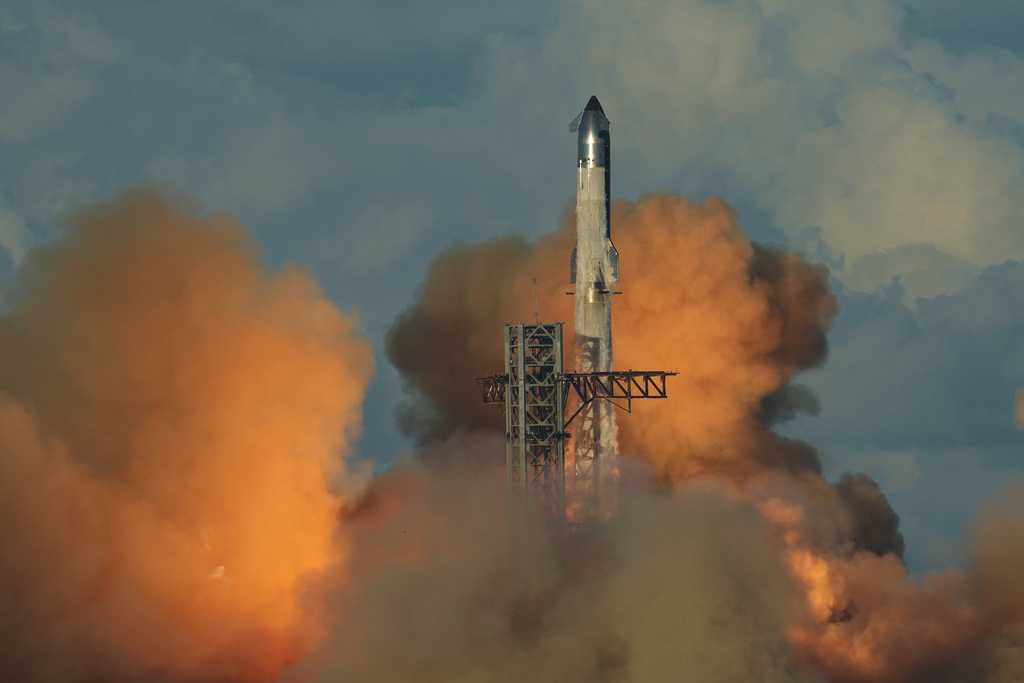
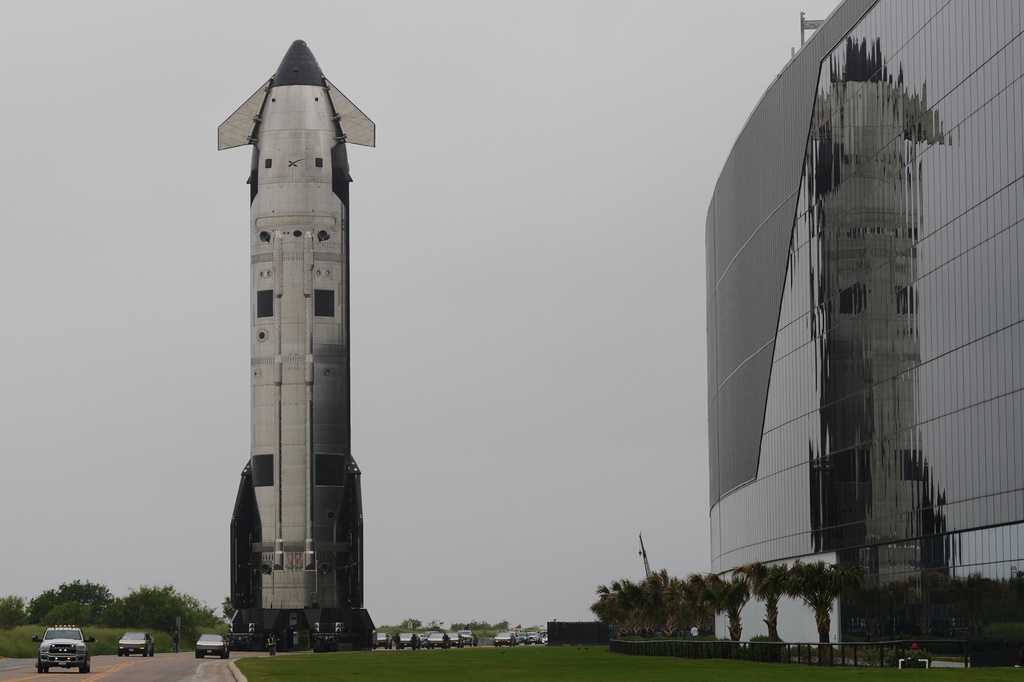
Starship, the world’s biggest rocket, is currently home to Boca Chica, Texas, along the Mexico border. However, the mega rocket will soon be moved to Florida’s Space Coast for future launches.
Meghan Moriarty and Mike Hanson of Hearst sister station WESH went to Boca Chica to get a glimpse of what life is like for those working and living around what is known as Starbase.
Advertisement
All this week, they will be sharing what Floridians can expect when the record-breaking rocket makes its move across the south.
But none of this is before SpaceX launches Starship on July 16 from its Starbase headquarters.
What is Starship?
Down the two-lane Highway 4, there’s not much to see besides the Texas desert and dusty air. But as you inch closer to the coast, the plethora of Teslas hints there’s more to the area than cacti and creatures.
Located at the tip of Texas is Starbase, home to Elon Musk’s Starship rocket, and what some may call the most ambitious engineering project of the 21st century.
Starbase is the newest city of the Rio Grande Valley, officially incorporated in May 2025.
The mini-city’s purpose is to have SpaceX crews nearby 24 hours a day, seven days a week, to bring Musk’s vision to life.
Starship, a fully reusable giant rocket, is designed to carry humans and cargo to the moon and eventually Mars. Its reusability is expected to lower the cost of space travel and play a key role in NASA’s Artemis missions.
Starship began its first test flights in 2023, many of which ended in explosions.
Starship is unlikely to launch from Brevard County until it achieves a completely successful launch, but it could be a critical component of future moon missions.
For now, Starship remains a work in progress, but one thing is clear: it is reshaping the future of space exploration and transforming the Texas desert into a hub of innovation.
This content is imported from infogram. You may be able to find the same content in another format, or you may be able to find more information, at their web site.
Next flight test
Starship is gearing up for its 13th flight test in Boca Chica, Texas.
SpaceX is targeting July 16 with a launch window of 6:45 p.m. to 8:15 p.m. ET.
The booster’s primary objective is to execute a successful launch, ascent, stage separation, boostback burn and landing burn.
According to SpaceX, there have been several modifications to hardware and software to address issues seen on previous flights.
Past explosions
This content is imported from infogram. You may be able to find the same content in another format, or you may be able to find more information, at their web site.
Impacts
Starship’s impact on Texas
SpaceX’s Starship launches at Starbase in Boca Chica, Texas, have brought economic opportunities to the region while raising concerns among some community members about environmental and social consequences.
Jeanette Greider, who grew up in Merritt Island, Florida, near Cape Canaveral, said the launches remind her of her childhood.
“Having grown up in Merritt Island, Florida, which is right next to Cape Canaveral, it’s very much like being back home. And it’s fun to watch other people’s experience because they haven’t grown up with it like I have,” she said.
A 1993 graduate of Merritt Island High School, Greider moved to Texas more than 40 years ago and said the Starship launches evoke a sense of nostalgia.
Greider is president of the South Padre Chamber of Commerce.
“If we have a launch, we see an increase in traffic and an increase in sales tax and hotel tax and things like that,” she said.
However, not everyone in the area shares her enthusiasm. Just north of Starbase is Brownsville, the most populated area in the Rio Grande Valley and one of the poorest regions in South Texas. Critics argue that SpaceX’s operations disproportionately affect the local community.
“So what we have here is one of the richest men in the world blowing up rockets in a low-income, brown community. We’re being abused by Elon Musk,” said Bekah Hinojosa, co-founder of the South Texas Environmental Justice Network.
Hinojosa has been outspoken against SpaceX for the past five years, arguing that the company has no place in the Rio Grande Valley.
Despite these concerns, Cameron County commissioners have highlighted the economic benefits SpaceX has brought to the area, including more than 4,000 permanent jobs at Starbase and opportunities for 24,000 local workers, such as vendors, welders, contractors, and food service employees.
The downsides include loud noises, increased traffic, and frequent beach and road closures.
The changes brought by SpaceX have sparked a divide in the community, with some embracing the economic growth and others fighting to preserve the area’s natural and cultural heritage.
Starship’s impact on infrastructure
The kind of power such a massive rocket has makes people wonder what will happen to everything around it when it moves to Florida.
Last year, several Federal Aviation Administration meetings in Brevard County gave residents a chance to voice concerns about Starship, with infrastructure a key topic of discussion.
“I live straight across the Indian River in Titusville. My house right now, during a regular SpaceX launch, I can sleep through it. A heavy — I hear it. This one, I’m terrified it’s gonna destroy my house,” said Charlene Melcher, a Titusville resident.
At Starbase, Texas, where the rocket is being tested, residents have reported significant impacts. Jorge Reyna, who lives about 20 miles from Starbase in Texas, said his children get scared and the windows start to crack with each launch.
In April, a lawsuit alleged that SpaceX’s rocket caused damage to roughly 80 homes in the Rio Grande Valley. The lawsuit stated, “SpaceX has repeatedly subjected the surrounding areas to extraordinary amounts of acoustic energy, including noise, vibrations and sonic booms.”
The Space Coast, familiar with powerful launches like Saturn V, the Space Shuttle, Falcon Heavy, and NASA’s Space Launch System, is preparing for Starship’s more frequent launches.
Starship’s impact on the environment
The rocket’s move to Florida is also raising environmental concerns among residents.
“SpaceX has burnt down more than 60 acres of wildlife habitat on pristine beaches,” Bekah Hinojosa, co-founder of the South Texas Environmental Justice Network, said of the environment surrounding Starbase in Texas.
In Florida, environmental concerns are not new. The Indian River Lagoon has faced decades of issues, including polluted stormwater runoff, yard waste, and septic problems, which have caused massive fish kills.
A 1993 NASA study found that space shuttle launches caused changes in plant community composition, vegetation damage, and mortality of fish, birds and reptiles.
In February, the FAA released an environmental impact study, which acknowledged adverse effects related to soil disturbance and air and water quality near the launch pad.
However, the study concluded that these effects were not significant compared to those from current launches.
What’s next?
While test flights of SpaceX’s Starship continue in Texas, construction is well underway at Kennedy Space Center to house the mega rocket.
Each test flight marks a step toward future missions to the moon and Mars.
Engineers are currently focused on refining Starship’s launch reliability, improving its heat shield, and perfecting booster recovery. SpaceX is also continuing construction of its massive Gigabay at Kennedy Space Center, where the rocket will eventually move to support NASA’s Artemis missions.
NASA Administrator Jared Isaacman shared his enthusiasm for space exploration.
“What has me excited about space exploration and NASA goes to the heart of it,” he said. “We’re pursuing the secrets of the universe. I can’t imagine a more exciting endeavor.”
He also explained how SpaceX and competitor Blue Origin’s focus on reusability will help reduce the cost of space travel, which will be key to supporting regular missions.
Before Starship can achieve its ambitious goals, it must prove it can fly safely, reliably, and repeatedly.
SpaceX has acknowledged that several test flights have ended in anomalies or explosions, which it says are a normal and necessary part of the rocket’s development process.
For now, in Texas and eventually in Florida, the future of space travel continues to unfold one launch at a time.