

Read the full article on KETV 7

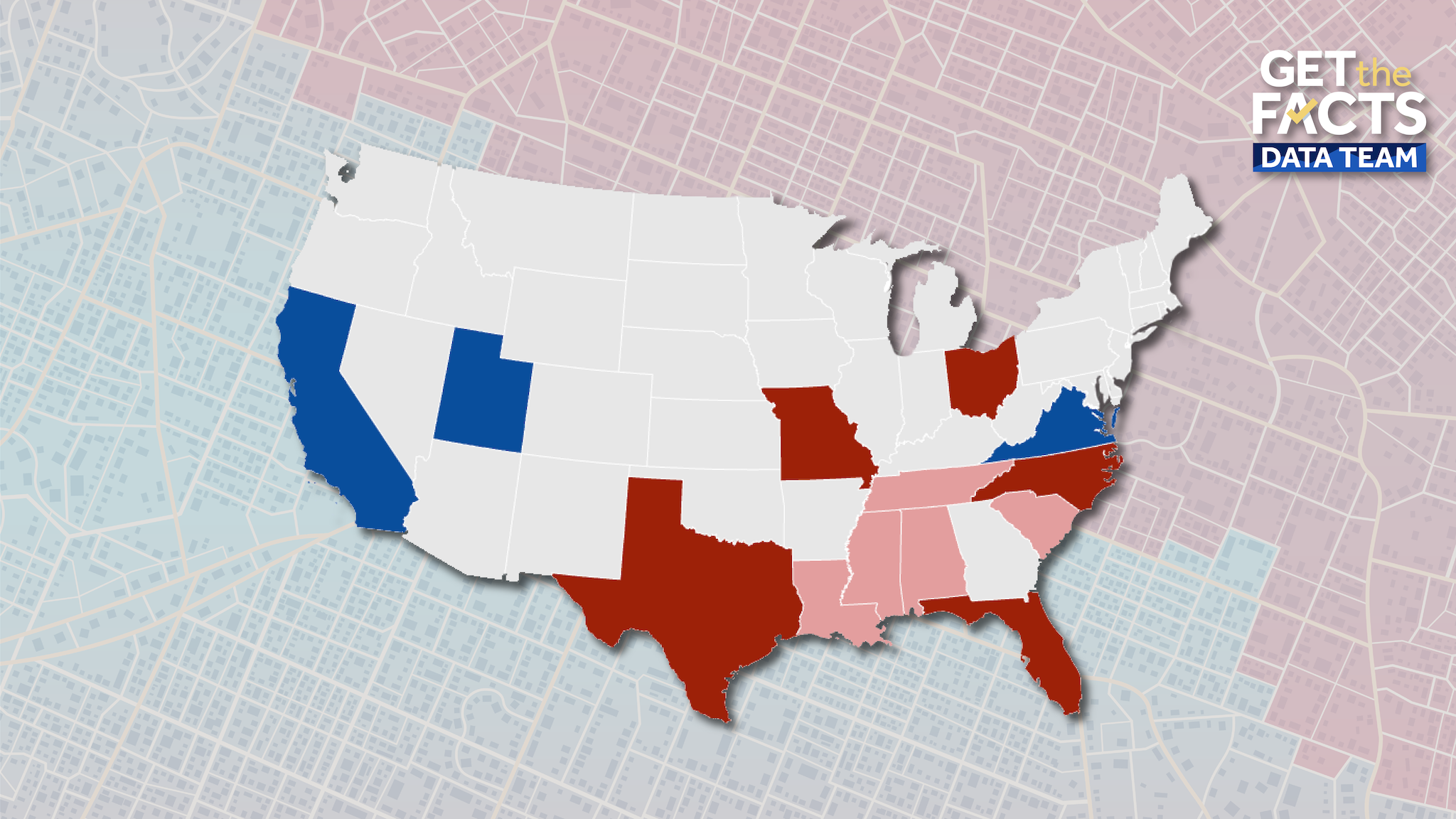
Several states have now passed new congressional maps mid-decade ahead of the 2026 midterm elections, with more on track to join.The efforts began when President Donald Trump urged Texas to redraw its maps last year to flip up to five districts currently held by Democrats to gain Republican representatives in the U.S. House. California subsequently followed.Now, eight states have enacted new congressional maps. Six favor Republicans, and two favor Democrats. The ongoing redistricting battle could net an additional eight Republican seats ahead of the midterm elections this year. The U.S. Supreme Court ruled Louisiana’s current House congressional maps were unconstitutional, saying Louisiana officials relied too heavily on race when drawing the state’s second majority-Black district. The ruling limits the powers of the Voting Rights Act.The previous map included one majority-Black district out of six total, despite Black people accounting for a third of the state’s population.The decision paves the way for other Republican-controlled states to redraw congressional districts in a way that eliminates districts with large Black and Latino populations. As a result of the ruling, the U.S. Supreme Court subsequently overturned rulings in Alabama on May 11 that blocked a congressional map from being used in 2023. On Tuesday, federal judges blocked the state from switching back to the 2023 map, which would reduce the number of majority-Black districts from two to one.Since Texas first redrew its congressional districts, five other states have attempted redistricting either through the state legislature or state courts. These states include Indiana, Maryland, New York, Washington and South Carolina, where the state Senate rejected redistricting efforts.Virginia voters also approved new districts in April, but the results were overturned by the state Supreme Court.The Get the Facts Data Team is tracking states that are joining the effort to redistrict mid-decade ahead of the 2026 midterm elections.
Several states have now passed new congressional maps mid-decade ahead of the 2026 midterm elections, with more on track to join.
The efforts began when President Donald Trump urged Texas to redraw its maps last year to flip up to five districts currently held by Democrats to gain Republican representatives in the U.S. House. California subsequently followed.
Advertisement
Now, eight states have enacted new congressional maps. Six favor Republicans, and two favor Democrats. The ongoing redistricting battle could net an additional eight Republican seats ahead of the midterm elections this year.
The U.S. Supreme Court ruled Louisiana’s current House congressional maps were unconstitutional, saying Louisiana officials relied too heavily on race when drawing the state’s second majority-Black district. The ruling limits the powers of the Voting Rights Act.
The previous map included one majority-Black district out of six total, despite Black people accounting for a third of the state’s population.
The decision paves the way for other Republican-controlled states to redraw congressional districts in a way that eliminates districts with large Black and Latino populations.
As a result of the ruling, the U.S. Supreme Court subsequently overturned rulings in Alabama on May 11 that blocked a congressional map from being used in 2023.
On Tuesday, federal judges blocked the state from switching back to the 2023 map, which would reduce the number of majority-Black districts from two to one.
Since Texas first redrew its congressional districts, five other states have attempted redistricting either through the state legislature or state courts. These states include Indiana, Maryland, New York, Washington and South Carolina, where the state Senate rejected redistricting efforts.
Virginia voters also approved new districts in April, but the results were overturned by the state Supreme Court.
The Get the Facts Data Team is tracking states that are joining the effort to redistrict mid-decade ahead of the 2026 midterm elections.