

Read the full article on KETV 7
Iran threatens to halt energy exports as US bombings and blockade escalate
The U.S. carried out a third round of bombings on Iran within 24 hours, with President Trump threatening to target civilian infrastructure if Iran does not negotiate.

Supervising Producer
WASHINGTON —
The United States launched a third round of bombings on Iran within 24 hours on Wednesday evening, as President Donald Trump threatened to escalate the conflict further if Iran does not agree to negotiate.
Trump, Iran Escalate Threats and Attacks
On Tuesday, Trump said the U.S. would bomb Iran’s power plants and bridges next week, a threat he often makes. On Wednesday, Trump appeared to back away from that timeframe, telling reporters, “I don’t like giving deadlines, but they pretty much know. They know the story. They better behave.”
Advertisement
The U.S. has bombed a few bridges during the more than four-month war, but Trump has routinely backed off threats for wider strikes against civilian infrastructure, which the United Nations recognizes as a potential war crime.
During remarks at a defense industry leaders conference in Pennsylvania on Wednesday, Trump claimed Iranian officials are eager to make a deal despite their apparent readiness to continue fighting.
“They want to settle so badly. They don’t like what we’re doing. And they do want to settle. We’ll find out whether or not we settle with them or we just finish it off,” Trump said. Trump has made multiple similar statements throughout the war.
Iran’s joint military command warned on Thursday it would destroy “all the infrastructure in the region” as U.S. strikes intensify.
Iran’s Parliament Speaker and a lead negotiator with the U.S., Mohammad Bagher Qalibaf, said Iran is prepared for a fuller military confrontation if the U.S. doesn’t live up to the terms of the deal the two countries signed last month. Trump has said the ceasefire portion of the agreement is ‘over,’ but talks between the countries to end the war permanently can continue.
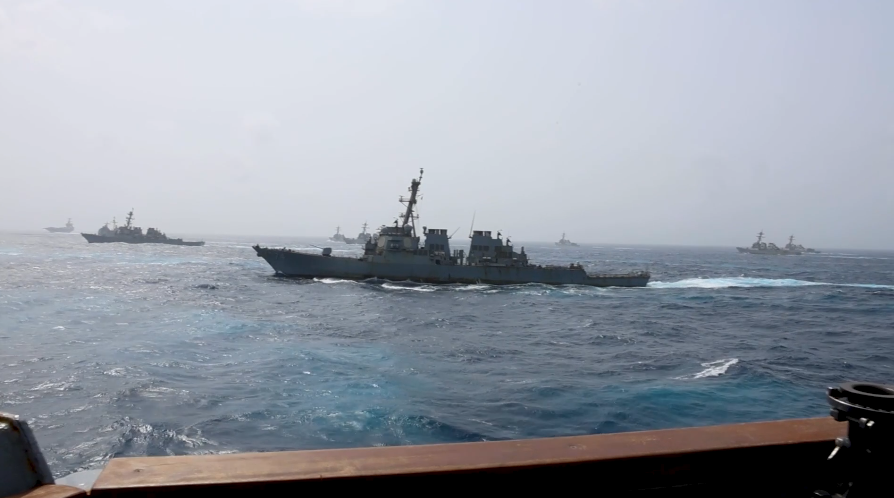
The U.S. reimposed its naval blockade of Iranian ports this week. In response, Iran’s Revolutionary Guard has threatened to halt all energy exports from the Middle East, a move that could further drive up global fuel prices.
A video released by U.S. Central Command shows an American aircraft disabling a ship that violated the blockade while attempting to travel toward Kharg Island, which handles nearly 90% of Iran’s oil exports.
As of Thursday, the U.S. has launched at least one attack daily on Iranian military installations for the last five days.
The uptick in fighting came after Iran bombed commercial ships in the Strait of Hormuz and attacked American military posts in Gulf region nations.
Trump is reportedly looking to expand strikes and fully reopen the Strait of Hormuz, which has become a focal point of the conflict. However, experts warn that achieving this may be difficult without deploying troops on the ground.
Global Oil Market Less Ready for New Shocks
Concerns are growing over the impact on global fuel prices. A new report from the International Monetary Fund found that oil markets were able to absorb much of the shock of the initial spike in oil prices at the war’s outset, but are losing their ability to shield consumers much further.
There was a surplus of oil production before the war, which oil markets drew from once the war started and oil was trapped in the Gulf region as Iran closed the Strait of Hormuz. The waterway handles about a fifth of the world’s oil shipping. While fuel prices increased after the war began, higher costs helped reduce consumption as other countries, including the U.S., ramped up oil drilling capacity.
The war has damaged oil production and refinery capacity in the Middle East, diminishing the cushion that existed earlier in the conflict. This means consumers are likely to see higher fuel prices as oil becomes more expensive.
Brent crude oil, the international benchmark for oil, was selling for $71.32 per barrel before the war, according to government data. It hit a wartime peak of $138.21 in April and had fallen to $68.52 in early July. It again climbed above $81 by Monday.
Likewise, according to AAA data compiled by Hearst Television’s Get the Facts Data Team, the average price for a gallon of regular gas was $2.98 when the war started. It peaked in late May at $4.56 and had fallen to $3.79 by early July. It rose to $3.94 on Thursday.
The IMF estimates it will take two to three months after the strait fully reopens to restore a significant supply of oil to the global market, potentially leading to further shocks and higher gas prices.
Keep watching for the latest from the Washington News Bureau: