

Read the full article on KETV 7
NOAA predicts below-normal 2026 Atlantic hurricane season as El Niño develops
Hurricane season officially begins June 1.
Our exclusive WJCL hurricane season forecast is here. I have the prediction for this season. Hurricane season is the most important time of the year weather-wise for coastal Georgia and the Low Country. Over the last 5 Atlantic hurricane seasons, 9 named storms have delivered direct or indirect impacts to our area. *** few of these storms include Elsa, Idalia, Debbie, and most recently, Halim. Last year we got *** break. Tropical activity eluded our coastline. However, that was not the case everywhere. Powerful Hurricane Melissa, one of the strongest hurricanes on record, devastated the island of Jamaica in late October. With the start of another hurricane season on the horizon, it’s time to look ahead. Here at WJCL, we give you the earliest hurricane season forecast anywhere in the Southeast. Before we look at the numbers and coastal hotspots for the 2026 season, let’s go over the ingredients in this year’s exclusive forecast. Ocean temperatures play *** vital role in any hurricane season. Warming waters in the Pacific Ocean near the equator are an early sign of *** developing El Nino. NOAA’s latest forecast shows *** possible super El Nino during hurricane season. This is important because it leads to increased upper-level winds over parts of the Atlantic basin which may limit tropical development. Our key ingredient, the LRC, helps us. Identify important features in the cycling weather pattern, allowing us to forecast weeks or months in advance. This is *** method I’ve used to make long range forecasts for nearly two decades. Here is *** look at some of the areas of interest in the current weather pattern. These low pressure areas may play an important role in future cycles this hurricane season. With our analysis complete, let’s take *** look at the 2026 forecast. We have highlighted two coastal hotspots for this season. The first covers parts of the Florida Panhandle and west coast of Florida. The second hotspot covers parts of South Carolina to the Outer Banks of North Carolina. These areas have *** higher than average chance of seeing direct impacts or *** landfall this season. Outside of the forecast hotspots, tropical activity is still possible, but the chances. are *** bit lower for the entire Atlantic Basin, WJCL 22 is forecasting *** below-average hurricane season with 9 to 13 named storms, 4 to 6 hurricanes, and 1 to 3 major hurricanes. An average season produces 14 named storms, 7 hurricanes, and 3 major hurricanes. The first named storm this year will be Arthur, then Bertha.
Advertisement
NOAA predicts below-normal 2026 Atlantic hurricane season as El Niño develops
Hurricane season officially begins June 1.

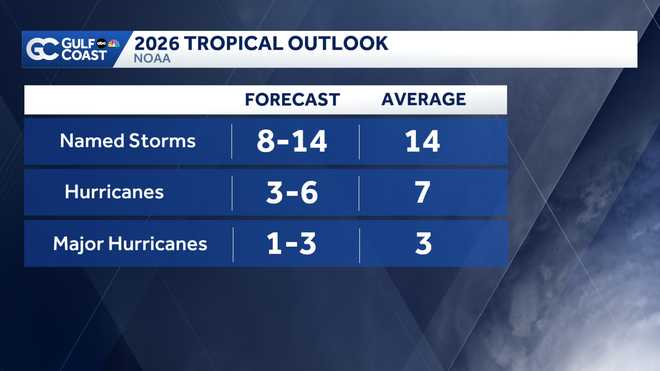
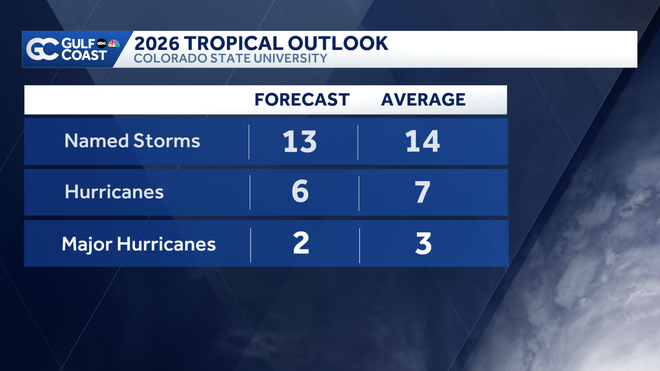
NOAA issued projections for the 2026 Atlantic hurricane season on Thursday, calling for a below-normal hurricane season. Forecasters predict a 10% chance of an above-normal season, a 35% chance of a near-normal season, and a 55% chance of a below-normal season. An average season has 14 named storms. NOAA is calling for eight to 14 named storms, three to six hurricanes and one to three major hurricanes. A storm has to have sustained winds at 39 mph or greater to get named and is named regardless of whether it impacts land. A major hurricane refers to any hurricane that reaches Category 3 or greater strength. Colorado State University meteorologists are also calling for a below-average Atlantic hurricane season. This is primarily due to the El Niño climate pattern expected to emerge this summer. El Niño is a climate pattern where sea surface temperatures in the Pacific Ocean run warmer than average.This often leads to more wind shear over the Caribbean and Atlantic basin. Wind shear can create a hostile environment, often leading to fewer and weaker storms for the Atlantic season. While the overall outlook is below average, it’s important to remember that it only takes one storm.
NOAA issued projections for the 2026 Atlantic hurricane season on Thursday, calling for a below-normal hurricane season.
Forecasters predict a 10% chance of an above-normal season, a 35% chance of a near-normal season, and a 55% chance of a below-normal season. An average season has 14 named storms.
Advertisement
NOAA is calling for eight to 14 named storms, three to six hurricanes and one to three major hurricanes. A storm has to have sustained winds at 39 mph or greater to get named and is named regardless of whether it impacts land. A major hurricane refers to any hurricane that reaches Category 3 or greater strength.
Colorado State University meteorologists are also calling for a below-average Atlantic hurricane season.
This is primarily due to the El Niño climate pattern expected to emerge this summer. El Niño is a climate pattern where sea surface temperatures in the Pacific Ocean run warmer than average.
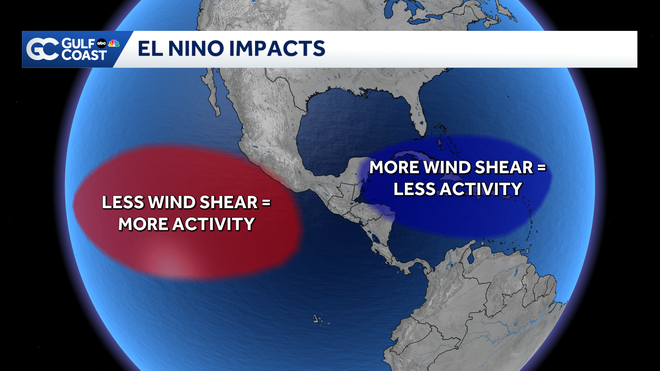
This often leads to more wind shear over the Caribbean and Atlantic basin. Wind shear can create a hostile environment, often leading to fewer and weaker storms for the Atlantic season.
While the overall outlook is below average, it’s important to remember that it only takes one storm.
[related id=’25f53a30-fb8e-4f4a-be3b-4f6ff3683402′ align=’center’ source=”][/related