Read the full article on KETV 7
Are you *** student loan borrower on the saving on *** valuable education plan, commonly referred to as the save plan? If so, the Department of Education recently announced some big changes that will cost you hundreds of dollars per month if you do not take action. So here’s what’s going on. The Biden administration introduced the save plan back in 2023, saying it would lower the monthly payments of millions of borrowers, some as low as $0. Now, in response, several Republican-led states filed lawsuits to block the plan, arguing it overstepped the Education Department’s authority and would put high costs onto taxpayers. While the plan was in legal limbo, borrowers were not required to make any payments. And after 2 years in litigation, *** federal appeals court effectively ended the plan. This leaves over 7 million borrowers to figure out their next steps. Starting July 1st, anyone still under the safe plan will be contacted by their servicer, who will give them at least 90 days to choose *** new repayment plan. If you don’t take action, your servicer will automatically enroll you into one of the new plans created by the Trump administration’s One Big Beautiful bill. This could mean *** difference of hundreds of dollars on your monthly bills and thousands on your interest paid over the years. So let’s break down the. Options. First, you have the two new plans created by the one big beautiful bill, one with fixed monthly payments for 10 to 25 years and one that takes 1% of your earnings for 30 years. The department says the plans will be ready by July 1st, and going forward, anyone who takes out federal loans after that date can only choose between these plans. There are also income-driven repayment options. But the department will be phasing out two of them by July of 2028, so you’ll need to switch again before then. Ultimately, choosing the best plan is personal. Do you want to pay it off as fast as you can and pay less in interest, or do you want low monthly payments? For immediate next steps, look for updates from your servicer and the Department of Education. Log into your servicer account to review the options to see what plan works best for you and visit studentaid.gov to use *** federal loan simulator to compare plans. Reporting in New York, I’m Ali Jasinski.
Advertisement
From $40,000 to $90,000: Here are the highest- and lowest-paying college majors

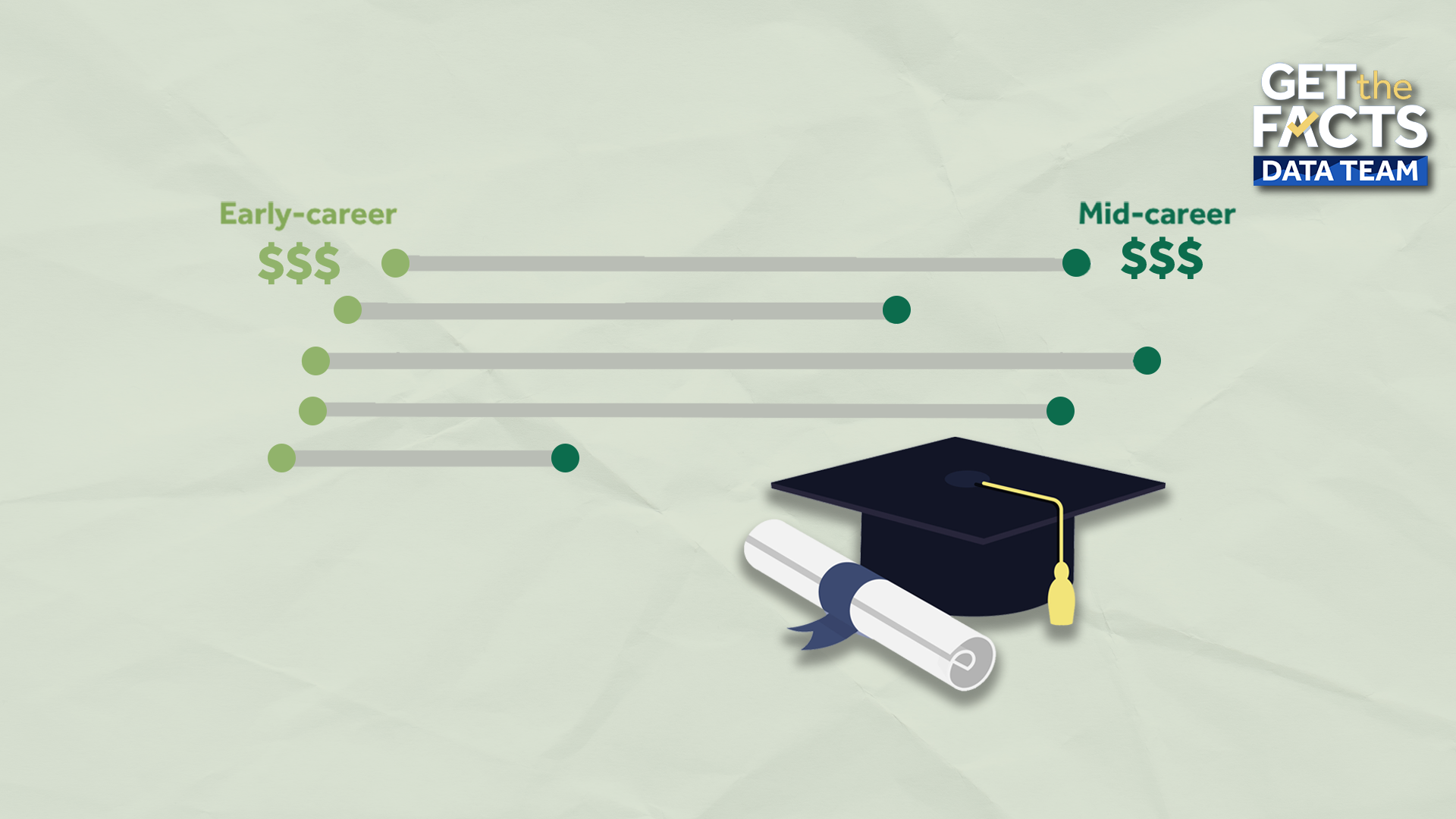
Recent college graduates with a bachelor’s degree or higher in computer engineering earned the highest median early-career wages, according to the latest data from the Federal Reserve Bank of New York.Among the 73 college majors analyzed by the FRBNY earlier this year, computer engineering graduates ages 22 to 27 had the highest early-career median wage at $90,000 in 2024. Four of the five highest-paying majors were engineering-related. Behind computer engineering, computer science graduates had the second-highest early-career median wage at $87,000.Chemical engineering and aerospace engineering tied for third, with median wages of $85,000. While computer engineering had the highest early-career wages, chemical engineering had a higher median wage at midcareer. Midcareer is defined as workers ages 35 to 45 with a bachelor’s degree or higher.Chemical engineers earn a median of $135,000, and computer engineers earn $131,000. Although computer engineering and computer science offer high wages, both majors also rank among those with the highest unemployment rates. In 2024, computer engineering had the second-highest unemployment rate at 7.8%, and computer science tied for fifth with performing arts at 7%. Early-career pharmacy graduates had the lowest median salary at $40,000. Theology and religion and social services followed, with median salaries of $42,000 and $43,000, respectively.The degree with the smallest wage growth among the 73 majors was early childhood education. It ranked among the lowest-paying majors and had a 15% increase from early to mid-career, rising from $45,000 to $52,000.Search the table below to see the median early and midcareer wages for college majors.PHNjcmlwdCB0eXBlPSJ0ZXh0L2phdmFzY3JpcHQiPiFmdW5jdGlvbigpeyJ1c2Ugc3RyaWN0Ijt3aW5kb3cuYWRkRXZlbnRMaXN0ZW5lcigibWVzc2FnZSIsKGZ1bmN0aW9uKGUpe2lmKHZvaWQgMCE9PWUuZGF0YVsiZGF0YXdyYXBwZXItaGVpZ2h0Il0pe3ZhciB0PWRvY3VtZW50LnF1ZXJ5U2VsZWN0b3JBbGwoImlmcmFtZSIpO2Zvcih2YXIgYSBpbiBlLmRhdGFbImRhdGF3cmFwcGVyLWhlaWdodCJdKWZvcih2YXIgcj0wO3I8dC5sZW5ndGg7cisrKXtpZih0W3JdLmNvbnRlbnRXaW5kb3c9PT1lLnNvdXJjZSl0W3JdLnN0eWxlLmhlaWdodD1lLmRhdGFbImRhdGF3cmFwcGVyLWhlaWdodCJdW2FdKyJweCJ9fX0pKX0oKTs8L3NjcmlwdD4=
Recent college graduates with a bachelor’s degree or higher in computer engineering earned the highest median early-career wages, according to the latest data from the Federal Reserve Bank of New York.
Among the 73 college majors analyzed by the FRBNY earlier this year, computer engineering graduates ages 22 to 27 had the highest early-career median wage at $90,000 in 2024.
Advertisement
Four of the five highest-paying majors were engineering-related. Behind computer engineering, computer science graduates had the second-highest early-career median wage at $87,000.
Chemical engineering and aerospace engineering tied for third, with median wages of $85,000.
While computer engineering had the highest early-career wages, chemical engineering had a higher median wage at midcareer. Midcareer is defined as workers ages 35 to 45 with a bachelor’s degree or higher.
Chemical engineers earn a median of $135,000, and computer engineers earn $131,000.
Although computer engineering and computer science offer high wages, both majors also rank among those with the highest unemployment rates. In 2024, computer engineering had the second-highest unemployment rate at 7.8%, and computer science tied for fifth with performing arts at 7%.
Early-career pharmacy graduates had the lowest median salary at $40,000. Theology and religion and social services followed, with median salaries of $42,000 and $43,000, respectively.
The degree with the smallest wage growth among the 73 majors was early childhood education. It ranked among the lowest-paying majors and had a 15% increase from early to mid-career, rising from $45,000 to $52,000.
Search the table below to see the median early and midcareer wages for college majors.