
Read the full article on KETV 7
A new look at astronauts’ plans to return to the moon.NASA hosted a news conference that started at 2 p.m. EST on Tuesday, May 26, to share plans for a lunar base and highlight progress toward a sustained presence on the lunar surface. Video above — “Beautiful but hostile”: NASA administrator talks moon baseAptly titled “Moon Base,” NASA calls it “a long-term lunar exploration and infrastructure initiative designed to enable sustained human presence and expanded scientific and commercial activity at the lunar South Pole.” The U.S. space administration says it “will send astronauts on increasingly difficult missions to explore more of the Moon for scientific discovery, economic benefits, and to build on our foundation for the first crewed missions to Mars.” NASA updated the public on its work so far on its planned manned moon missions and its outline for a permanent moon base. They also launched the new Moon Base website.At the press conference, NASA Administrator Jared Isaacman said Moon Base I is targeting a landing around fall 2026. He also said that Moon Base II will deliver the largest single payload to the moon’s surface ever and that Moon Base III will include the Prism payload, which will be a collaboration of several private research companies to create a comprehensive lunar science lab. Both Moon Base II and III are also planned for later this year.NASA Moon Base Program Executive Carlos García-Galán announced most of the updates, including the graphic below of the planned phases of NASA’s moon bases.The early lunar infrastructure will be carried to the moon by the Artemis IV and V missions.García-Galán also announced the awarded funding for aspects of the upcoming moon missions. Blue Origin was announced as the lunar lander supplier for two lunar terrain vehicles, or LTVs. Those LTVs will be supplied by aerospace technology companies Astrolab and Lunar Outpost. Closing out the payload announcement was the spot to supply lunar drones for NASA’s Moonfall mission, meant to scope out potential landing sites for future missions and habitats. The award went to drones from Firefly Aerospace. The funding across all awards totalled almost a billion dollars.”We have been busy,” García-Galán said.With private collaborations underway, García-Galán said their next update would dive into what international collaborations NASA is working on to get back to the moon.During a Q&A portion of the event, NASA was asked if those international collaborations mean that any moon base would operate like the International Space Station. Lori Glaze, the acting associate administrator of the Exploration Systems Development Mission Directorate at NASA, clarified that while discussions are ongoing, they don’t see it that way for now.”I don’t know that this is quite going to be in the ISS style,” Glaze said.The plans come in the wake of a change in strategy from the space agency.In March, Isaacman announced that the agency would shift its goal from sending a floating space station into lunar orbit and instead invest billions to build directly on the moon’s surface. NASA also announced it would launch a nuclear-propelled spacecraft to Mars by the end of 2028.”This time, the goal is not flags and footprints. This time, the goal is to stay,” Isaacman said. “We are providing a demand signal for frequent crewed missions well beyond Artemis V. We intend to work with no fewer than two launch providers, with the aim of crewed landings every six months and additional opportunities for new entrants in the years ahead.”During the recent Artemis II mission in April, astronauts on the mission’s Orion spacecraft broke the record for the farthest humans have traveled in space. The crew flew around the moon, capturing views of its dark side never before seen by human eyes, and returned safely.The follow-up mission — Artemis III — had been targeting a landing near the moon’s south pole by another pair of astronauts a year or two later. But with concern growing over the readiness of a lunar lander and moonwalking suits and long gaps between flights, Isaacman announced that the mission would instead focus on launching a lunar lander into orbit around Earth for practice in 2027.At the news conference, Isaacman ended his remarks with an aspirational tone.”The grand return is close at hand,” he said.
A new look at astronauts’ plans to return to the moon.
NASA hosted a news conference that started at 2 p.m. EST on Tuesday, May 26, to share plans for a lunar base and highlight progress toward a sustained presence on the lunar surface.
Advertisement
Video above — “Beautiful but hostile”: NASA administrator talks moon base
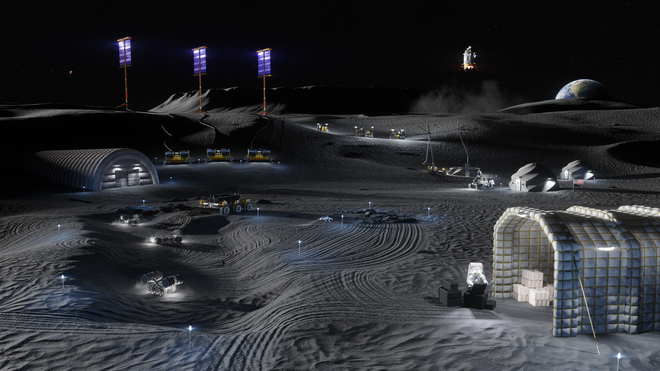
Aptly titled “Moon Base,” NASA calls it “a long-term lunar exploration and infrastructure initiative designed to enable sustained human presence and expanded scientific and commercial activity at the lunar South Pole.”
The U.S. space administration says it “will send astronauts on increasingly difficult missions to explore more of the Moon for scientific discovery, economic benefits, and to build on our foundation for the first crewed missions to Mars.”
NASA updated the public on its work so far on its planned manned moon missions and its outline for a permanent moon base. They also launched the new Moon Base website.
At the press conference, NASA Administrator Jared Isaacman said Moon Base I is targeting a landing around fall 2026. He also said that Moon Base II will deliver the largest single payload to the moon’s surface ever and that Moon Base III will include the Prism payload, which will be a collaboration of several private research companies to create a comprehensive lunar science lab. Both Moon Base II and III are also planned for later this year.
NASA Moon Base Program Executive Carlos García-Galán announced most of the updates, including the graphic below of the planned phases of NASA’s moon bases.
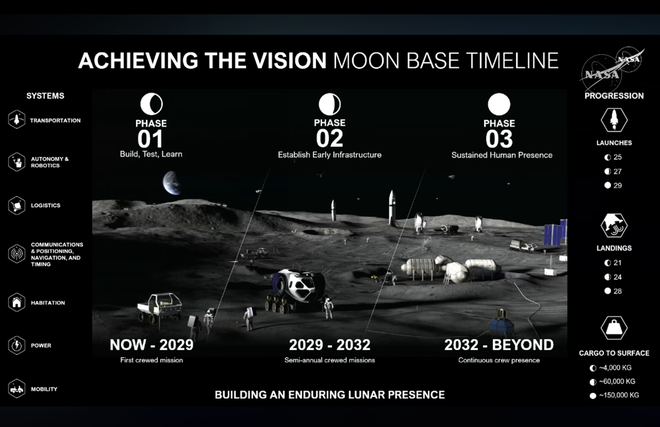
The early lunar infrastructure will be carried to the moon by the Artemis IV and V missions.
García-Galán also announced the awarded funding for aspects of the upcoming moon missions. Blue Origin was announced as the lunar lander supplier for two lunar terrain vehicles, or LTVs. Those LTVs will be supplied by aerospace technology companies Astrolab and Lunar Outpost. Closing out the payload announcement was the spot to supply lunar drones for NASA’s Moonfall mission, meant to scope out potential landing sites for future missions and habitats. The award went to drones from Firefly Aerospace. The funding across all awards totalled almost a billion dollars.
“We have been busy,” García-Galán said.
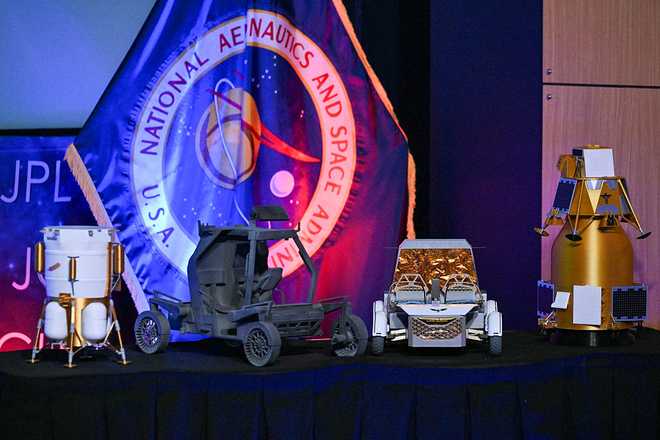
With private collaborations underway, García-Galán said their next update would dive into what international collaborations NASA is working on to get back to the moon.
During a Q&A portion of the event, NASA was asked if those international collaborations mean that any moon base would operate like the International Space Station. Lori Glaze, the acting associate administrator of the Exploration Systems Development Mission Directorate at NASA, clarified that while discussions are ongoing, they don’t see it that way for now.
“I don’t know that this is quite going to be in the ISS style,” Glaze said.
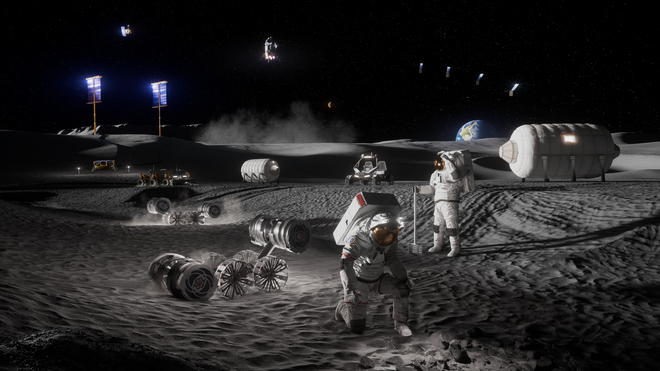
The plans come in the wake of a change in strategy from the space agency.
In March, Isaacman announced that the agency would shift its goal from sending a floating space station into lunar orbit and instead invest billions to build directly on the moon’s surface. NASA also announced it would launch a nuclear-propelled spacecraft to Mars by the end of 2028.
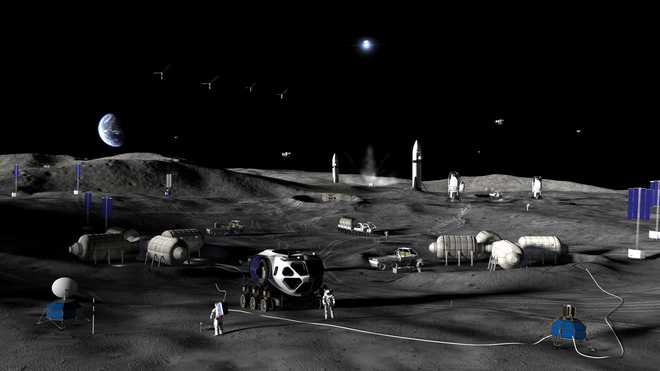
“This time, the goal is not flags and footprints. This time, the goal is to stay,” Isaacman said. “We are providing a demand signal for frequent crewed missions well beyond Artemis V. We intend to work with no fewer than two launch providers, with the aim of crewed landings every six months and additional opportunities for new entrants in the years ahead.”
During the recent Artemis II mission in April, astronauts on the mission’s Orion spacecraft broke the record for the farthest humans have traveled in space. The crew flew around the moon, capturing views of its dark side never before seen by human eyes, and returned safely.
The follow-up mission — Artemis III — had been targeting a landing near the moon’s south pole by another pair of astronauts a year or two later. But with concern growing over the readiness of a lunar lander and moonwalking suits and long gaps between flights, Isaacman announced that the mission would instead focus on launching a lunar lander into orbit around Earth for practice in 2027.
At the news conference, Isaacman ended his remarks with an aspirational tone.
“The grand return is close at hand,” he said.