

Read the full article on KETV 7

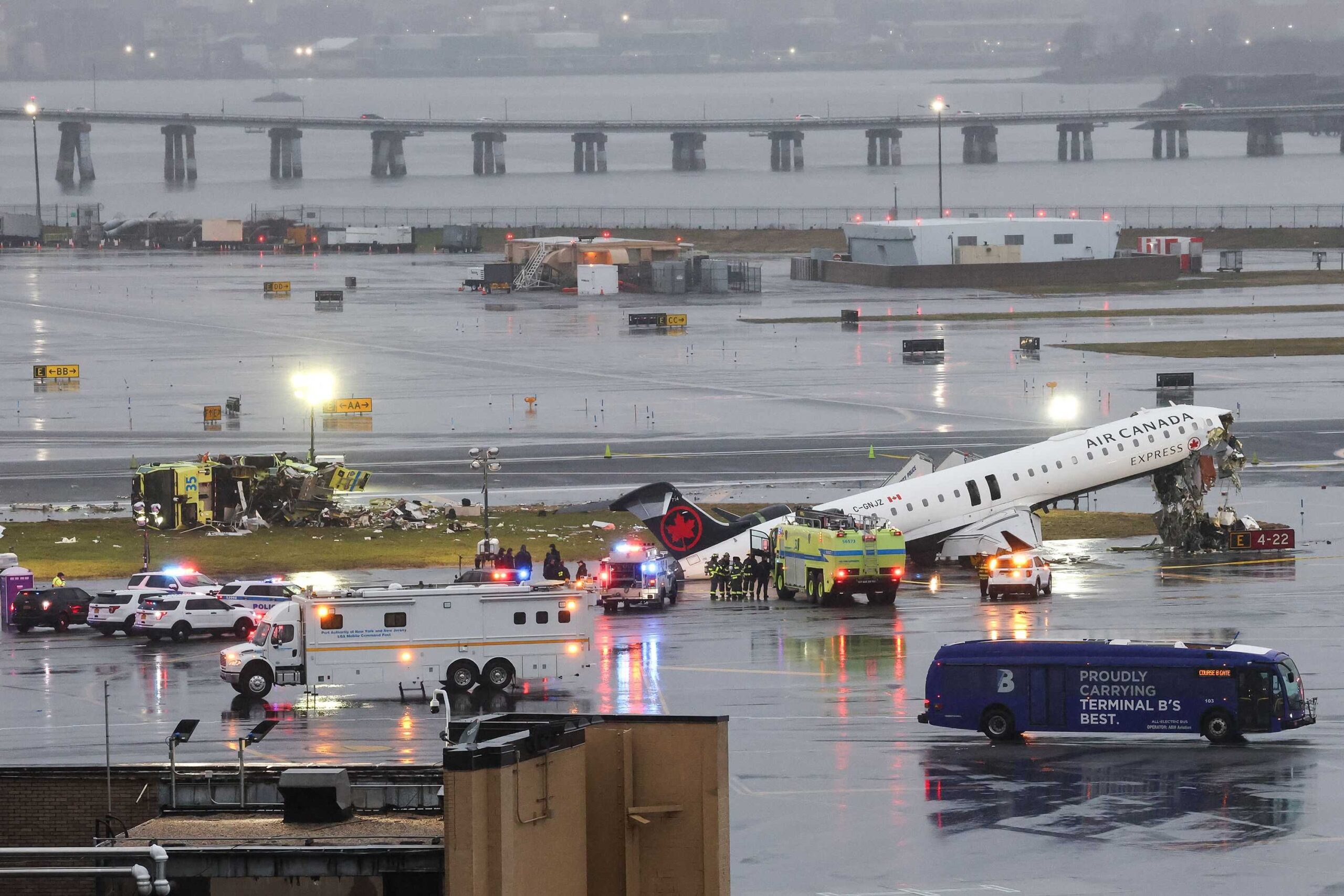
New details from investigators reveal the final moments before an Air Canada Express flight fatally slammed into an airport fire truck crossing the same runway. National Transportation Safety Board Chair Jennifer Hamandy says just 2 people were working in the LaGuardia control tower at the time, with both starting their shifts about 1 hour before the crash. Investigators now say 1 controller was handling the active runway. And airspace immediately surrounding the airport. The second controller, *** supervisor, was also responsible for issuing route clearances to departing flights, an arrangement investigators say was not uncommon for that hour of the night. That is in the standard operating procedures for LaGuardia. Our air traffic control team has stated this is *** problem, that this is *** concern for them for years. But investigators still do not know which controller was specifically overseeing ground control, the movement of planes and vehicles on taxiways. Richard Kennington spent 25 years as an FAA air traffic controller. LaGuardia is one of the most difficult because they have so much aircraft and so little real estate when compared to *** Denver or *** Kennedy or *** DFW. Add. To the complexity, investigators say controllers were already dealing with another emergency just before the crash. *** United Airlines flight aborted its takeoff twice, prompting the response from airport firefighters. 2384 is declaring an emergency. Flight attendants in the back are feeling ill because of the odor. The NTSB says that 1 minute and 3 seconds before the crash, interference garbled *** radio call. From the fire truck to the control tower, the truck radioed again just 20 seconds before the crash, and the LaGuardia Tower granted clearance to cross the runway when the plane was just 100 ft above the ground. Just 9 seconds before the fatal collision, the tower told the fire truck to stop. The plane was 1 2nd from touching down. Stop, stop, stop, stop, stop, stop, stop. Stop truck 1. Stop truck. The NTSB now says the fire truck was not equipped with *** transponder, meaning ground collision warning systems in the tower did not alert controllers to the danger unfolding in front of them. *** CNN review of anonymous safety reports from pilots showed growing concerns about conditions at LaGuardia before the crash. Pilots filed at least *** dozen reports warning of miscommunication, near misses, and increasing pressure on controllers. The pace of operation. is building in LaGuardia. The controllers are pushing the line. One pilot wrote. On thunderstorm days, LGA is starting to feel like DCA did before the accident there. Please do something. I think this was preventable, and we will get to the bottom of it and honor all those that were involved by reassuring that it doesn’t happen again.
Advertisement
The Port Authority of New York and New Jersey is putting tracking devices in airport vehicles after an Air Canada Express regional jet landing at LaGuardia Airport last month slammed into a fire truck on the runway, killing the plane’s two pilots.Thirty-nine people were injured, including the two firefighters in the truck that was hit.The transponders allow surface tracking systems to identify a vehicle and accurately plot it on a map displayed in the control tower, as well as sound an alarm if a collision is about to happen.”We will be expanding that capability across our airports, building on the technology already in place,” James Allen, chief communications officer for the Port Authority, said.In preliminary findings published last week, the National Transportation Safety Board noted LaGuardia is equipped with an Airport Surface Detection Equipment Model X, known as ASDE-X, but it did not warn controllers before the crash due to the lack of tracking devices in the trucks.”ASDE-X provides visual and aural alerts when it detects potential runway incursions or conflicts, giving controllers the ability to intervene before an accident occurs,” the NTSB said. “The equipment did not provide a warning the night of the collision since the fire trucks did not have transponders and were only partially picked up by ground radar.”The controller tried to stop the truck when they realized the crash was imminent, the NTSB reported, but the initial warning may have been misunderstood. The plane struck the fire truck at 104 mph.The FAA issued updated guidance in May 2025 to encourage broader use of transponders in vehicles at airports. Since December, a pilot program at Newark Liberty International Airport, which is also operated by the Port Authority, has been testing the technology.CNN’s Aaron Cooper contributed to this report.
The Port Authority of New York and New Jersey is putting tracking devices in airport vehicles after an Air Canada Express regional jet landing at LaGuardia Airport last month slammed into a fire truck on the runway, killing the plane’s two pilots.
Thirty-nine people were injured, including the two firefighters in the truck that was hit.
Advertisement
The transponders allow surface tracking systems to identify a vehicle and accurately plot it on a map displayed in the control tower, as well as sound an alarm if a collision is about to happen.
“We will be expanding that capability across our airports, building on the technology already in place,” James Allen, chief communications officer for the Port Authority, said.
In preliminary findings published last week, the National Transportation Safety Board noted LaGuardia is equipped with an Airport Surface Detection Equipment Model X, known as ASDE-X, but it did not warn controllers before the crash due to the lack of tracking devices in the trucks.
“ASDE-X provides visual and aural alerts when it detects potential runway incursions or conflicts, giving controllers the ability to intervene before an accident occurs,” the NTSB said. “The equipment did not provide a warning the night of the collision since the fire trucks did not have transponders and were only partially picked up by ground radar.”
The controller tried to stop the truck when they realized the crash was imminent, the NTSB reported, but the initial warning may have been misunderstood. The plane struck the fire truck at 104 mph.
The FAA issued updated guidance in May 2025 to encourage broader use of transponders in vehicles at airports. Since December, a pilot program at Newark Liberty International Airport, which is also operated by the Port Authority, has been testing the technology.
CNN’s Aaron Cooper contributed to this report.