
Read the full article on KETV 7

Doctors have long relied on smoking history to decide who gets screened for lung cancer, but here’s the problem. More than 50% of people diagnosed with the disease every year wouldn’t have qualified for that screening at all. Now researchers at Mass General Brigham Cancer Institute and MIT are using AI to try to change that. Standard lung cancer screening exists through *** low dose CT scan, but only about 20% of people who are eligible for screening actually get checked. While some organizations have since expanded their guidelines until 2022, standard guidelines say CT scans are warranted only for people ages 50 to 80 who have smoked heavily and either still smoke or quit less than 15 years ago. Half of People diagnosed with lung cancer in the US every year would not have met the criteria for screening. Doctors at Mass General Brigham Cancer Institute are working to close that gap. Working with engineers at MIT, they developed an AI tool called SIBI, which can analyze *** single CT scan and generate *** risk score, predicting the likelihood of *** person developing lung cancer over any period up to. Six years in 2023, its developers reported that Sybil was between 86 and 94% accurate in telling which patients were at high risk and which were at low risk of developing cancer within *** year. What Sybil is doing is something that the radiologists can’t do, which is try and predict what’s going to happen *** year from now, two years from now, that may not be on the image today. Sybil works through. Pattern recognition trained on tens of thousands of scans to find biological signals invisible to the human eye. If someone has *** CAT scan today and Sybil gives it *** high risk score, what does that mean for the person? Should we be treating them in *** different way now to mitigate their risk, to lower the chances of this happening to them in the future? We don’t know if it will work in that way, but that’s what we’re hoping. Sybil isn’t approved for routine clinical use outside of trials, but it is being used in research projects at about 1 dozen US hospitals and in more than 30 countries around the world. In Atlanta, I’m Ivan Rodriguez.
Advertisement
A new artificial intelligence tool called Sybil is helping doctors predict lung cancer risk years before it appears on scans, potentially closing gaps in current screening guidelines. Standard lung cancer screening is conducted through low-dose CT scans, but only about 20% of eligible individuals undergo screening. Until 2022, guidelines recommended CT scans only for people aged 50 to 80 who smoked heavily and either still smoke or quit within the last 15 years. “In fact, 50% of people diagnosed with lung cancer in the US every year would not have met the criteria for screening,” said Dr. Lecia Sequist, a medical oncologist at Mass General Brigham Cancer Institute. To address this gap, doctors at Mass General Brigham Cancer Institute collaborated with engineers at MIT to develop Sybil, an AI tool that analyzes a single CT scan and generates a risk score predicting the likelihood of developing lung cancer over a period of up to six years. In 2023, researchers reported that Sybil achieved an accuracy rate of 86% to 94% in distinguishing high-risk patients from low-risk patients within a year. “What Sybil is doing is something that the radiologists can’t do, which is try and predict what’s going to happen 1 year from now, 2 years from now, that may not be on the image today,” Sequist said. Sybil uses pattern recognition, trained on tens of thousands of scans, to detect biological signals invisible to the human eye. “If someone has a CAT scan today and Sybil gives it a high risk score, what does that mean for the person? Should we be, you know, treating them in a different way now to mitigate their risk, to lower the chances of this happening to them in the future? We don’t know if it will work in that way, but that’s what we’re hoping,” Sequist said.
A new artificial intelligence tool called Sybil is helping doctors predict lung cancer risk years before it appears on scans, potentially closing gaps in current screening guidelines.
Standard lung cancer screening is conducted through low-dose CT scans, but only about 20% of eligible individuals undergo screening. Until 2022, guidelines recommended CT scans only for people aged 50 to 80 who smoked heavily and either still smoke or quit within the last 15 years.
Advertisement
“In fact, 50% of people diagnosed with lung cancer in the US every year would not have met the criteria for screening,” said Dr. Lecia Sequist, a medical oncologist at Mass General Brigham Cancer Institute.
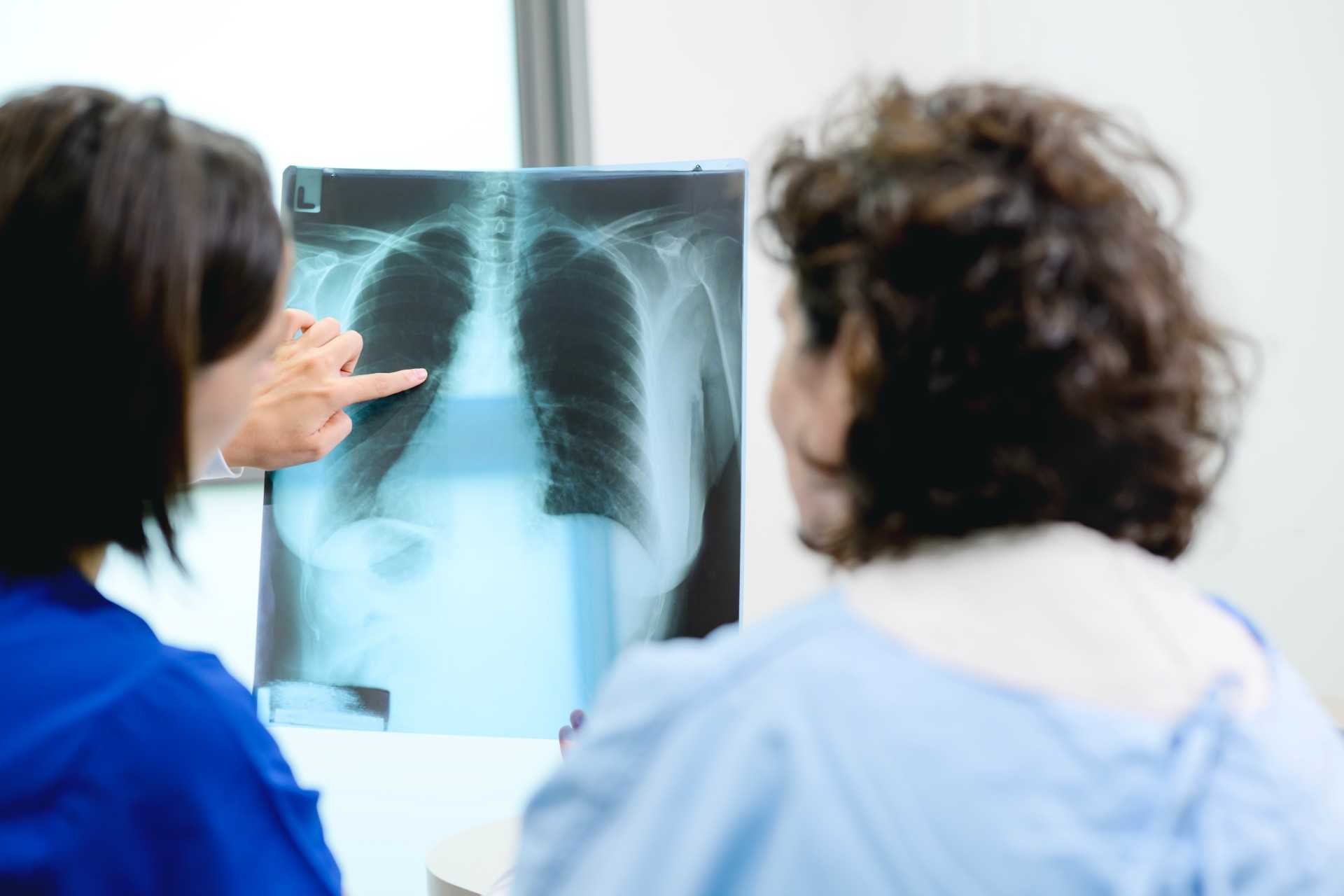
To address this gap, doctors at Mass General Brigham Cancer Institute collaborated with engineers at MIT to develop Sybil, an AI tool that analyzes a single CT scan and generates a risk score predicting the likelihood of developing lung cancer over a period of up to six years.
In 2023, researchers reported that Sybil achieved an accuracy rate of 86% to 94% in distinguishing high-risk patients from low-risk patients within a year.
“What Sybil is doing is something that the radiologists can’t do, which is try and predict what’s going to happen 1 year from now, 2 years from now, that may not be on the image today,” Sequist said.
Sybil uses pattern recognition, trained on tens of thousands of scans, to detect biological signals invisible to the human eye.
“If someone has a CAT scan today and Sybil gives it a high risk score, what does that mean for the person? Should we be, you know, treating them in a different way now to mitigate their risk, to lower the chances of this happening to them in the future? We don’t know if it will work in that way, but that’s what we’re hoping,” Sequist said.