
Read the full article on KETV 7

TODAY IT SITS SUN BAKED IN THE BAY. WHEN THEY GOT THERE, THEY GOT A SHOWER, CLOTHING AND A NEW CELL. JUST A QUICK FERRY RIDE FROM FISHERMAN’S WHARF. AND THE WARDEN SENT A TELEGRAM TO WASHINGTON, D.C., THAT SAID 53 PACKAGES OF FURNITURE ARRIVED. NO DAMAGE. THE WORST OF THE WORST WERE HERE. SO THEY SAY. WELCOME TO THE ROCK. ONE PRISONER’S HOBBY WAS PAINTING HOME AT VARIOUS TIMES TO THE BIRDMAN OF ALCATRAZ, AL CAPONE, WHITEY BULGER, CELL C314. IT’S RIGHT UP THERE. IS WHITEY BULGER, THE MOST FAMOUS CRIMINAL? NO, NO. AT ITS PEAK, ROUGHLY 275 PRISONERS. NOT THAT MANY PRISONERS, BUT THESE WERE THE MOST DANGEROUS AND DISRUPTIVE PRISONERS STILL TODAY. LEGEND HAS IT THAT NO ONE EVER SUCCESSFULLY ESCAPED. DO YOU BELIEVE ANYONE HAS SUCCESSFULLY? I DON’T THINK SO. YOU DON’T THINK SO? UNLESS YOU’RE ONE. NO, NO, NO WE’RE NOT. BUT THEY STILL DON’T THINK SO. BUT YOU KNOW, WE ALWAYS HEARD THE LEGEND, RIGHT? THAT NO ONE HAD ESCAPED. WE ALWAYS HEARD. IT MUST HAVE BEEN A TEASE FOR PRISONERS WHO WERE IN THERE TO LOOK AT SAN FRANCISCO. SO OBVIOUSLY, THIS IS WHERE THE CELL WAS. AND HERE IS WHERE SAN FRANCISCO IS. THIS IS THE VIEW THAT THEY WOULD LOOK AT EVERY DAY WHEN THEY WERE HERE. THEY JUST COULDN’T GET FROM HERE TO THERE, WHICH OBVIOUSLY WAS THE ISSUE HER
Advertisement
The origins of a coyote that drew international headlines after it was spotted swimming ashore to San Francisco’s Alcatraz Island have been revealed.Initially thought to have made the quarter-and-a-mile journey from San Francisco, which faces the southern edge of Alcatraz, the animal turned out to have made a much longer 2-mile swim from Angel Island State Park, according to new DNA evidence collected by National Park Service ecologists. The coyote’s whereabouts still remain unknown. Related video above: Inside the island’s notorious prison”We are surprised by the coyote’s origin,” Park Service wildlife ecologist Bill Merkle said in a Monday news release. “Our working assumption was that the coyote made the swim from San Francisco because it is a significantly shorter distance.” Video of the swimming coyote, something that has never been recorded before, was captured by a tourist in January. At the time, experts didn’t rule out that it could have also been swept in from Marin County or Angel Island, where a family of coyotes also recently established territory after making the swim from the North Bay. “Coyotes can be commonly seen throughout our San Francisco and Marin parklands but never before on Alcatraz,” Julian Espinoza, a spokesperson for the Golden Gate National Recreation Area, which oversees Alcatraz, told SFGATE in an email in January. He confirmed that no other coyote had accomplished the feat since the Park Service took over management of the island in 1972. “This was the first time our park biologists observed anything like this.”At first, it wasn’t clear if the animal, seen shivering as it limped to shore, had survived the swim. But another tourist photographed it again later that month, seemingly healthy, as park staff discovered the carcass of at least one bird and paw prints in the sand.The remains became a cause for concern with the seabird nesting season on the horizon. In February, thousands of birds descend on the island, and the area is cordoned off to the public. Though the coyote hadn’t been sighted since the Jan. 24 photograph, Winchell told SFGATE that plans were underway to “humanely trap and remove” the animal within a week if it didn’t leave on its own. Park staff then planned to relocate it to an undetermined location outside San Francisco where it likely came from — one with better habitat and more varied prey. Park Service staff also expressed concern about the coyote’s ability to survive on Alcatraz in the long term, Winchell said, due in part to the island’s lack of fresh water and its size, 22 acres with no cover. “If a coyote ever does reappear on Alcatraz, the timing of its arrival would drive much of our decision making about what to do next,” he told SFGATE in an email on Monday. “If a coyote returned to the island just before or during the seabird breeding season, we would likely need to quickly capture and relocate the animal off the island to protect birds, chicks, and eggs. If a coyote arrived just after breeding season ended, it could be a great opportunity to monitor and study the animal for a period of time.”Staff would still need to relocate it before the next bird nesting season, he noted. Wanting to learn more about the visitor, park biologists installed trail cameras and audio recording devices for signs of it, but months of follow-up monitoring yielded nothing. Experts eventually collected scat from the animal, which was sent to the Mammalian Ecology and Conservation Unit of UC Davis’ Veterinary Genetics Laboratory for DNA analysis. From there, they learned the coyote was a male, with results matching him to a coyote previously sampled from the Angel Island population, according to Dr. Ben Sacks.The search is on for the animal, which has evaded eyewitnesses and cameras alike. “We don’t know what happened to the coyote,” Merkle said. “But he proved himself an expert swimmer to get to Alcatraz, and I hope he made a successful swim back home to Angel Island.”
The origins of a coyote that drew international headlines after it was spotted swimming ashore to San Francisco’s Alcatraz Island have been revealed.
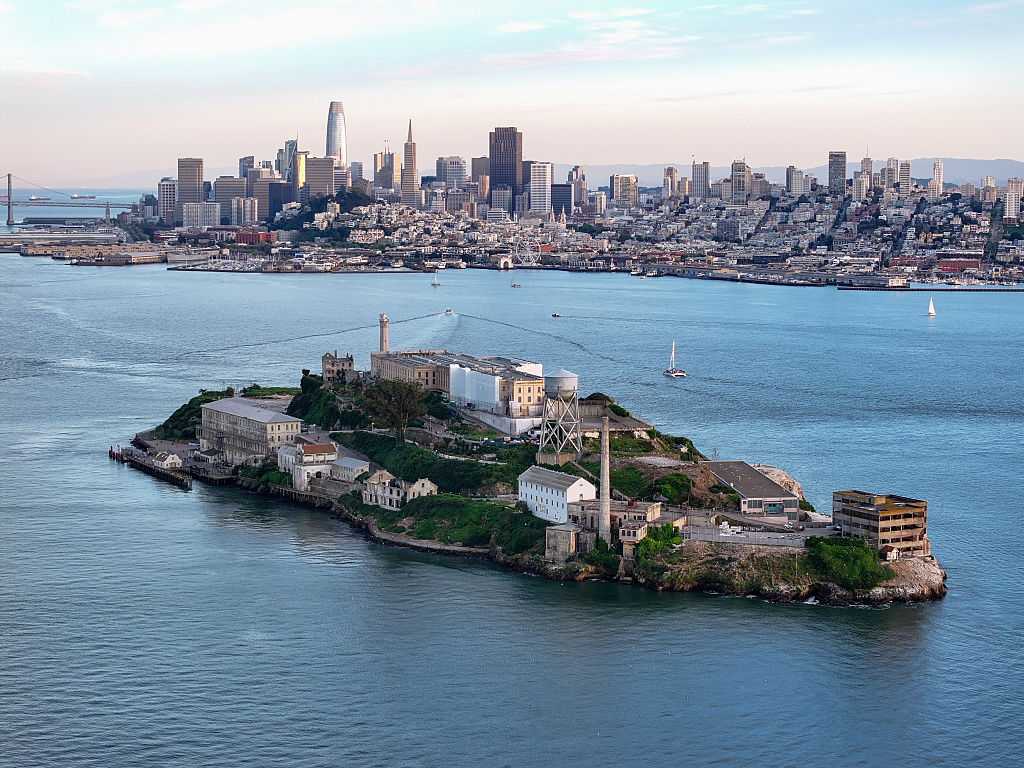
Initially thought to have made the quarter-and-a-mile journey from San Francisco, which faces the southern edge of Alcatraz, the animal turned out to have made a much longer 2-mile swim from Angel Island State Park, according to new DNA evidence collected by National Park Service ecologists. The coyote’s whereabouts still remain unknown.
Advertisement
Related video above: Inside the island’s notorious prison
“We are surprised by the coyote’s origin,” Park Service wildlife ecologist Bill Merkle said in a Monday news release. “Our working assumption was that the coyote made the swim from San Francisco because it is a significantly shorter distance.”
Video of the swimming coyote, something that has never been recorded before, was captured by a tourist in January. At the time, experts didn’t rule out that it could have also been swept in from Marin County or Angel Island, where a family of coyotes also recently established territory after making the swim from the North Bay.
“Coyotes can be commonly seen throughout our San Francisco and Marin parklands but never before on Alcatraz,” Julian Espinoza, a spokesperson for the Golden Gate National Recreation Area, which oversees Alcatraz, told SFGATE in an email in January. He confirmed that no other coyote had accomplished the feat since the Park Service took over management of the island in 1972. “This was the first time our park biologists observed anything like this.”
At first, it wasn’t clear if the animal, seen shivering as it limped to shore, had survived the swim. But another tourist photographed it again later that month, seemingly healthy, as park staff discovered the carcass of at least one bird and paw prints in the sand.
The remains became a cause for concern with the seabird nesting season on the horizon. In February, thousands of birds descend on the island, and the area is cordoned off to the public. Though the coyote hadn’t been sighted since the Jan. 24 photograph, Winchell told SFGATE that plans were underway to “humanely trap and remove” the animal within a week if it didn’t leave on its own. Park staff then planned to relocate it to an undetermined location outside San Francisco where it likely came from — one with better habitat and more varied prey.
Park Service staff also expressed concern about the coyote’s ability to survive on Alcatraz in the long term, Winchell said, due in part to the island’s lack of fresh water and its size, 22 acres with no cover.
“If a coyote ever does reappear on Alcatraz, the timing of its arrival would drive much of our decision making about what to do next,” he told SFGATE in an email on Monday. “If a coyote returned to the island just before or during the seabird breeding season, we would likely need to quickly capture and relocate the animal off the island to protect birds, chicks, and eggs. If a coyote arrived just after breeding season ended, it could be a great opportunity to monitor and study the animal for a period of time.”
Staff would still need to relocate it before the next bird nesting season, he noted.
Wanting to learn more about the visitor, park biologists installed trail cameras and audio recording devices for signs of it, but months of follow-up monitoring yielded nothing. Experts eventually collected scat from the animal, which was sent to the Mammalian Ecology and Conservation Unit of UC Davis’ Veterinary Genetics Laboratory for DNA analysis. From there, they learned the coyote was a male, with results matching him to a coyote previously sampled from the Angel Island population, according to Dr. Ben Sacks.
The search is on for the animal, which has evaded eyewitnesses and cameras alike.
“We don’t know what happened to the coyote,” Merkle said. “But he proved himself an expert swimmer to get to Alcatraz, and I hope he made a successful swim back home to Angel Island.”