

Read the full article on KETV 7
America 250: The Space Race | From Cold War rivalry to lunar ambitions

CAPE CANAVERAL, Fla. —
The United States’ space exploration journey began in the late 1950s with the construction of the nation’s first operational spaceport at Cape Canaveral, Florida, as part of efforts to counter the Soviet Union’s advancements in space during the Cold War.
A Dec. 6, 1957, Vanguard rocket explosion marked an early setback for the U.S., while the Soviet Union achieved several milestones, including launching the first satellite, sending the first man and the first American woman into space, and conducting the first spacewalk.
Advertisement
“You are hearing the actual signals transmitted by the Earth-circling satellite, one of the great scientific feats of the age,” a news reel announced during the era when the Sputnik satellite orbited the Earth.
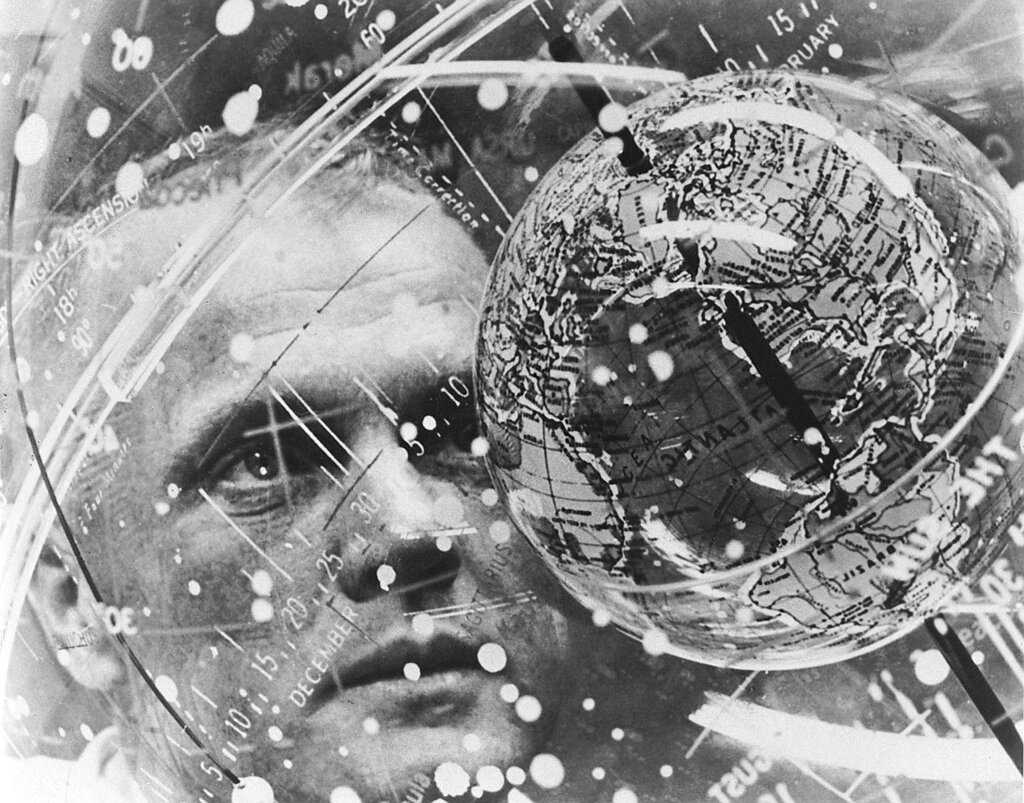
In this February 1962 photo made available by NASA, astronaut John Glenn looks into a Celestial Training Device globe at the Aeromedical Laboratory at Cape Canaveral, Fla. Glenn, the first American to orbit Earth who later spent 24 years representing Ohio in the Senate, died Thursday, Dec. 8, 2016, at the age of 95. (NASA via AP)
Landing on the moon
Landing on the moon became the ultimate goal for the U.S., as President John F. Kennedy famously declared, “We choose to go to the moon in this decade and do the other things, not because they are easy, but because they are hard.”
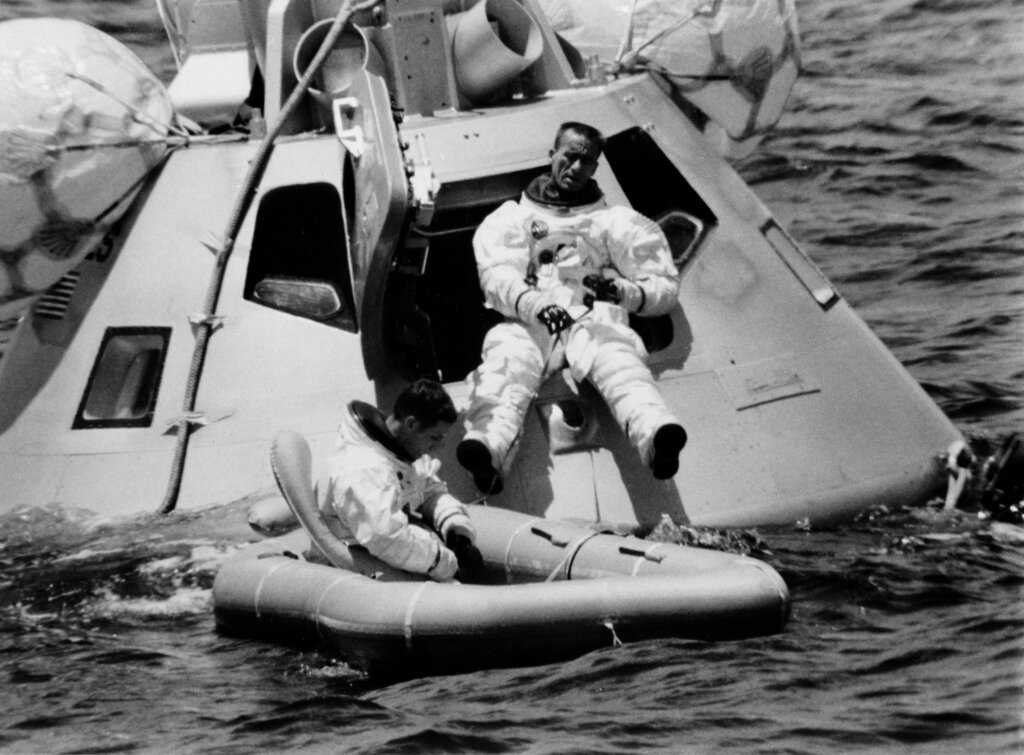
In this handout photo from NASA, civilian astronaut R. Walter Cunningham comes out of the floating Apollo 7 capsule while Air Force Maj. Don F. Eisele works on safety procedures in the liferaft during evacuation training at Cape Kennedy, Fla., Aug. 23, 1968. (AP Photo/NASA)
Mercury missions
The Mercury missions from 1959 to 1963 paved the way, with Alan Shepard becoming the first American in space on May 5, 1961.
“Liftoff … and the clock has started,” the launch announcer said.
Less than a year later, John Glenn orbited Earth three times, remarking, “I feel zero G and I feel fine … oh, that view is tremendous.”
Gemini program
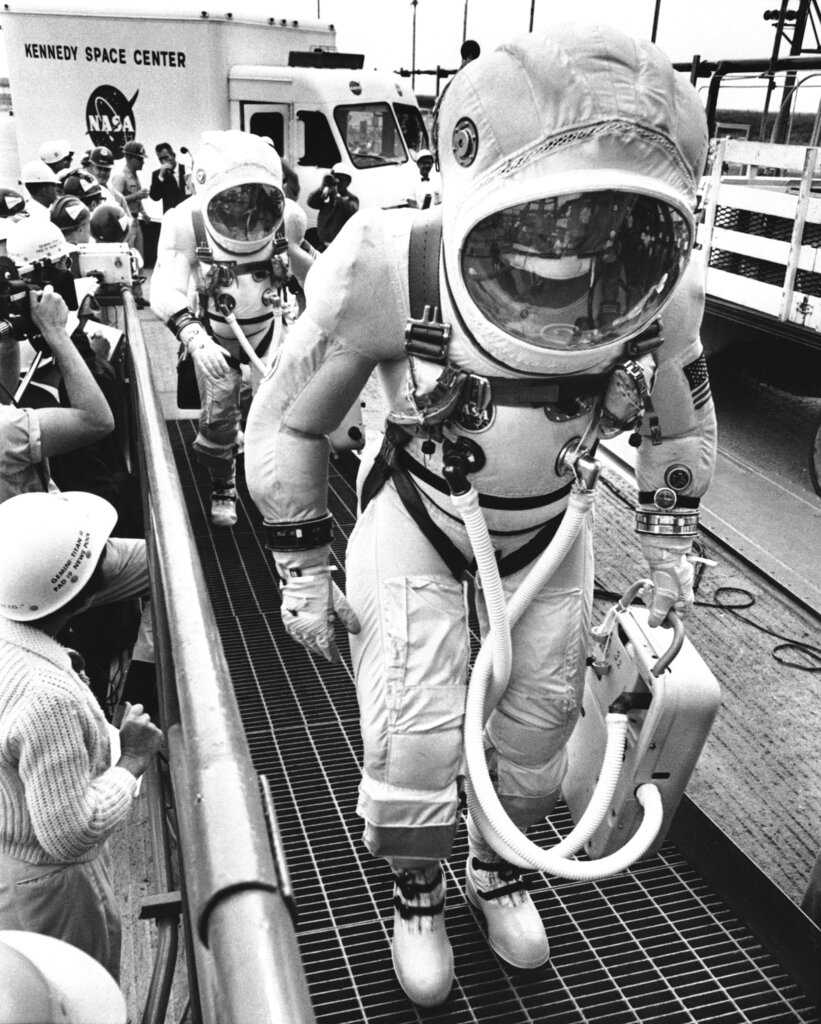
Command pilot Frank Borman, followed by his fellow Gemini 7 astronaut James Lovell carry their air conditioning units as they climb ramp from van to their spacecraft at Cape Kennedy, Florida on Dec. 4, 1965. The two were blasted off right on scheduled in afternoon on a projected 14 day orbital flight. (AP Photo)
The Gemini program followed, with teams of two astronauts conducting groundbreaking missions from 1962 to 1968. These included the first American spacewalk by astronaut Ed White and spacecraft docking maneuvers with a lunar lander, all under the backdrop of America’s determination to surpass the Soviet Union.
“I believe that this nation should commit itself to achieving a goal of landing a man on the moon and returning him safely to Earth,” Kennedy said, emphasizing the importance of being first.
Apollo program
The Apollo program culminated in the historic Apollo 11 mission.
“Five, four, three, two, one, zero … all engines running. Liftoff — we have a liftoff,” the announcer declared as the spacecraft launched.
Four days later, the world witnessed Neil Armstrong’s iconic words: “One small step for man … one giant leap for mankind.”
Artemis program
Now, the Artemis program aims to take America’s lunar ambitions further, with plans to not just land on the moon but to build a permanent base on its surface.