

Read the full article on KETV 7
Does vinegar kill cyclospora? Answering your questions about produce safety
Digital Curator
The cyclospora investigation that has Americans eyeing their leafy greens with suspicion continues.
The FDA initially identified the source of the diarrhea-linked parasite’s outbreak as iceberg lettuce from a central Mexico farm supplied by Taylor Farms, though it said Sunday that test results from one lettuce sample were a false positive.
Advertisement
However, Taylor Farms’ voluntary recall of its lettuce still stands – you can find a full list of the recalled products here – and the FDA said Monday that its “investigation and outbreak data continue to converge on shredded iceberg lettuce from Taylor Farms locations in Central Mexico.”
There is “overwhelming epidemiological data supporting the current voluntary recall by Taylor Farms,” it said in a statement. The evidence for the recall came from interviews with people who tested positive for cyclospora.
With information changing quickly, following safety advice from the early days of the investigation is still smart out of an abundance of caution.
Top safety tips
Always wash your hands with soap and water after using the bathroom and before handling food. Antibacterial soap won’t kill the parasite, but soap and water are highly effective at removing cyclospora.
The best way to kill the parasite is by cooking. Since washing alone can’t guarantee the parasite’s removal, cook produce to a temperature of at least 158 degrees Fahrenheit, or 70 degrees Celsius.
What foods should you avoid?
Experts recommend avoiding precut and packaged produce because it undergoes more handling. Bagged salad mixes and kits have been linked to past cyclosporiasis outbreaks, according to health officials in Michigan, which is at the center of the outbreak.
Specifically, the FDA encourages the public to continue to avoid all products listed in Taylor Farms’ voluntary recall.
Raspberries, basil, salad mixes, cilantro, berry and fruit mixes, lettuce and snap peas have all been linked to previous outbreaks, too. The bumpy surface of raspberries, for instance, makes it easier for the parasite to stay lodged in the nooks and crannies. However, no one source has been identified in the current outbreak.
Does washing produce remove cyclospora?
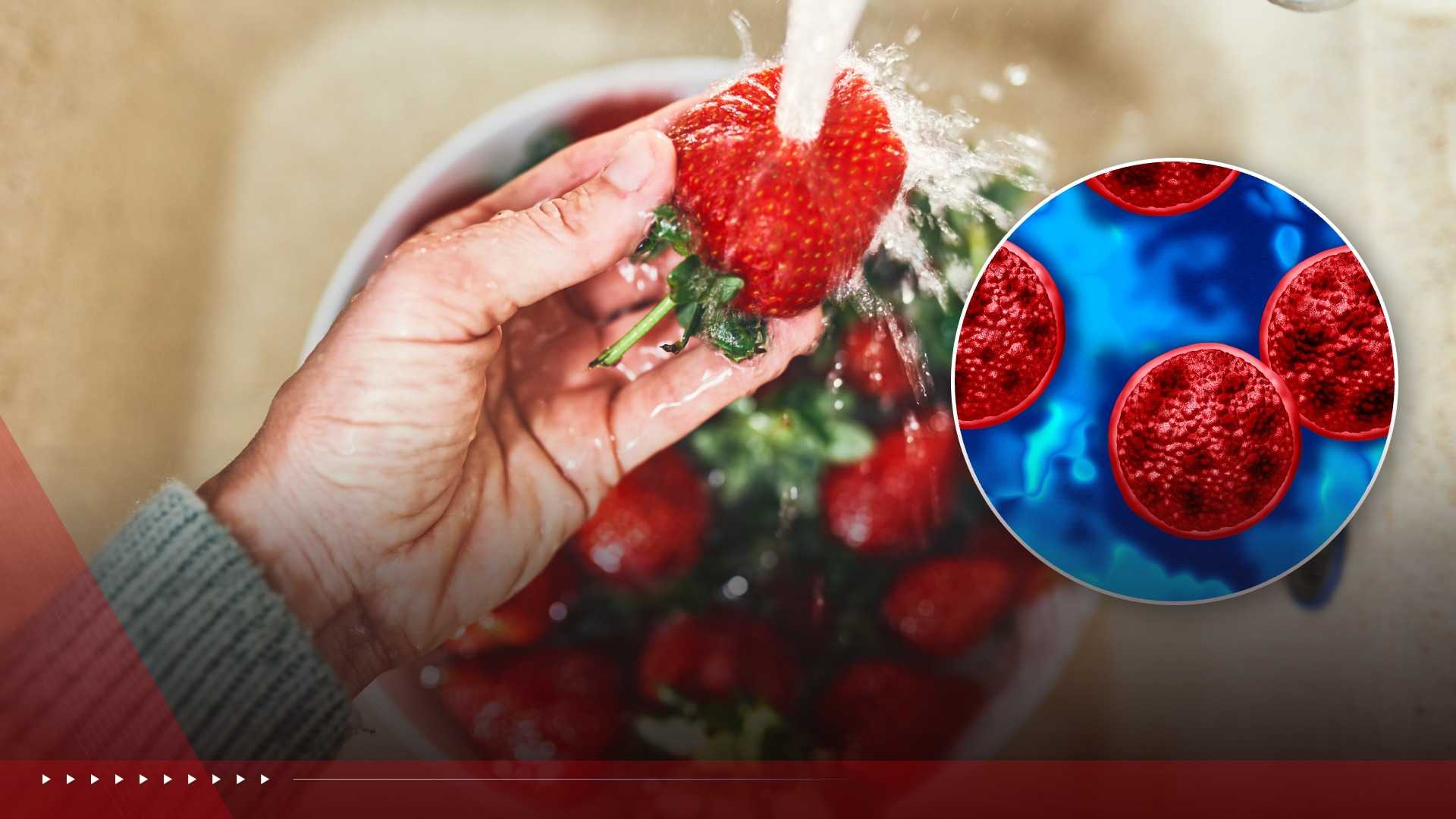
The CDC recommends you thoroughly wash produce to remove cyclospora, even if it’s labeled as pre-washed. Scrub firm produce like melons and cucumbers with a clean brush. And make sure to cut away damaged or bruised areas on produce.
Peel fruits and vegetables as much as possible, and wash them before peeling so the knife doesn’t carry germs into the flesh of the produce.
If you’re craving lettuce, consider buying a whole head of it and discarding the outer two to three layers of the leaves, as well as washing the inner leaves.
Washing doesn’t guarantee that you’ll remove all of the potential parasites, but it’s a good first step, the FDA says.
What methods kill cyclospora?
Vinegar won’t kill the parasite. Research shows it can help remove it. You can submerge produce in a mix of one part vinegar and three parts water and swish it around for a few minutes. Rinse with water to get rid of the vinegar flavor. However, cooking is still your best move.
The processing of frozen produce may reduce the parasite, but freezing is not a reliable way to kill or remove it. Canned fruits and vegetables that have been heated during the canning process are a safe bet.
What not to do to your produce
Cyclospora parasites are resistant to standard chlorine-based sanitizers, according to the FDA. Do not use soap or bleach to rinse produce.
Other things to know
Cyclosporiasis, the disease caused by the parasite cyclospora, is not usually spread directly from person to person. Instead, people can become infected by consuming contaminated food or water, the CDC says.
Symptoms don’t show up until two to 14 days after exposure, making it hard to pinpoint the source of infection. They can last for weeks.
If you start to feel ill, you should consult your healthcare provider, especially if you have diarrhea or other severe symptoms that last for more than three days, according to the FDA. One of the main concerns with diarrhea is dehydration from losing fluids, which can lead to complications.
Even though it’s not bacteria, cyclosporiasis can be treated with antibiotics.
According to the Cleveland Clinic, you should avoid swimming if you have diarrhea and wait at least two weeks to swim after it goes away.