

Read the full article on KETV 7

A new government report Thursday shows inflation surged to 3.5% compared to last year, the highest increase in nearly three years. The spike is driven by rising gas prices fueled by the ongoing war in Iran, according to economists.In turn, drivers paid $81.3 billion more for gas in March than in February, according to the same report. As of Thursday midday, the national average for a gallon of regular gas stood at $4.30, a 27-cent increase from last week, according to AAA. Oil prices also spiked to a four-year high overnight Thursday, following reports that President Donald Trump is considering bombing Iran again. And, while the market has settled slightly since then, oil prices remain at wartime highs. Trump administration officials say the price increases are a short-term cost for long-term national security. “The price of gasoline, of course, is very, very high. We expect that that’s a temporary phenomenon,” National Economic Council Director Kevin Hassett said while answering reporters’ questions Thursday. However, one economist suggested higher prices, especially gas, may last well past November’s midterm elections.“The Iran War has essentially made that a guarantee,” Bankrate senior economic analyst Mark Hamrick said. “The longer this goes, the more sustainable these price increases or cost increases will be.”Hearst’s Get the Facts Data Team reviewed county-by-county changes in gas prices since the war in Iran began, revealing significant regional differences. For example, coastal counties were the first to feel rising gas prices. It took longer for those prices to reach the middle of the country, though they are elevated now.The data also shows that about half of the country is seeing gas top $4 per gallon, while less than 50 counties across the country are still seeing gas under $3 per gallon. A new GDP report also released Thursday showed the economy grew 2% in the first quarter of 2026. Hamrick says that while this would normally be a good sign, the underlying factors are things to consider.Hamrick says a large part of that growth comes from corporate investments in artificial intelligence and infrastructure. The average consumer, Hamrick says, is unlikely to feel the benefits due to inflation pressures.Watch the latest on inflation and gas prices:
A new government report Thursday shows inflation surged to 3.5% compared to last year, the highest increase in nearly three years. The spike is driven by rising gas prices fueled by the ongoing war in Iran, according to economists.
In turn, drivers paid $81.3 billion more for gas in March than in February, according to the same report.
Advertisement
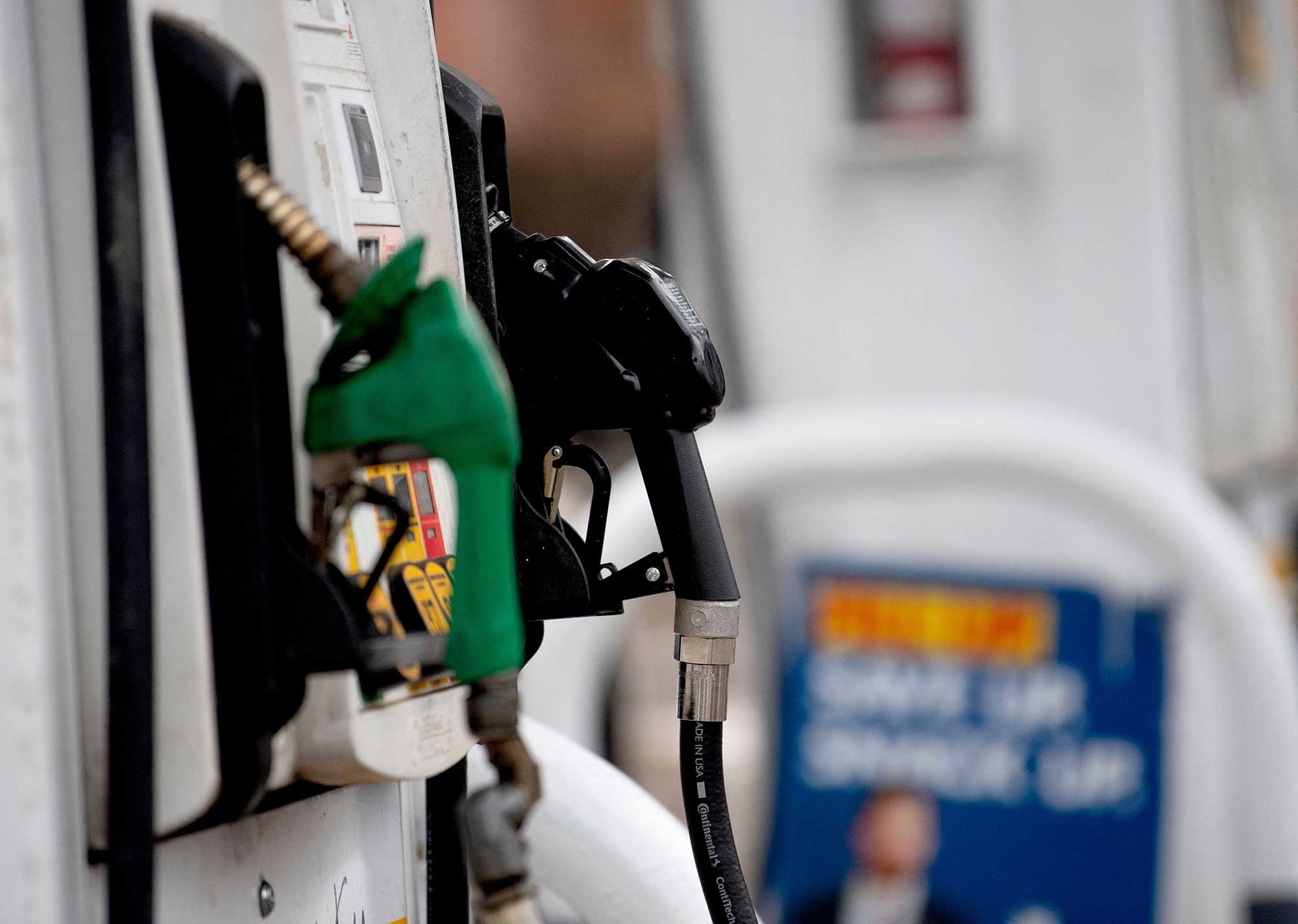
As of Thursday midday, the national average for a gallon of regular gas stood at $4.30, a 27-cent increase from last week, according to AAA.
Oil prices also spiked to a four-year high overnight Thursday, following reports that President Donald Trump is considering bombing Iran again. And, while the market has settled slightly since then, oil prices remain at wartime highs.
Trump administration officials say the price increases are a short-term cost for long-term national security.
“The price of gasoline, of course, is very, very high. We expect that that’s a temporary phenomenon,” National Economic Council Director Kevin Hassett said while answering reporters’ questions Thursday.
However, one economist suggested higher prices, especially gas, may last well past November’s midterm elections.
“The Iran War has essentially made that a guarantee,” Bankrate senior economic analyst Mark Hamrick said. “The longer this goes, the more sustainable these price increases or cost increases will be.”
Hearst’s Get the Facts Data Team reviewed county-by-county changes in gas prices since the war in Iran began, revealing significant regional differences. For example, coastal counties were the first to feel rising gas prices. It took longer for those prices to reach the middle of the country, though they are elevated now.
The data also shows that about half of the country is seeing gas top $4 per gallon, while less than 50 counties across the country are still seeing gas under $3 per gallon.
A new GDP report also released Thursday showed the economy grew 2% in the first quarter of 2026. Hamrick says that while this would normally be a good sign, the underlying factors are things to consider.
Hamrick says a large part of that growth comes from corporate investments in artificial intelligence and infrastructure. The average consumer, Hamrick says, is unlikely to feel the benefits due to inflation pressures.
Watch the latest on inflation and gas prices: