

Read the full article on KETV 7

The greenhouse on Bellevue University’s campus is home to plants from around the world. In between classes, students wander through bluestem grasses from Nebraska’s plains, pineapples from tropical Hawaii and pitcher plants from the South.”We’re doing the hard science and the old-fashioned, get-your-hands-dirty science,” lab manager Johnny Farnen said.Farnen said it’s also one of the cheapest buildings on Bellevue University’s campus.”We still use less natural gas and water and electricity than the other buildings,” Farnen said.Since January, Bellevue University reported that the lab has decreased its water use by 95% and its electricity use by 85%. Farnen oversees it all and makes sure the Sustainability Lab lives up to its.”The LED lights are set not by lights on, lights off, but by how much available light the plants need for those growth cycles,” Farnen said.The lab takes in data from the outside weather, like temperature, and adjusts to meet the plants’ needs. If it’s too hot, the lab can take in more water, spread it across the cooling walls and disperse the cool air across the plants.”Our water that we use inside is all collected precipitation,” Farnen said. “The entire complex collects rain and snow melt, and then we store it underground and we utilize it inside.” The team even reuses some of the plant materials, which the university said has saved up to $2,700. Farnen also prides himself and his team on propagating their plants, which has saved an estimated $10,000.”For instance, potting soil. Most people would throw it away,” Farnen said, “We compost it and, in a year, it’s ready to use again.”The lab will soon share its benefits across the university, starting with a partnership between Farnen’s team and Bellevue’s dining service.”They’ll start growing plants for the cafeteria, and then also they will start working on getting their food waste for composting,” Phil Fitzpatrick, assistant dean of the College of Science and Technology, said.The Sustainability Lab is also going to launch a community garden for students, staff and faculty to use. While you might not have access to a weather-automated greenhouse, Farnen said you can still be sustainable at home.”One of my favorites that I use in my own property is these water-storing gel crystals. You till them into your soil, and when it rains, they absorb water,” Farnen said. “They’re inexpensive and last two to three years. You just till those in and you don’t have to water every day.But Farnen said the best way to save water is to put native Nebraska plants into your yard. They can keep up with the weather changes the best and have adapted to the soil.Make sure you can always see the latest news, weather, sports and more from KETV NewsWatch 7 on Google search.NAVIGATE: Home | Weather | Local News | National | Sports | Newscasts on demand |
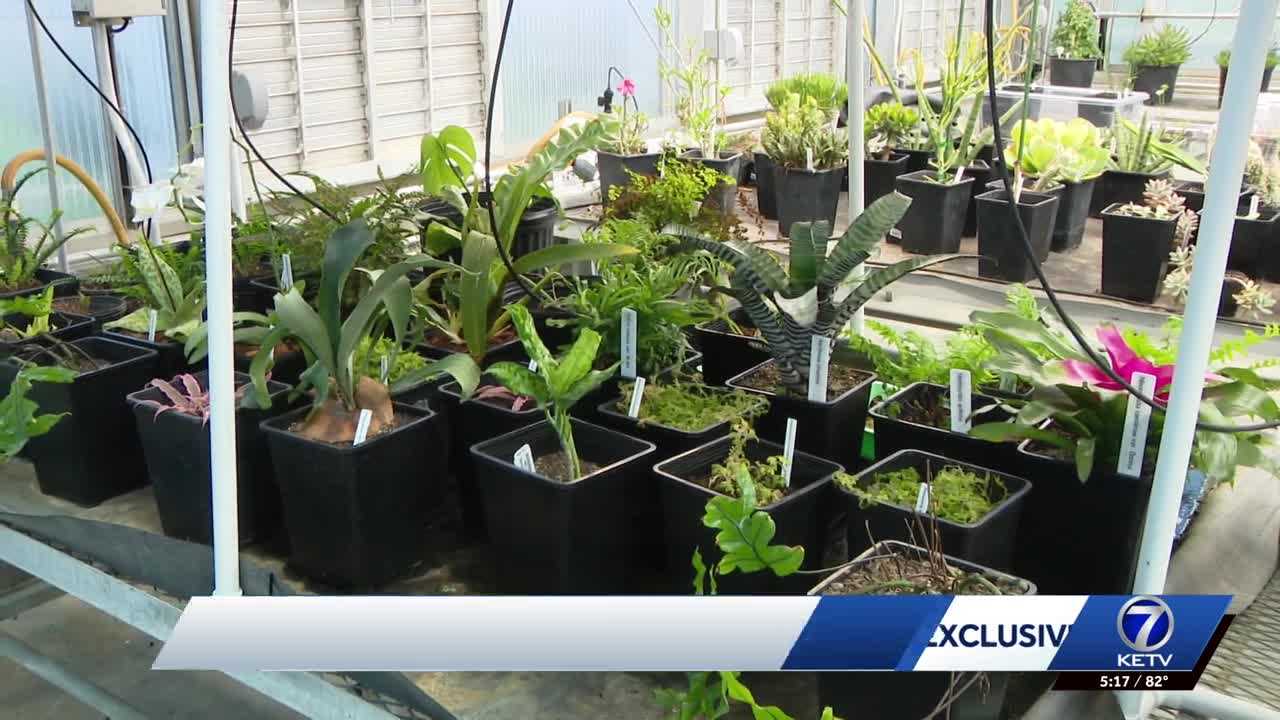
The greenhouse on Bellevue University’s campus is home to plants from around the world. In between classes, students wander through bluestem grasses from Nebraska’s plains, pineapples from tropical Hawaii and pitcher plants from the South.
“We’re doing the hard science and the old-fashioned, get-your-hands-dirty science,” lab manager Johnny Farnen said.
Advertisement
Farnen said it’s also one of the cheapest buildings on Bellevue University’s campus.
“We still use less natural gas and water and electricity than the other buildings,” Farnen said.
Since January, Bellevue University reported that the lab has decreased its water use by 95% and its electricity use by 85%. Farnen oversees it all and makes sure the Sustainability Lab lives up to its.
“The LED lights are set not by lights on, lights off, but by how much available light the plants need for those growth cycles,” Farnen said.
The lab takes in data from the outside weather, like temperature, and adjusts to meet the plants’ needs. If it’s too hot, the lab can take in more water, spread it across the cooling walls and disperse the cool air across the plants.
“Our water that we use inside is all collected precipitation,” Farnen said. “The entire complex collects rain and snow melt, and then we store it underground and we utilize it inside.”
The team even reuses some of the plant materials, which the university said has saved up to $2,700. Farnen also prides himself and his team on propagating their plants, which has saved an estimated $10,000.
“For instance, potting soil. Most people would throw it away,” Farnen said, “We compost it and, in a year, it’s ready to use again.”
The lab will soon share its benefits across the university, starting with a partnership between Farnen’s team and Bellevue’s dining service.
“They’ll start growing plants for the cafeteria, and then also they will start working on getting their food waste for composting,” Phil Fitzpatrick, assistant dean of the College of Science and Technology, said.
The Sustainability Lab is also going to launch a community garden for students, staff and faculty to use. While you might not have access to a weather-automated greenhouse, Farnen said you can still be sustainable at home.
“One of my favorites that I use in my own property is these water-storing gel crystals. You till them into your soil, and when it rains, they absorb water,” Farnen said. “They’re inexpensive and last two to three years. You just till those in and you don’t have to water every day.
But Farnen said the best way to save water is to put native Nebraska plants into your yard. They can keep up with the weather changes the best and have adapted to the soil.
Make sure you can always see the latest news, weather, sports and more from KETV NewsWatch 7 on Google search.
NAVIGATE: Home | Weather | Local News | National | Sports | Newscasts on demand |