
Read the full article on KETV 7
Restored gravestone at a Massachusetts cemetery tells story of formerly enslaved man known as Boston

Digital Media Manager
Conservation work returned a rare and historic gravestone to Boston, Massachusetts’ Granary Burying Ground, preserving the story of a formerly enslaved man known as Boston. The marker is believed to be one of the oldest gravestones of a free Black person in America.
Sister station WCVB in Boston reports that Mayor Michelle Wu first alluded to the discovery during a speech at the city’s annual Independence Day Oration at Faneuil Hall.
Advertisement
“It’s been there all along. We just had to go look and share the story,” Wu said at the time.
City officials said Thursday that the gravestone was obscured for decades and left off modern surveys of the site. The site’s new recognition began with the Boston Parks and Recreation Department’s Historic Burying Ground Initiative and the observation of an unusual epitaph.
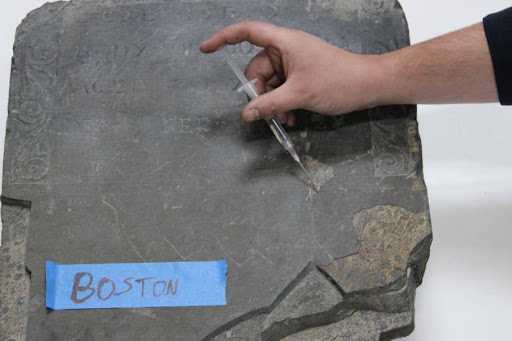
It says only “Boston,” and is dated 1728/1729.
According to the city, Director of Boston’s Historic Burying Grounds Kelly Thomas’ research connected it to the life of a formerly enslaved man named Sebastian whose story was featured in the 2024 book “Belonging: An Intimate History of Slavery and Family in Early New England” by Gloria McCahon Whiting.
“Thomas determined that the man memorialized as ‘Boston’ and Sebastian were the same man. It is likely his name transitioned from Sebastian to Bastian, then Bastian to ‘Boston’ over the years in the documentary records,” city officials wrote.
He was born in bondage but developed white allies during a long campaign to obtain a legal marriage to his wife, who was also a slave, Whiting said in a statement. He later obtained his freedom and became a father of six.
“Evidence suggests that his advocacy helped inspire both the publication of New England’s earliest antislavery tract and the passage of legislation in Massachusetts supporting marriage rights for the enslaved,” Whiting said.
Citing historical accounts, the city said that Boston was known as “a respected member of the community” and his obituary was published in the New England Weekly Journal of Feb. 24, 1729.
“The rediscovery of this gravestone highlights the important role of historic preservation and the historic burying grounds in bringing to light overlooked stories in the City’s rich history,” Thomas said in a statement.
How the gravestone was restored
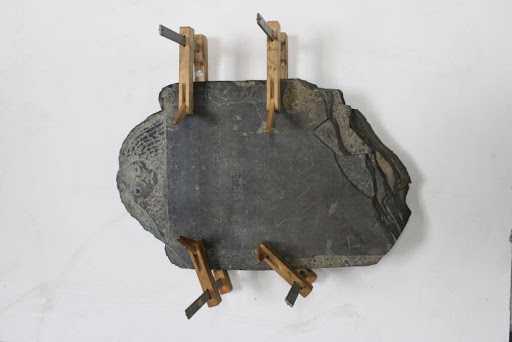
Boston’s gravestone was found partially buried and badly damaged by centuries of weathering. According to the city, it was documented and then moved to a climate-controlled workspace where it was cleaned to help reveal the inscription.
“Conservators also repaired parts of the grave with conservation-grade materials to prevent further deterioration,” the city said.
Following the conservation work, the gravestone was returned to the Granary Burying Ground. It was set vertically at its original location.
“This conservation work not only preserved a rare colonial-era artifact but also made the inscription legible for the first time in decades, enabling the Boston Parks and Recreation Department to identify the man memorialized as Boston,” city officials said.