

Read the full article on KETV 7
NASA plans to light a fire on the moon for the very first time — here’s why
Step 1: Get to the moon. Step 2: Light a fire.
Copy Editor
Astronauts want to light it up on the moon — for science.
The National Aeronautics and Space Administration, as part of its Artemis program, is planning to conduct combustion experiments on the lunar surface to better understand how fire operates outside of Earth.
Advertisement
Related video above: NASA attempts rescue mission for space telescope
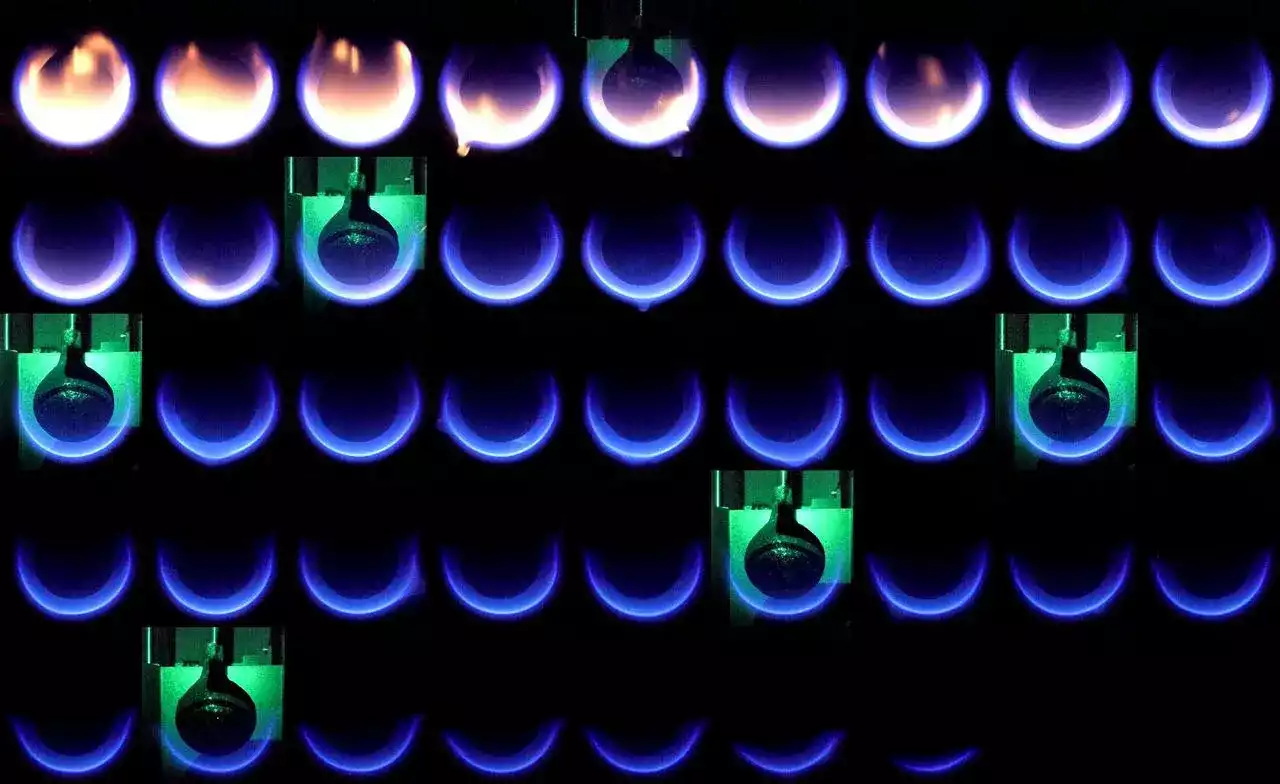
Think of a lit match. On Earth, the flame has a distinct, upward teardrop shape. This happens due to gravity, with hotter air rising, creating the yellow trail as it burns up. In space, a flame instead takes on the shape of a blue sphere, representing a slower, cooler burn, referred to as a “cool flame.”
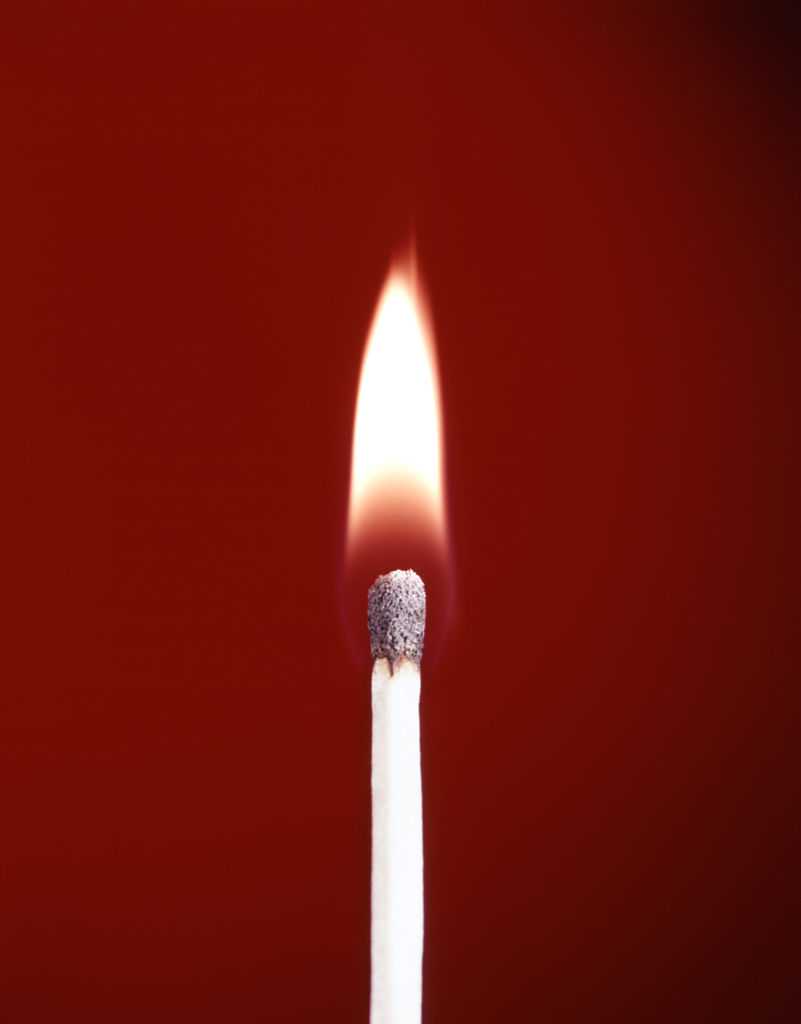
A typical lit match.
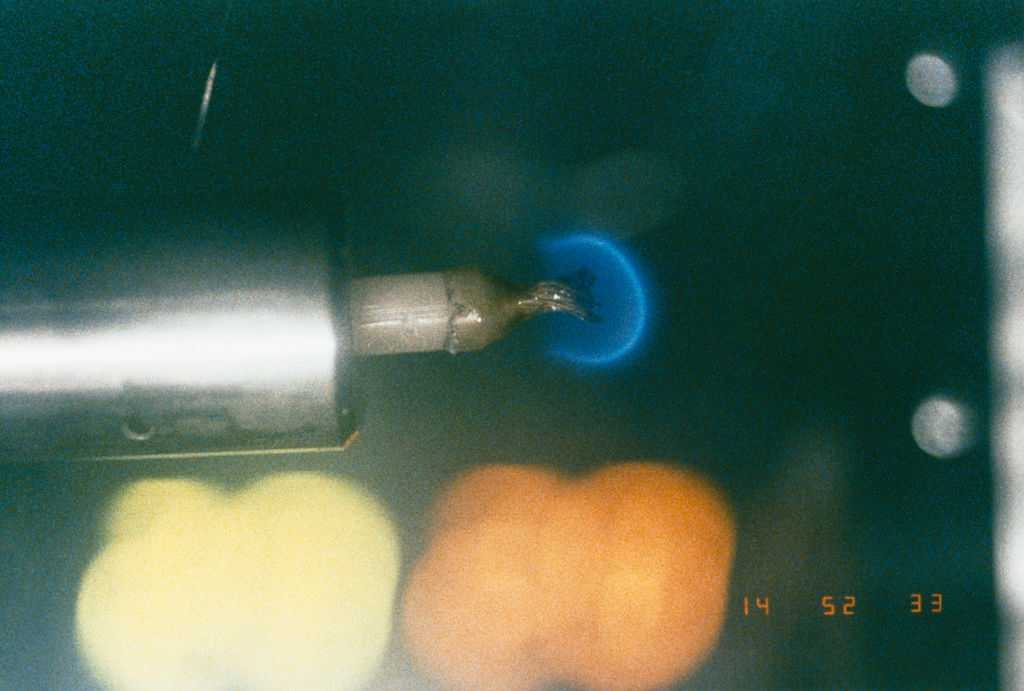
A candle flame burning in microgravity on board the Space Shuttle Columbia, circa 1985.
NASA’s prior combustion experiments on the International Space Station showed that fire behaves differently in space. The microgravity on the ISS is about 90% of Earth’s gravity (known mathematically as 1g). The gravity on the moon is about 16.667% of 1g, meaning the moon’s gravity is one-sixth that of Earth’s gravity. With such low but stable gravity, we can expect flames on the moon not to behave as they would on Earth. The burn rate in lunar gravity is sometimes referred to as a “Goldilocks zone” for studying combustion, due to flames lasting longer than they usually do.
Another difference between fire on Earth and in space is what’s left behind. With a normal lit flame, carbon dioxide and water are produced, but once the visible, yellow flame is gone, the cool, blue flame produces carbon monoxide and formaldehyde.
The lunar experiment is called Flammability of Materials on the Moon, or FM2. It would be the “first-ever combustion experiment to be performed on another planetary body” and marks “a critical step in determining material flammability and safety for future missions,” according to NASA.
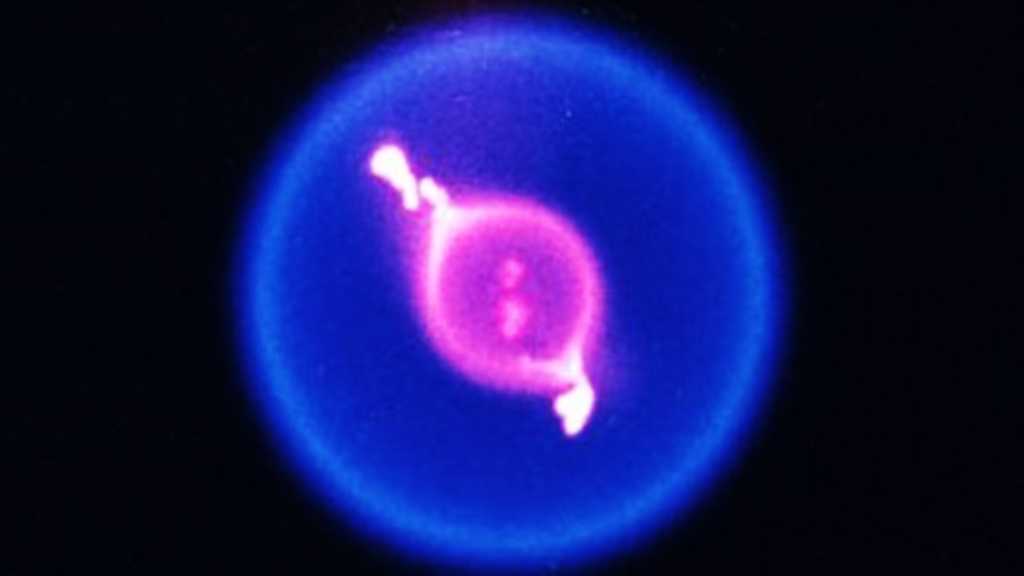
A color image of a burning single fuel droplet from NASA’s FLEX-2 combustion experiment.
The experiments are essential to understanding how combustion — both intentional and unintentional — would function on the moon. NASA’s prior combustion experiments were meant to determine how fire would perform for functional use in space or in the event of an accident. For good measure, NASA has also tested how to put out space fires. Many of these experiments have been conducted in collaboration with the European Space Agency, or ESA, and the Japan Aerospace Exploration Agency, or JAXA.
The research team behind this new experiment wrote that understanding the difference in flame behavior is critical because “a material that is marginally nonflammable on Earth … may be flammable at a lower gravity level (for example, on the Moon).” With the cooler and longer-lasting flames in space, the chemical reactions that cause combustion could also last longer.
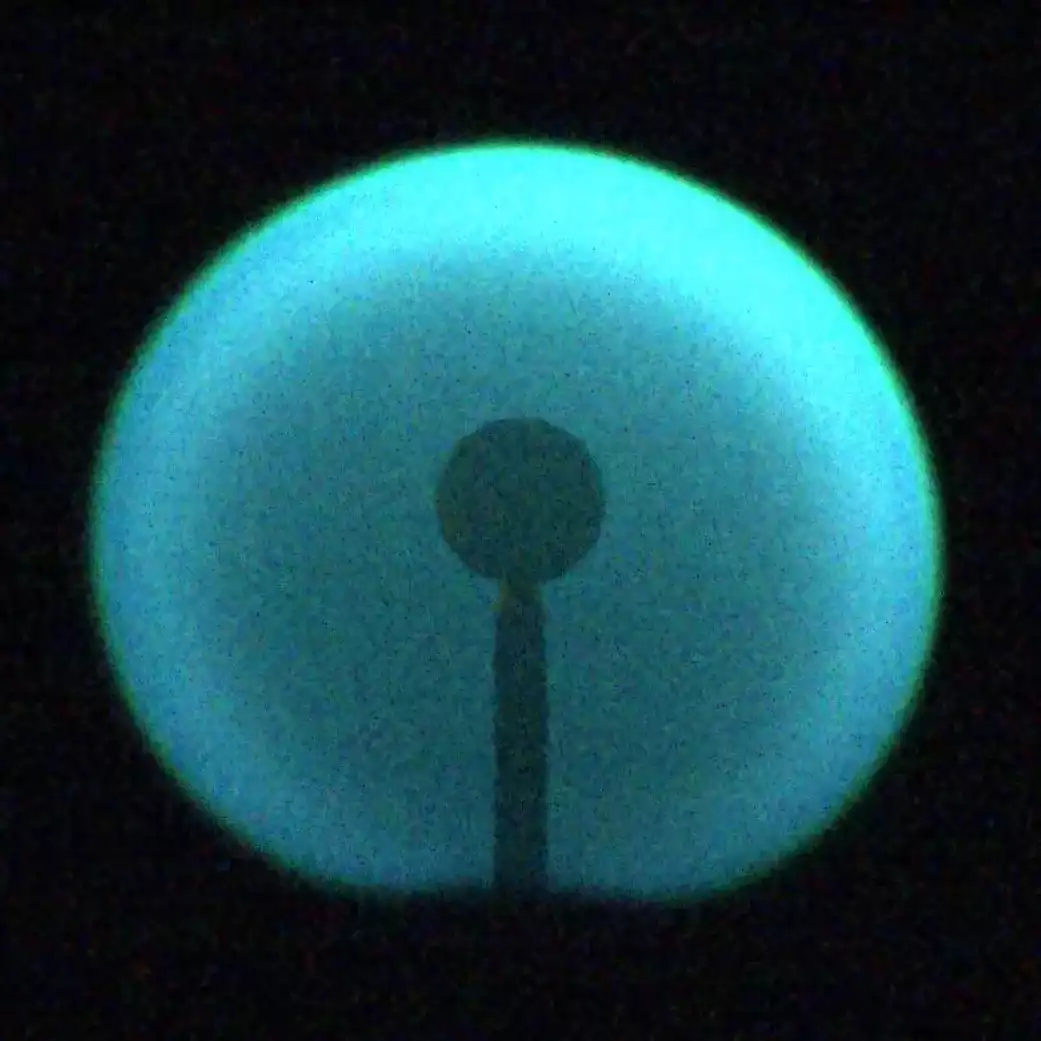
Combustion researchers designed experiments on the space station that analyzed the behavior of spherical flames in microgravity.
This new information would be invaluable to members of the Artemis project’s astronaut team and eventual lunar crew. Knowing how to put out a moon fire would also be good to know for NASA’s first permanent moon base.
Last May, two of NASA’s researchers discussed their combustion work on one of the administration’s podcasts, “Houston We Have A Podcast,” the official podcast of the Johnson Space Center in Houston, Texas.
“You can have fires on a space station, and we’re interested in figuring out the conditions in terms of the flow environment where the fire could occur, and then another important element is what measures we take to minimize the chance of that happening if you do have a fire,” said Paul Ferkul, the lead researcher on FM2.
Studying combustion on the moon will obviously be a boon to lunar astronauts, but could also be helpful for potential astronauts on Mars as well.
“When you go to partial g, like in lunar gravity, you’ll notice that the flame is stable,” said Emily Johnson, a project manager at NASA’s Glenn Research Center. “The flame doesn’t flicker, and it’s because it’s in that Goldilocks zone of that burn rate, and we expect the Mars environment to be similar, but obviously a little bit different.”
NASA’s Artemis program is running full speed ahead since the historic success of Artemis II. Artemis III, scheduled for a launch in late 2027, will not be landing on the moon, but will be conducting routine checks for upcoming missions. FM2 will have to wait for Artemis IV, which aims to land astronauts on the moon for the first time since 1972, and is set to launch in early 2028.