Read the full article on KETV 7

A new ordinance aimed at restoring a voter-approved minimum wage plan went before the Lincoln public on Monday afternoon.Lincoln City Council member James Michael Bowers put forward the proposal to defy LB258, which curtailed the voter-approved plan from 2022.LB258, championed by Sen. Jane Raybould, baselined Nebraska’s minimum wage at $15 per hour, following the ballot initiative. But instead of tying subsequent annual increases to the Consumer Price Index, as voters approved, LB258 standardized the increases at 1.75%. per year. Under that formula, the wage would rise to $15.26 next year. The law also sets a separate minimum wage of $13.50 for 14- and 15-year-olds.Bowers plan would return Lincoln’s minimum wage to tracking CPI and scrap the youth wage.“This measure had bigger margins than the elected officials that voters sent to their government bodies to represent them,” Bowers said. “The state used their tools in their toolbox to overturn the will of the people. I hope that other municipalities use the tools that they have in the toolbox to protect the will of the people.”But state Sen. Jane Raybould, a former Lincoln City Council member who prioritized LB 258, cautioned that council members should consider the broader economic impact of such a move.“They haven’t done the homework, and they haven’t reached out to the stakeholders that the minimum wage impacts, particularly like daycare centers,” Raybould said.Raybould said the state law was intended to create a uniform minimum wage across Nebraska and warned that allowing cities to set their own rates could create confusion for businesses operating in multiple locations.“If it does get passed, it’ll create a lot of confusion for, say, Runza. They have locations all throughout the state of Nebraska,” she said.Currently, no Nebraska law explicitly prohibits cities from setting their own minimum wage, potentially opening the door for similar ordinances in other municipalities.Raybould said she has asked Attorney General Mike Hilgers to weigh in on the issue.An array of supporters and opponents spoke about the ordinance’s potential impacts during a public meeting Monday afternoon.Lincoln Mayor Leirion Gaylor Baird signaled support for the measure in a statement on Monday: “Lincolnites spoke with a decisive voice by overwhelmingly approving Initiative 433 to raise the minimum wage in Nebraska. If passed by the Council, I intend to sign Councilman Bowers’ ordinance to reflect the will of the people of Lincoln and Nebraska.”The council will vote on the ordinance next Monday.
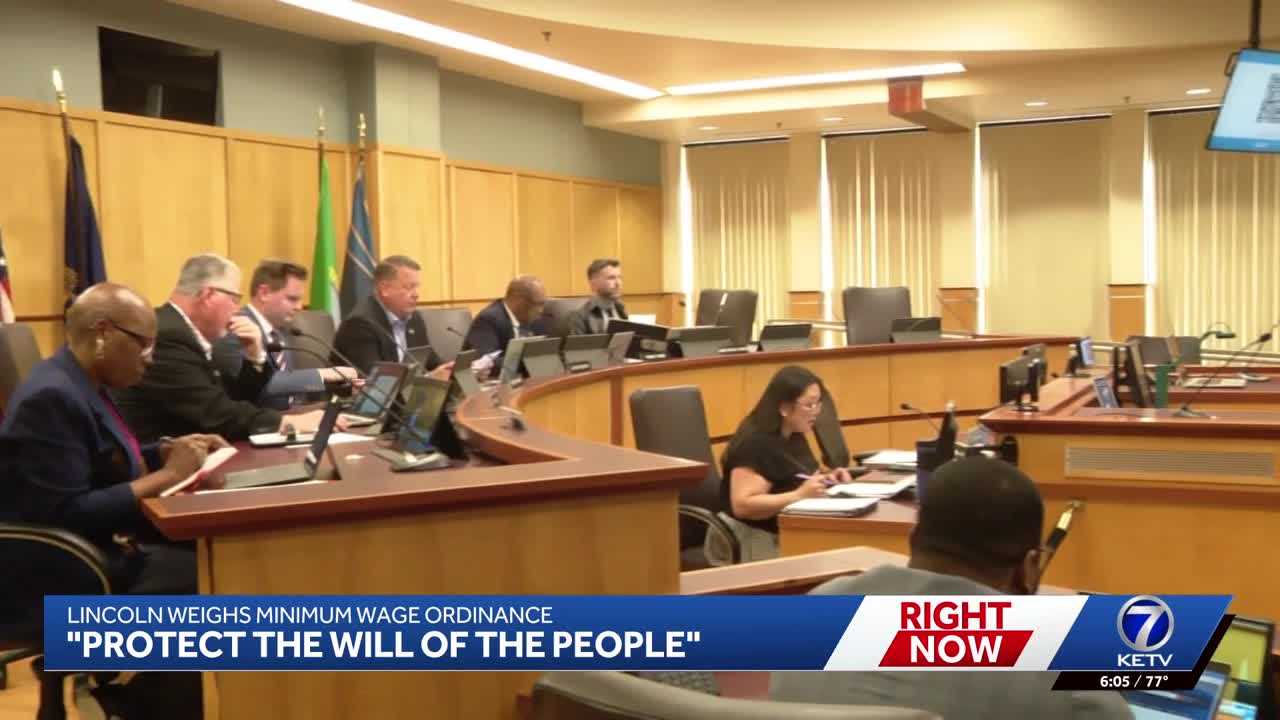
A new ordinance aimed at restoring a voter-approved minimum wage plan went before the Lincoln public on Monday afternoon.
Lincoln City Council member James Michael Bowers put forward the proposal to defy LB258, which curtailed the voter-approved plan from 2022.
Advertisement
LB258, championed by Sen. Jane Raybould, baselined Nebraska’s minimum wage at $15 per hour, following the ballot initiative. But instead of tying subsequent annual increases to the Consumer Price Index, as voters approved, LB258 standardized the increases at 1.75%. per year.
Under that formula, the wage would rise to $15.26 next year. The law also sets a separate minimum wage of $13.50 for 14- and 15-year-olds.
Bowers plan would return Lincoln’s minimum wage to tracking CPI and scrap the youth wage.
“This measure had bigger margins than the elected officials that voters sent to their government bodies to represent them,” Bowers said. “The state used their tools in their toolbox to overturn the will of the people. I hope that other municipalities use the tools that they have in the toolbox to protect the will of the people.”
But state Sen. Jane Raybould, a former Lincoln City Council member who prioritized LB 258, cautioned that council members should consider the broader economic impact of such a move.
“They haven’t done the homework, and they haven’t reached out to the stakeholders that the minimum wage impacts, particularly like daycare centers,” Raybould said.
Raybould said the state law was intended to create a uniform minimum wage across Nebraska and warned that allowing cities to set their own rates could create confusion for businesses operating in multiple locations.
“If it does get passed, it’ll create a lot of confusion for, say, Runza. They have locations all throughout the state of Nebraska,” she said.
Currently, no Nebraska law explicitly prohibits cities from setting their own minimum wage, potentially opening the door for similar ordinances in other municipalities.
Raybould said she has asked Attorney General Mike Hilgers to weigh in on the issue.
An array of supporters and opponents spoke about the ordinance’s potential impacts during a public meeting Monday afternoon.
Lincoln Mayor Leirion Gaylor Baird signaled support for the measure in a statement on Monday: “Lincolnites spoke with a decisive voice by overwhelmingly approving Initiative 433 to raise the minimum wage in Nebraska. If passed by the Council, I intend to sign Councilman Bowers’ ordinance to reflect the will of the people of Lincoln and Nebraska.”
The council will vote on the ordinance next Monday.