
Read the full article on KETV 7

A new pancreatic cancer drug being tested by doctors is showing promise, potentially doubling survival rates for patients compared to chemotherapy alone.Related video above: Study finds pancreatic cancer rising in younger womenPancreatic cancer is one of the deadliest kinds of cancer, according to the National Cancer Institute. Only about 1 out of 8 people live for longer than five years after diagnosis when all the stages are combined, according to the American Cancer Society. Studies show patients with the diagnosis are often given three to 12 months to live, depending on their treatment.New research presented by Revolution Medicine on a drug called daraxonrasib is giving doctors and patients new optimism. The drug is not a cure, and it didn’t work for all patients. However, patients who received the drug in a recent clinical trial had a median overall survival of 13 months, compared to less than seven months among those who received chemotherapy, the company said in a release. The patients in the trial had all received previous treatment.The New York Times spoke to scientists who said the drug “could turn out to be cancer’s equivalent of breaking the four-minute mile.” For a long time, researchers believed that the protein that is altered in pancreatic cancer and drives its growth had too smooth a surface for a drug to attach to, calling it a “greasy ball.” However, work by Kevan Shokat at the University of California, San Francisco, and Greg Verdine at Harvard University helped result in a new approach: a drug that “glues” those proteins, called KRAS, together, disabling them.That drug, daraxonrasib, has been fast-tracked for review by the Food and Drug Administration and could be approved later this year. In the meantime, the FDA is allowing Revolution Medicines, the drug’s developer, to treat some patients early with the experimental drug. Now, similar drugs are being developed by other companies for pancreatic, lung and colon cancers. “It’s the beginning, not the end,” Dr. Elizabeth Jaffee, a pancreatic cancer researcher at Johns Hopkins University, told the New York Times.Dr. Erkut Borazanci is involved in clinical trials using the drug at the HonorHealth Research Institute in Phoenix, Arizona.”I wouldn’t go so far as to say ‘miracle drug.’ I think the great thing about this drug is we are able to target the thing that makes pancreatic cancer go,” Borazanci said.David Stockton was diagnosed with pancreatic cancer three years ago, and has been part of the trial and is one of Borazanci’s patients.”As soon as I was diagnosed … my thought was it’s a death sentence. And you know, you think of your family,” Stockton said. “It was very clear that this was my best option, other than going back for more chemo … but this was clearly the best option. So I was only worried about how to get into this trial, how to get this drug.”Side effects of the drug include a skin rash and stomach issues.”The side effects were really quite minimal — no nausea, no gastro issues, no neuropathy, none of the stuff that chemo typically gives you … The skin rash was the worst of it,” Stockton said.While it is not an all-out cure, Stockton said the extra days he has with family are a game-changer.”If I can pick up another six, nine, twelve months, I’ll probably make it to the next greatest thing … I don’t feel like I’m going down. I feel like I’ve got a long time to go — except for this little cancer thing. But if I can hold that back for a little longer, I’m feeling good about things,” Stockton said.Borazanci said the way this drug targets the cancer gives researchers a strong scientific foundation that will allow them to look at other combinations that will build upon this success.”Knowing that this drug, by itself, can help treat pancreatic cancer more effectively than chemotherapy gives the individual more options,” Borazanci said.”We’re always looking at two things. We’re looking at … what can we do to help that person live as long as possible? But just as important is what can we do to help ensure that the quality of life is high? The promise of targeted therapy … kind of speaks to both of those things,” Borazanci said.”It’s exciting times that we can talk about targeted therapy against pancreatic cancer. So, we’re living in a different era now, and I’m really excited to see how the next few years go for people like David and so many around the country, around the world, dealing with this terrible cancer,” Borazanci said.
A new pancreatic cancer drug being tested by doctors is showing promise, potentially doubling survival rates for patients compared to chemotherapy alone.
Related video above: Study finds pancreatic cancer rising in younger women
Advertisement
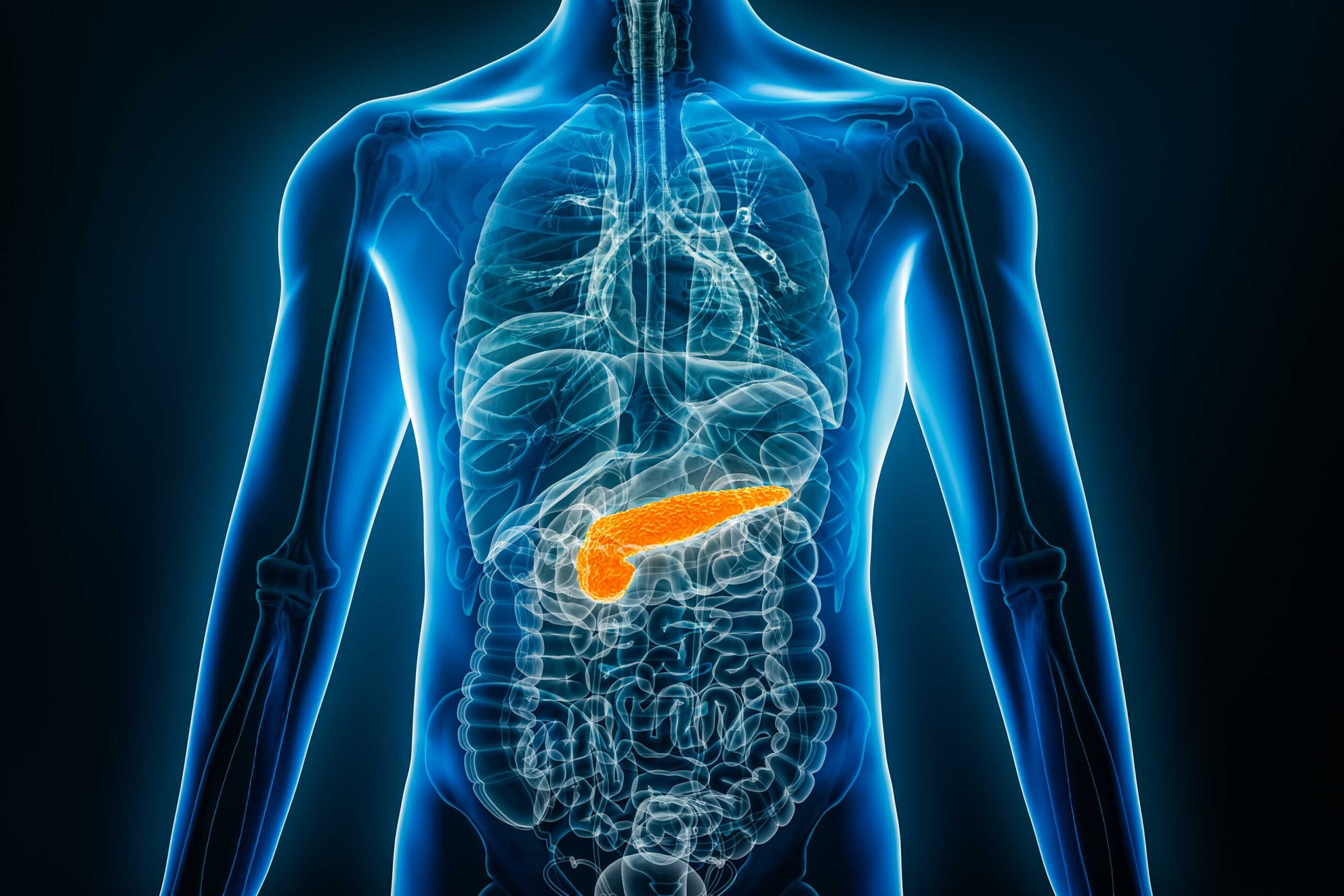
Pancreatic cancer is one of the deadliest kinds of cancer, according to the National Cancer Institute. Only about 1 out of 8 people live for longer than five years after diagnosis when all the stages are combined, according to the American Cancer Society. Studies show patients with the diagnosis are often given three to 12 months to live, depending on their treatment.
New research presented by Revolution Medicine on a drug called daraxonrasib is giving doctors and patients new optimism.
The drug is not a cure, and it didn’t work for all patients. However, patients who received the drug in a recent clinical trial had a median overall survival of 13 months, compared to less than seven months among those who received chemotherapy, the company said in a release. The patients in the trial had all received previous treatment.
The New York Times spoke to scientists who said the drug “could turn out to be cancer’s equivalent of breaking the four-minute mile.”
For a long time, researchers believed that the protein that is altered in pancreatic cancer and drives its growth had too smooth a surface for a drug to attach to, calling it a “greasy ball.” However, work by Kevan Shokat at the University of California, San Francisco, and Greg Verdine at Harvard University helped result in a new approach: a drug that “glues” those proteins, called KRAS, together, disabling them.
That drug, daraxonrasib, has been fast-tracked for review by the Food and Drug Administration and could be approved later this year. In the meantime, the FDA is allowing Revolution Medicines, the drug’s developer, to treat some patients early with the experimental drug.
Now, similar drugs are being developed by other companies for pancreatic, lung and colon cancers.
“It’s the beginning, not the end,” Dr. Elizabeth Jaffee, a pancreatic cancer researcher at Johns Hopkins University, told the New York Times.
Dr. Erkut Borazanci is involved in clinical trials using the drug at the HonorHealth Research Institute in Phoenix, Arizona.
“I wouldn’t go so far as to say ‘miracle drug.’ I think the great thing about this drug is we are able to target the thing that makes pancreatic cancer go,” Borazanci said.
David Stockton was diagnosed with pancreatic cancer three years ago, and has been part of the trial and is one of Borazanci’s patients.
“As soon as I was diagnosed … my thought was it’s a death sentence. And you know, you think of your family,” Stockton said. “It was very clear that this was my best option, other than going back for more chemo … but this was clearly the best option. So I was only worried about how to get into this trial, how to get this drug.”
Side effects of the drug include a skin rash and stomach issues.
“The side effects were really quite minimal — no nausea, no gastro issues, no neuropathy, none of the stuff that chemo typically gives you … The skin rash was the worst of it,” Stockton said.
While it is not an all-out cure, Stockton said the extra days he has with family are a game-changer.
“If I can pick up another six, nine, twelve months, I’ll probably make it to the next greatest thing … I don’t feel like I’m going down. I feel like I’ve got a long time to go — except for this little cancer thing. But if I can hold that back for a little longer, I’m feeling good about things,” Stockton said.
Borazanci said the way this drug targets the cancer gives researchers a strong scientific foundation that will allow them to look at other combinations that will build upon this success.
“Knowing that this drug, by itself, can help treat pancreatic cancer more effectively than chemotherapy gives the individual more options,” Borazanci said.
“We’re always looking at two things. We’re looking at … what can we do to help that person live as long as possible? But just as important is what can we do to help ensure that the quality of life is high? The promise of targeted therapy … kind of speaks to both of those things,” Borazanci said.
“It’s exciting times that we can talk about targeted therapy against pancreatic cancer. So, we’re living in a different era now, and I’m really excited to see how the next few years go for people like David and so many around the country, around the world, dealing with this terrible cancer,” Borazanci said.