
Read the full article on KETV 7
One year into Trump’s National Guard deployment, is crime down in DC?
President Trump has taken credit for massive drops in crime, but our Get the Facts Data Team found more modest figures.
WASHINGTON —
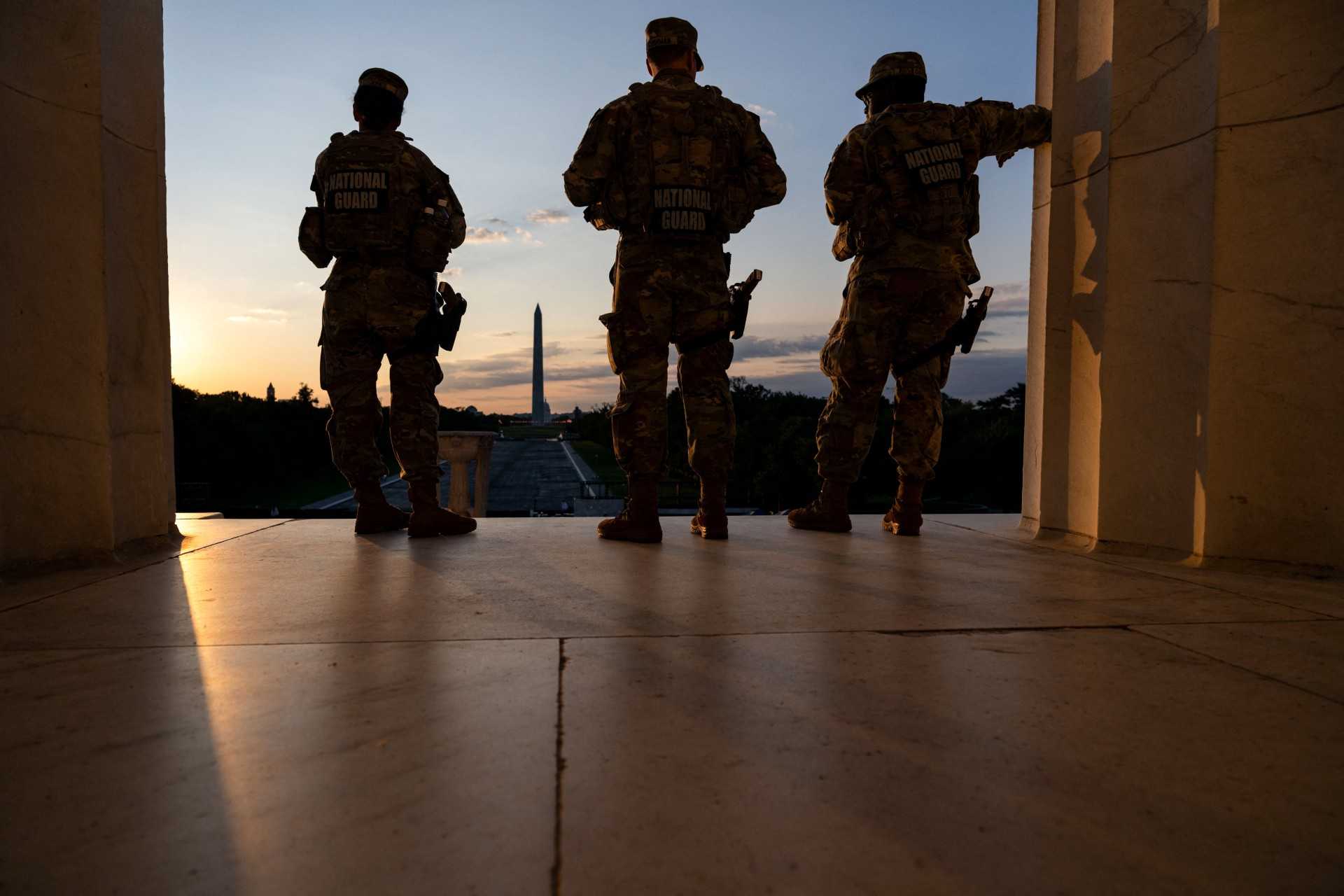
This month marks one year since President Donald Trump deployed thousands of National Guard soldiers to the nation’s capital, in a controversial push to crack down on crime.
The deployment is now expected to stretch through the end of the president’s term, a strategy that’s already costing taxpayers hundreds of millions of dollars.
Advertisement
So, is it actually working? It’s a question that has divided residents.
“It’s for show. It’s so that the tourists see it, but I don’t feel like it’s impacting my daily life where I necessarily feel safer,” said Maira Alejandra, who has lived in the district for two years.
“In my neighborhood in particular, they are making things safer. I know some people don’t like them here, but I welcome them,” said Steven Sabatini, who has lived in DC’s Dupont Circle for decades.
What the data shows
Trump has made a range of claims about crime trends. In a social media post last month, he wrote, “Washington D.C. went from High Crime to NO CRIME.”
Speaking to reporters in the Oval Office on Monday, he said, “Crime is down 92%, maybe more. I want to get it down 100%.”
Our Get the Facts Data Team’s analysis of Metropolitan Police Department (MPD) incident data found different figures.
Property crime declined by 27% in the year after the guard was introduced compared to the year prior.
Violent crime dropped by 14%, although it was already falling before the deployment. Experts caution that a number of factors can influence crime trends, so it’s difficult to attribute these changes solely to the deployment.
Richard Hahn, senior manager for research and evidence in the Niskanen Center’s Criminal Justice Department, also researched the question in a report released earlier this year.
“What we found is that violent crime has been relatively unaffected by the presence of the National Guard. Now, low-level property crime has been affected. It’s what you would expect because the National Guard troops are not trained police,” Hahn said.
Brigadier General Leland Blanchard, interim commanding general of the D.C. National Guard, pointed to benefits beyond crime data in a roundtable with reporters on Monday. He said, over the course of the last year, guardsmen have provided 788 medical assists, ranging from administering CPR to applying tourniquets for gunshot victims. He said the team has administered Narcan to 325 individuals and reunited 43 lost children with their families.
The guard was previously involved in “beautification,” from picking up trash to laying down mulch. When asked for updated metrics, a spokesperson for Joint Task Force-D.C. said in an email that service members are not currently conducting beautification tasks.
The cost to taxpayers
A Congressional Budget Office analysis published in Jan. 2026 estimated the monthly cost of the D.C. deployment at $55 million. That was assuming troop levels remained around 2,950 personnel.
But those numbers surged ahead of major summer events, such as America’s 250th anniversary celebration. As of Aug. 1, 2026, JTF-DC reported that 4,630 personnel were assigned to the mission, hailing from 17 states and territories, in addition to guardsmen local to D.C.
The planned extension of the deployment until the end of Trump’s term is expected to cost roughly $1.4 billion, according to a Pentagon estimate that was recently provided to Congress. The cost estimate is for fiscal years 2027-2029.
Hahn said the question for policymakers is whether pouring resources into another public safety strategy would yield better results at a more affordable cost.
“It’s an extremely expensive intervention that seems to have yielded mixed results, whereas investing in a police officer is much less expensive,” Hahn said.
What’s next?
As the deployment hits the one-year mark, Brig. Gen. Blanchard said they’re examining adjustments to the guard’s footprint to improve the mission moving forward.
The guard has faced criticism for focusing on tourism hubs, rather than the highest-crime neighborhoods.
“I would say that you will definitely see, over the next couple of weeks, some adjustments,” Blanchard told reporters. “We’ll still be downtown, and we’ll still be in the neighborhoods that we’re in right now. We’ll just shift some of those resources.”
The size of the deployment is also expected to shrink in the coming weeks as summer events wind down. Blanchard declined to provide specifics, but the Pentagon told lawmakers that its $1.4 billion cost estimate assumes an average of 2,500 members through January 2029.
Under a new contract, the Trump administration is also expected to move guard members into long-term housing, as opposed to short-term hotel stays, yet another sign that the president has no intention of backing down.