
Read the full article on KETV 7

The Meadowcroft Rockshelter and Historic Village in Avella, Pennsylvania, takes visitors on a journey back 19,000 years to the earliest known evidence of human activity in North America.Most of the site, a national historic landmark, features fairly recent history, including a 19th-century rural village with a reassembled covered bridge, a one-room schoolhouse and a church. It was uncovered by a curious groundhog and Albert Miller, a dedicated farmer. “He was also an amateur archeologist. We have correspondence with archeologists that go back to the 1930s because of his interest. And, he was also a naturalist and the local historian. So he’s a remarkable guy,” David Scofield, the director of Meadowcroft, said.The centerpiece of Meadowcroft is the Rockshelter, which puts the site at an entirely different level of history. The rock shelter is in a bluff over a creek and contains evidence that the area could have been inhabited starting between 16,000 and 19,000 years ago. It was discovered in 1955 by Miller after he noticed artifacts unearthed by a groundhog. “Albert knew his theory that people had camped under that long ago was correct. And, he kept quiet about his find. He enlarged the hole, he found more artifacts, and spent the next 18 years trying to find a professional archeologist to excavate. He knew it should be done professionally,” Scofield said. In 1973, the University of Pittsburgh tasked James Adavasio with excavating the site. “It wasn’t long before they realized the site is older and deeper than anyone had anticipated. And by 1974, they got the first radiocarbon dates back from the Smithsonian and just blew everybody away. No one anticipated this site was that old,” Scofield said. The findings challenged existing paradigms about when humans arrived in North America, pushing the timeline back to 5,000 years before the Clovis people, who were previously thought to be the earliest inhabitants. Archaeologists aren’t settled on whether the radiocarbon dating is accurate, but if it is, the site is evidence for some of the earliest human habitation of the Americas. Scofield described the visitor experience as unique. “You can come stand where prehistoric people stood. Where else are you going to do that?” he said. One interactive activity at Meadowcroft is trying the atlatl, a prehistoric weapon predating the bow and arrow.Visitors can also explore an 18th-century village and 17th-century wigwams of the Monongahela culture.”That’s really to illustrate that this is in a time prior to European arrival, so they didn’t have iron and steel, so no axes to cut the trees,” Scofield said, explaining the construction methods of the wigwams.
The Meadowcroft Rockshelter and Historic Village in Avella, Pennsylvania, takes visitors on a journey back 19,000 years to the earliest known evidence of human activity in North America.
Most of the site, a national historic landmark, features fairly recent history, including a 19th-century rural village with a reassembled covered bridge, a one-room schoolhouse and a church.
Advertisement
It was uncovered by a curious groundhog and Albert Miller, a dedicated farmer.
“He was also an amateur archeologist. We have correspondence with archeologists that go back to the 1930s because of his interest. And, he was also a naturalist and the local historian. So he’s a remarkable guy,” David Scofield, the director of Meadowcroft, said.
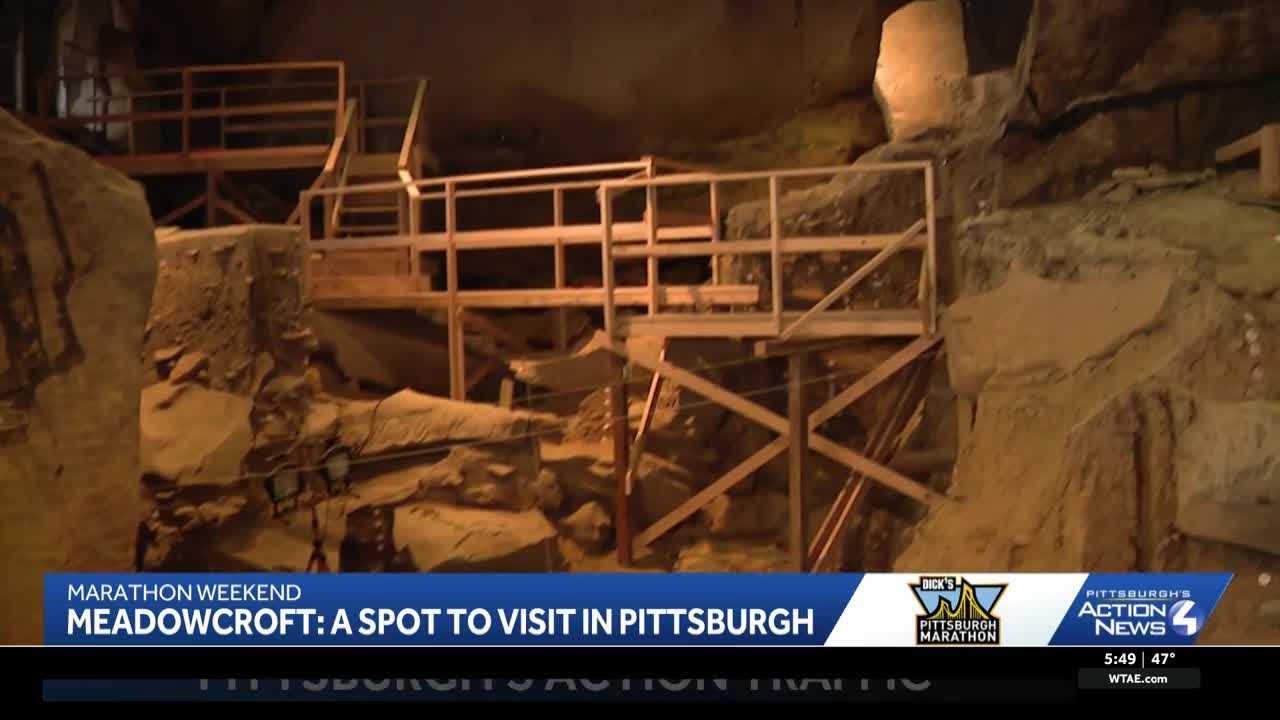
The centerpiece of Meadowcroft is the Rockshelter, which puts the site at an entirely different level of history. The rock shelter is in a bluff over a creek and contains evidence that the area could have been inhabited starting between 16,000 and 19,000 years ago.
It was discovered in 1955 by Miller after he noticed artifacts unearthed by a groundhog.
“Albert knew his theory that people had camped under that long ago was correct. And, he kept quiet about his find. He enlarged the hole, he found more artifacts, and spent the next 18 years trying to find a professional archeologist to excavate. He knew it should be done professionally,” Scofield said.
In 1973, the University of Pittsburgh tasked James Adavasio with excavating the site.
“It wasn’t long before they realized the site is older and deeper than anyone had anticipated. And by 1974, they got the first radiocarbon dates back from the Smithsonian and just blew everybody away. No one anticipated this site was that old,” Scofield said.
The findings challenged existing paradigms about when humans arrived in North America, pushing the timeline back to 5,000 years before the Clovis people, who were previously thought to be the earliest inhabitants. Archaeologists aren’t settled on whether the radiocarbon dating is accurate, but if it is, the site is evidence for some of the earliest human habitation of the Americas.
Scofield described the visitor experience as unique.
“You can come stand where prehistoric people stood. Where else are you going to do that?” he said.
One interactive activity at Meadowcroft is trying the atlatl, a prehistoric weapon predating the bow and arrow.
Visitors can also explore an 18th-century village and 17th-century wigwams of the Monongahela culture.
“That’s really to illustrate that this is in a time prior to European arrival, so they didn’t have iron and steel, so no axes to cut the trees,” Scofield said, explaining the construction methods of the wigwams.