

Read the full article on KETV 7
SpaceX rocket expected to slam into the moon this week: What we know

Digital Editor
CAPE CANAVERAL, Fla. —
A drifting SpaceX rocket is on a collision course with the moon, slated to slam into the lunar surface this week, packing the equivalent energy of three tons of TNT.
It poses no imminent threat to the moon or the Earth, but the crash will send up a massive plume of dust that scientists and stargazers are eager to observe.
Advertisement
Related video above | NASA awards nearly $600 million in lunar contracts to advance moon base plans
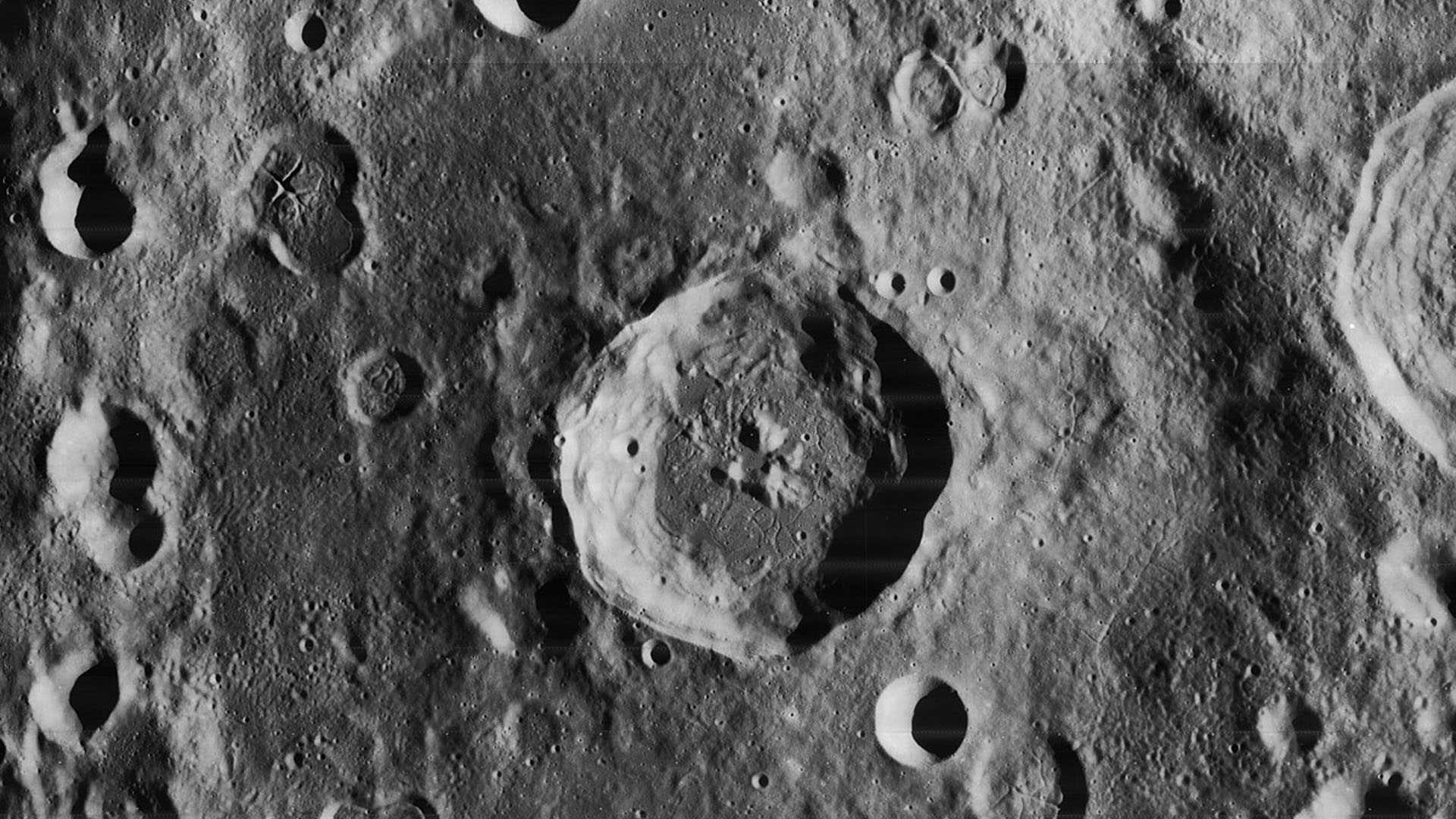
The rocket’s upper stage will unintentionally slam into the moon on Wednesday at an estimated speed of 5,400 mph — about seven times the speed of sound. The crash is expected to happen near the moon’s Einstein Crater on its sunlit western limb.
How did this happen?
Launched in January 2025, the rocket sent two commercial lunar landers toward Earth’s dusty sidekick.
After its work was done, the rocket lacked enough fuel to make the return trip to Earth or to move into deep space, keeping it in unstable orbit for months.
Left adrift, the abandoned rocket segment — measuring some 40 feet and weighing around 10,000 pounds — became trapped in a complex orbit, influenced by the combined gravity of both the Earth and the moon, slowly pulling it toward a collision course with the lunar surface.
When will it hit the moon?
Scientists estimate that the rocket will crash around 2:35 a.m. ET Wednesday.
With the action unfolding in the wee hours, the eastern portions of the U.S. and Canada, and much of South America should have the best views — but only if you have the right equipment.
Einstein Crater
Will I be able to see the collision?
You likely will not be able to see the initial collision with the naked eye or even a small home telescope, but sensitive equipment might be able to view the resulting dust cloud.
The impact flash, lasting less than a second, will probably be too dim to see, according to experts. But the stream of ejected material could stretch for several miles into space and remain visible to telescopes for tens of minutes.
“The gravity on the moon is low, and there is no wind to blow the dust away,” said Los Alamos National Laboratory’s Benjamin Fernando, who’s encouraging observations by professionals and amateurs alike.
Fernando anticipates an impact crater nearly 90 feet across and 16 feet deep, too small to see from Earth but visible to spacecraft.
Should I be worried?
No, there’s no need to worry.
Scientists say the collision does not pose a threat to the moon or the Earth. But it does highlight a larger issue: Things are getting crowded in space as more and more items cram into orbit.
“This impact will not be a problem,” retired astrophysicist Jonathan McDowell told the Associated Press. “But in a future where there are long-term bases on the moon, similar impacts would be an issue, and we need to not leave rocket stages in chaotic orbits of this kind.”
With the moon as the new travel hot spot, scientists said it’s crucial to improve debris monitoring and traffic control before packs of robots and astronauts arrive.
The United States and China are racing to land astronauts on the moon in the next few years. Elon Musk’s SpaceX and Jeff Bezos’ Blue Origin are vying to provide the lander for NASA’s yet-to-be-named moonwalkers of Artemis IV, who will succeed the 12 Apollo astronauts who strolled the lunar surface.
Has this happened before?
Yes, this has happened before.
It will be the second dead rocket known to crash into the moon accidentally. A Chinese rocket segment dug out a pair of craters on the lunar far side in 2022.
That rocket body left a double crater about 95 feet wide.
Why are scientists interested?
With meteoroids and other natural objects offering little if any warning before walloping the moon, scientists said there’s much to learn by observing well-tracked strikes by human-made objects like the one coming up.
NASA hurled rocket sections and lunar modules into the moon during the Apollo era for seismic measurements. Decades later, in 2009, NASA intentionally crashed its LCROSS spacecraft and upper stage in search of ice near the lunar south pole.
How long will the crater last?
The moon already bears countless craters, ranging up to 1,600 miles.
With little to no real atmosphere, the moon is defenseless against the constant barrage of meteors and asteroids, and the occasional incoming spacecraft, including a few intentionally crashed for science’s sake.
With no weather, there’s no erosion and so impact craters last forever.
The Associated Press contributed to this report.