

Read the full article on KETV 7

President Donald Trump and Chinese President Xi Jinping are meeting in Beijing for a two-day summit focused on trade, diplomacy, and other global challenges.Though experts suggest the visit may deliver more symbolism than breakthroughs, the outcomes could affect Americans and their wallets.Trump and Xi Talks BeginThe leaders of the two superpowers sat for their first of several meetings on Thursday morning in Beijing. In public remarks, Trump referred to Xi as a friend, while Xi emphasized the importance of peace over conflict. “Can we, in the interest of the well-being of our two peoples and the future of humanity, build a bright future together for our bilateral relations? These are the questions vital to history, to the world, and to the people,” Xi said. Diplomacy remains critical throughout the talks. Behind closed doors, Xi reportedly warned Trump that the U.S.’ decision to sell weapons to Taiwan, which China claims as its territory, must be “handled properly.” Can China Help End the Iran War?China’s reliance on Iranian oil amid the ongoing U.S. war with Iran is also top of mind. The White House confirmed that the two leaders discussed the U.S.-Iran War in private talks, agreeing that Iran should not have nuclear weapons and that the Strait of Hormuz should remain open for shipping. The White House added that China opposes militarizing the Strait and charging tolls for its use, as Iran has done, and expressed interest in purchasing more American oil. China’s summary of the meeting made no mention of the Iran War. China imports significant amounts of oil from Iran, making the closure of the Strait of Hormuz a major concern. Despite this, China has been cautious about becoming involved in the U.S.-Iran conflict.Trump Looks to Make Deals Economic matters are another major focus. The U.S. wants to increase sales of American beef, airplanes, and soybeans to China. Meanwhile, China controls a substantial portion of the world’s rare earth minerals, essential for manufacturing products like smartphones and fighter jets. Tesla CEO Elon Musk, Nvidia CEO Jensen Huang, and outgoing Apple CEO Tim Cook are among more than a dozen business leaders joining President Trump on this trip. Some sat in during the meeting between Trump and Xi.”They’re here today to pay respects to you and to China,” Trump said to Xi in his public remarks. “They look forward to trade and doing business, and it’s going to be totally reciprocal on our behalf.”Tariffs are also a key issue. A recent Atlantic Council analysis puts the current U.S. tariff rate on Chinese goods at about 24%, a cost paid by American businesses and consumers. Economists warn that could fluctuate prices in the U.S. depending on the outcome of these talks.Watch more coverage on Trump’s visit to China:
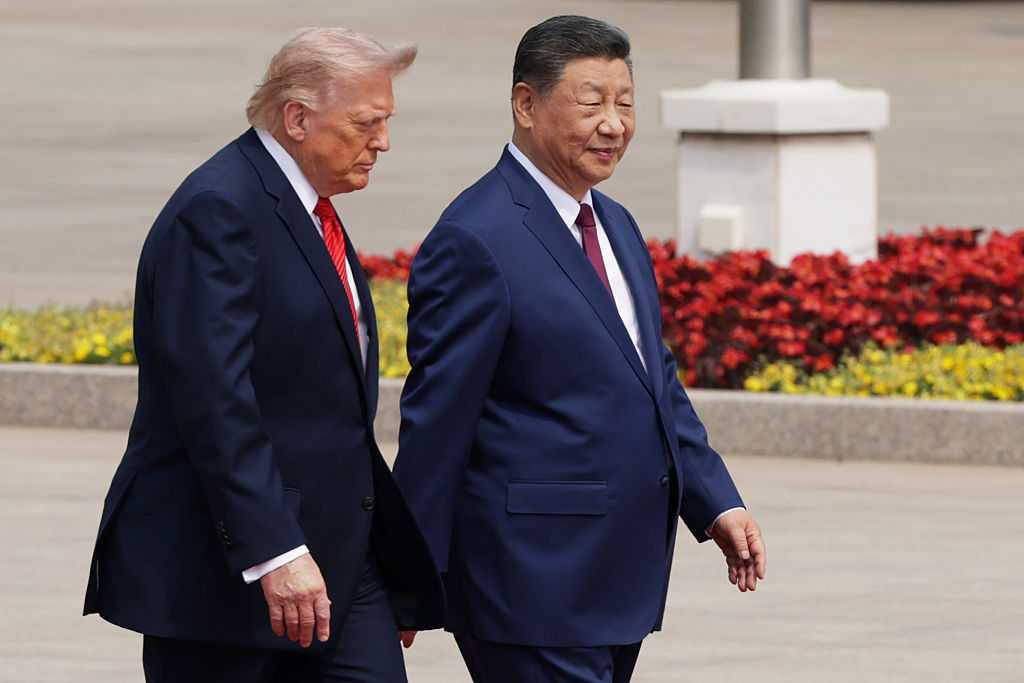
President Donald Trump and Chinese President Xi Jinping are meeting in Beijing for a two-day summit focused on trade, diplomacy, and other global challenges.
Though experts suggest the visit may deliver more symbolism than breakthroughs, the outcomes could affect Americans and their wallets.
Advertisement
Trump and Xi Talks Begin
The leaders of the two superpowers sat for their first of several meetings on Thursday morning in Beijing.
In public remarks, Trump referred to Xi as a friend, while Xi emphasized the importance of peace over conflict.
“Can we, in the interest of the well-being of our two peoples and the future of humanity, build a bright future together for our bilateral relations? These are the questions vital to history, to the world, and to the people,” Xi said.
Diplomacy remains critical throughout the talks. Behind closed doors, Xi reportedly warned Trump that the U.S.’ decision to sell weapons to Taiwan, which China claims as its territory, must be “handled properly.”
Can China Help End the Iran War?
China’s reliance on Iranian oil amid the ongoing U.S. war with Iran is also top of mind.
The White House confirmed that the two leaders discussed the U.S.-Iran War in private talks, agreeing that Iran should not have nuclear weapons and that the Strait of Hormuz should remain open for shipping.
The White House added that China opposes militarizing the Strait and charging tolls for its use, as Iran has done, and expressed interest in purchasing more American oil.
China’s summary of the meeting made no mention of the Iran War. China imports significant amounts of oil from Iran, making the closure of the Strait of Hormuz a major concern. Despite this, China has been cautious about becoming involved in the U.S.-Iran conflict.
Trump Looks to Make Deals
Economic matters are another major focus. The U.S. wants to increase sales of American beef, airplanes, and soybeans to China. Meanwhile, China controls a substantial portion of the world’s rare earth minerals, essential for manufacturing products like smartphones and fighter jets.
Tesla CEO Elon Musk, Nvidia CEO Jensen Huang, and outgoing Apple CEO Tim Cook are among more than a dozen business leaders joining President Trump on this trip. Some sat in during the meeting between Trump and Xi.
“They’re here today to pay respects to you and to China,” Trump said to Xi in his public remarks. “They look forward to trade and doing business, and it’s going to be totally reciprocal on our behalf.”
Tariffs are also a key issue. A recent Atlantic Council analysis puts the current U.S. tariff rate on Chinese goods at about 24%, a cost paid by American businesses and consumers. Economists warn that could fluctuate prices in the U.S. depending on the outcome of these talks.
Watch more coverage on Trump’s visit to China: