Read the full article on KETV 7
Vanessa Trump reveals she has been diagnosed with breast cancer
I’m gonna start with this full disclosure, you’re my doctor and I am so glad about that. I’m so honored, Gail. I remember when I went for an appointment really over *** year ago and you started telling me I’m working on this book and I’m very excited about the book and the name of the book is The Breast Advice and I said that is such *** good title thank you that only you could do well coming from you that means *** lot. What I like is that you said for the first time to my knowledge too. You have *** doctor and you have *** patient and you said you’re curating patient wisdom and *** doctor’s expertise. Talk about why you decided to do it that way. Yeah, I, I feel like this is *** new, it’s *** paradigm shift in getting information in breast cancer because what I was seeing is too often. These two things were siloed so women get *** lot of information about their experience from their friends more than ever before and then over here is the doctor, medical information, advice, etc. but these things really aren’t competitive. They shouldn’t compete. They need to be married and they need to be um combined and blended to give someone the best possible chance of outcome, but one size doesn’t fit all. Though just because your friend or someone you know had *** certain experience with breast cancer and then you get the diagnosis, it doesn’t mean that you all are going to have the same thing. It could be and most often is two totally different experience for everybody and, and that’s where the doctor expertise comes in because you’re right, you know what else I thought was also good is that you said even you learned something in terms of getting information from your patient. I feel like there are so many times. Literally on *** day to day basis I meet new women diagnosed with breast cancer and they have such smart, wonderful, wise things to say and and so for the, the book is kind of like codifying that there’s one chapter where it’s two friends who met the day before surgery and one of, one of the patients says this thing and I literally every time I say it, it kind of my voice cracks. She says, remember I told my kids don’t get bitter, get. Better right? and it’s an attitudinal thing and how to talk to your children these are all things very, very wise things that really help other patients get through it but I also think it’s still for most women one of their biggest fears and you say that it does take an emotional toll, but the news is still better than it’s ever been before. One of the reasons why I went into this field is because I’m generally *** very optimistic person. And uh I wanted to go into *** field where I saw things getting better and better every single year um even during my training between the year of 2000 OK I had just started practice in 2010. The survival rate from breast cancer went up 2% each year. So if you were diagnosed after 2010, OK, you had *** 20% higher chance of survival than you did *** decade before. So if that’s not progress, I don’t know what is nowadays the survival from breast cancer is upwards of 91% overall. Now that doesn’t mean you can give those numbers and those favorable numbers to everyone. Of course it’s still *** life threatening disease, but we still have so many options and um. It is *** scary situation because it still is the most common cancer in this country that women get. You should get your mammogram when because that seems to be fluctuating for *** lot of people, but you have very definite ideas about it. Yeah, I do. It is fluctuating because even *** lot of the major societies like American Cancer Society and the United States Prevention Service Task Force, people still disagree. Most of those of us who are in the trenches treating this disease know the data, which is the data clearly shows mammograms save lives by picking up cancers earlier starting at age 40 and every single year after that as long as you’re in what we call the general risk category. If you have *** family history, if you have, there are many other factors which we go into the book, how to figure out that you might be at higher risk, there are *** lot of other factors, not just family history, and so there are mitigating factors that we may tell someone you should start earlier or not only do *** mammogram, do an ultrasound also, or do an. MRI I was always raised you should check, you should check, but in the book there seem to be some experts that are saying that’s not the best way to do it you disagree with that way of thinking. I think knowing what is normal for you in all parts of your body are really important and self empowering. So you’re in favor of self exam. Yes, I, I think not obsessively. But knowing what’s normal for you means that there’s *** much higher chance that if something new developed that you would pick it up in in exchange for or in the face of not having felt that thing before. I like what you say about don’t tell anybody they’re too young to get uh breast cancer. You say many cases they have no family history because I used to think, well, I don’t have family history so I don’t need to worry. It’s shocking. I think that 90% of women who get breast cancer have no family history or genetic factors. For sure, if you do have *** family history, you’re at *** higher risk, but I don’t think you can repeat this fact enough because there’s so many women out there who use that as rationale for not getting screened. They say, I don’t have *** family history. I am not at risk. 10 to 12% of American women will get breast cancer over their lifetime, and 90% of them will not have had *** family history, so we’re all at risk, you know, and so, um, it’s not *** good reason to not get screened. You devote *** chapter to racial disparities, which of course sitting here it was *** woman of color, cinnamon brown with *** dollop of caramel, certainly got my attention because why is that and how is that so. What’s really important to know, black women are prone to getting *** kind of breast cancer that we talk about in the book that is more aggressive. It’s called triple negative. We don’t know, but we don’t know why that part we don’t know about. Only about 15%, Gayle, of women overall get this kind of breast cancer, but if you’re *** black woman and you get breast cancer, there’s *** 30% chance you will get that. And it is more difficult to treat. We also know that obviously access to care is really, really important. Prioritizing someone’self to make sure they get in, get mammograms. Is that part of the problem? Black women don’t have access to care or in some cases not as diligent about getting the care? I think it’s both. Every scenario you can bring up. There is *** proportion of patients that are affected by that access to care or insurance or don’t have the time or whatever, whatever you wanna talk about disparities in health care, but there are also some people that are like this, no, no, no, no, no, I don’t wanna know. I know *** woman who’s 55, doctor, who’s who’s never had *** mammogram, and I said, why? Why, Cathy? She said, because I’m afraid. You’re afraid. I literally say. Don’t be afraid of getting *** mammogram, be afraid of not getting it because here’s the other part not only do mammograms save lives by picking up cancers earlier, but what I say is the thing that people don’t realize is if you’re getting screened regularly and we do find something, there’s such *** high chance that what we’ll have to do is so much less aggressive. Right? If you get *** mammogram every year and you develop cancer, there’s *** much lower chance you would need chemotherapy therapy. There’s *** much lower chance you would need *** mastectomy than *** smaller surgery. So not only do mammograms save lives, but they save lives while doing less. Are you more likely to have cancer, get cancer if you have dense breasts or not dense breasts or it doesn’t matter? So here’s the thing. As you get older, that density atrophies and you should become less dense, and women who maintain that density for whatever reason are at *** marginally higher risk, but it’s not *** lot. The biggest problem with dense breast tissue is it can make it harder to see *** cancer against the background and so what we, what we. Do is why our ears prick up when we hear dense breast tissue we say oh maybe we should be adding an ultrasound so that we don’t have anything fall through the cracks or we have *** higher chance of picking up *** cancer. I’ve heard if you cut down on your sugar that’s also *** factor and that was not that’s also not the case. What I always say is vegetarian triathletes get breast cancer too. Um, lifestyle definitely helps. I’m not *** draconian lifestyle person personally or professionally, and I don’t advocate. I think my patients are adults and they get to make their own choices. You write about body scans because I was thinking about getting one and you do two patients. And they each have different points of view about it. One is great, the other is like, not for me. Where do you stand on that? I think there’s no one size fits all. I have mixed feelings about it, number one, because long term it’s not been validated. What I worry about is people are gonna start doing the scale and then abandoned. The tried and true things so *** whole body scan is not going to pick up *** breast cancer like *** mammogram. It’s not going to pick up *** colon cancer like colonoscopy. So, so if you do that *** lot of people would say I’m doing one test the whole body, I’m done. Right, it’s not like that. What is it that you think people still don’t understand about breast cancer? I think one of the things that I would also point out, and we, we talk about this in the, in the book when in that chapter of can it, can it come back. There are still 40,000 deaths *** year related to breast cancer. OK, that’s *** lot. And so our work is so far from done. OK, what I would say that people don’t talk about *** lot. Is that there are definitely *** very significant proportion of breast cancer deaths, whether it’s 3 or 50%, that are related to either failure to detect early based on not screening or. Not following through with certain treatments, there is such *** silver thing as *** silver lining, and you, you give some in the book. It’s everybody should get *** breast friend, yeah, and or friends. I mean the way people tell me their communities come out for them showing up is worth everything. Thank you, Doctor Port.
Advertisement
Vanessa Trump, the ex-wife of Donald Trump Jr., and mother of five announced Wednesday she has been diagnosed with breast cancer.“While this isn’t news anyone expects, I’m working closely with my medical team on a treatment plan,” Trump posted on Instagram Wednesday.She said she underwent a medical procedure earlier this week and asked for privacy as she focuses on her health and recovery.“I am staying focused and hopeful while surrounded by the love and support of my family, my kids, and those closest to me. Thank you for your kindness and support it truly means more than I can express,” Trump said.Vanessa Trump and the eldest son of President Donald Trump divorced in 2018 after twelve years of marriage. The two have five children together, including Kai Trump, 19, who boasts a large following on social media and is often seen with her grandfather at the White House.Vanessa Trump has been dating Tiger Woods since the professional golfer confirmed their relationship last March.Ivanka Trump, the president’s eldest daughter, commented on Vanessa Trump’s social media post: “Praying for your continued strength and a swift recovery. Love you mama.”CNN has reached out to the White House for comment.
Vanessa Trump, the ex-wife of Donald Trump Jr., and mother of five announced Wednesday she has been diagnosed with breast cancer.
“While this isn’t news anyone expects, I’m working closely with my medical team on a treatment plan,” Trump posted on Instagram Wednesday.
Advertisement
She said she underwent a medical procedure earlier this week and asked for privacy as she focuses on her health and recovery.
“I am staying focused and hopeful while surrounded by the love and support of my family, my kids, and those closest to me. Thank you for your kindness and support it truly means more than I can express,” Trump said.
Vanessa Trump and the eldest son of President Donald Trump divorced in 2018 after twelve years of marriage. The two have five children together, including Kai Trump, 19, who boasts a large following on social media and is often seen with her grandfather at the White House.
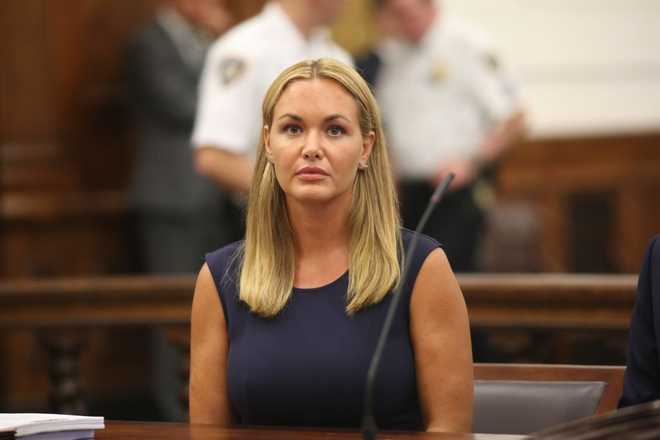
Vanessa Trump has been dating Tiger Woods since the professional golfer confirmed their relationship last March.
Ivanka Trump, the president’s eldest daughter, commented on Vanessa Trump’s social media post: “Praying for your continued strength and a swift recovery. Love you mama.”
CNN has reached out to the White House for comment.