

Read the full article on KETV 7

Fifteen passengers from a ship experiencing a hantavirus outbreak arrived at the Davis Global Center on the campus of the University of Nebraska Medical Center in the middle of the night for what could be a long-term stay. Dr. Michael Wadman, medical director of the National Quarantine Unit, said, “The passengers are asymptomatic and expressed gratitude for their accommodations.””They definitely were tired and needed some rest,” he said. “So we did a quick assessment. We brought them into the unit. Very smooth and successful. Safe transfer.”Doctors said further assessment, including more detailed questions on how much exposure to the virus they may have had, would happen later. Nebraska Medicine said it doesn’t expect the condition of the passengers to change. An announcement would be made if conditions changed, a spokesperson said.The rooms at the National Quarantine Unit are not hospital rooms.”It’s a much more comfortable environment, actually,” said Dr. Angela Hewlett, the medical director of the Nebraska Biocontainment Unit. The rooms have a TV, exercise equipment, and plenty of space, doctors said, with negative air pressure and other precautions.A sixteenth passenger is being housed in the biocontainment unit, which is known for treating Ebola patients in 2014. Unlike the quarantine unit, these rooms are built for patient care. That passenger took two PCR tests on the ship, according to a Centers for Disease Control and Prevention official, with one test showing positive. “They currently do not have any symptoms and have a good appetite, although they’re very tired, understandably,” Hewlett said. John Knox, principal deputy assistant secretary of the U.S. Administration for Strategic Preparedness and Response, said the University of Nebraska Medical Center was chosen for its extensive experience in handling such cases. “We have a very simple rule here,” said Dr. Jeffery Gold, president of the University of Nebraska. “If we treat our patients the way we would treat family members and loved ones, we’re going to be OK.”
Fifteen passengers from a ship experiencing a hantavirus outbreak arrived at the Davis Global Center on the campus of the University of Nebraska Medical Center in the middle of the night for what could be a long-term stay.
Advertisement
Dr. Michael Wadman, medical director of the National Quarantine Unit, said, “The passengers are asymptomatic and expressed gratitude for their accommodations.”
“They definitely were tired and needed some rest,” he said. “So we did a quick assessment. We brought them into the unit. Very smooth and successful. Safe transfer.”
Doctors said further assessment, including more detailed questions on how much exposure to the virus they may have had, would happen later.
Nebraska Medicine said it doesn’t expect the condition of the passengers to change. An announcement would be made if conditions changed, a spokesperson said.
The rooms at the National Quarantine Unit are not hospital rooms.
“It’s a much more comfortable environment, actually,” said Dr. Angela Hewlett, the medical director of the Nebraska Biocontainment Unit.
The rooms have a TV, exercise equipment, and plenty of space, doctors said, with negative air pressure and other precautions.
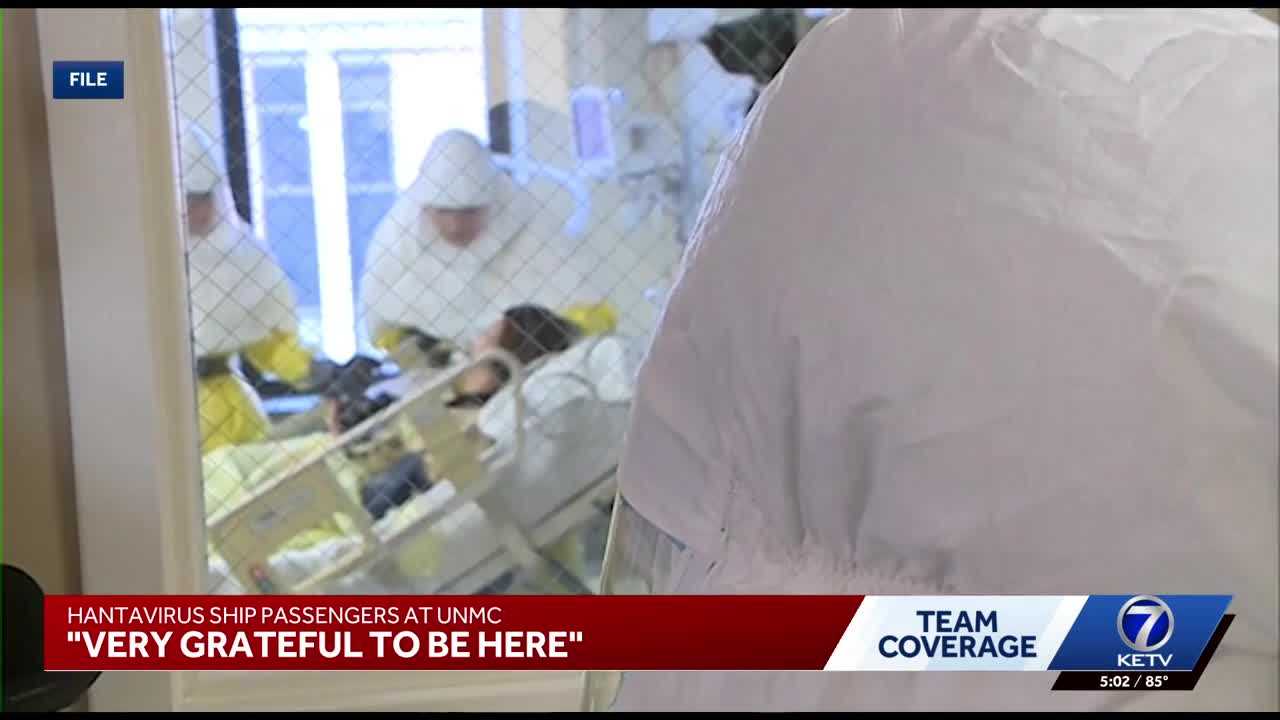
A sixteenth passenger is being housed in the biocontainment unit, which is known for treating Ebola patients in 2014. Unlike the quarantine unit, these rooms are built for patient care.
That passenger took two PCR tests on the ship, according to a Centers for Disease Control and Prevention official, with one test showing positive.
“They currently do not have any symptoms and have a good appetite, although they’re very tired, understandably,” Hewlett said.
John Knox, principal deputy assistant secretary of the U.S. Administration for Strategic Preparedness and Response, said the University of Nebraska Medical Center was chosen for its extensive experience in handling such cases.
“We have a very simple rule here,” said Dr. Jeffery Gold, president of the University of Nebraska. “If we treat our patients the way we would treat family members and loved ones, we’re going to be OK.”