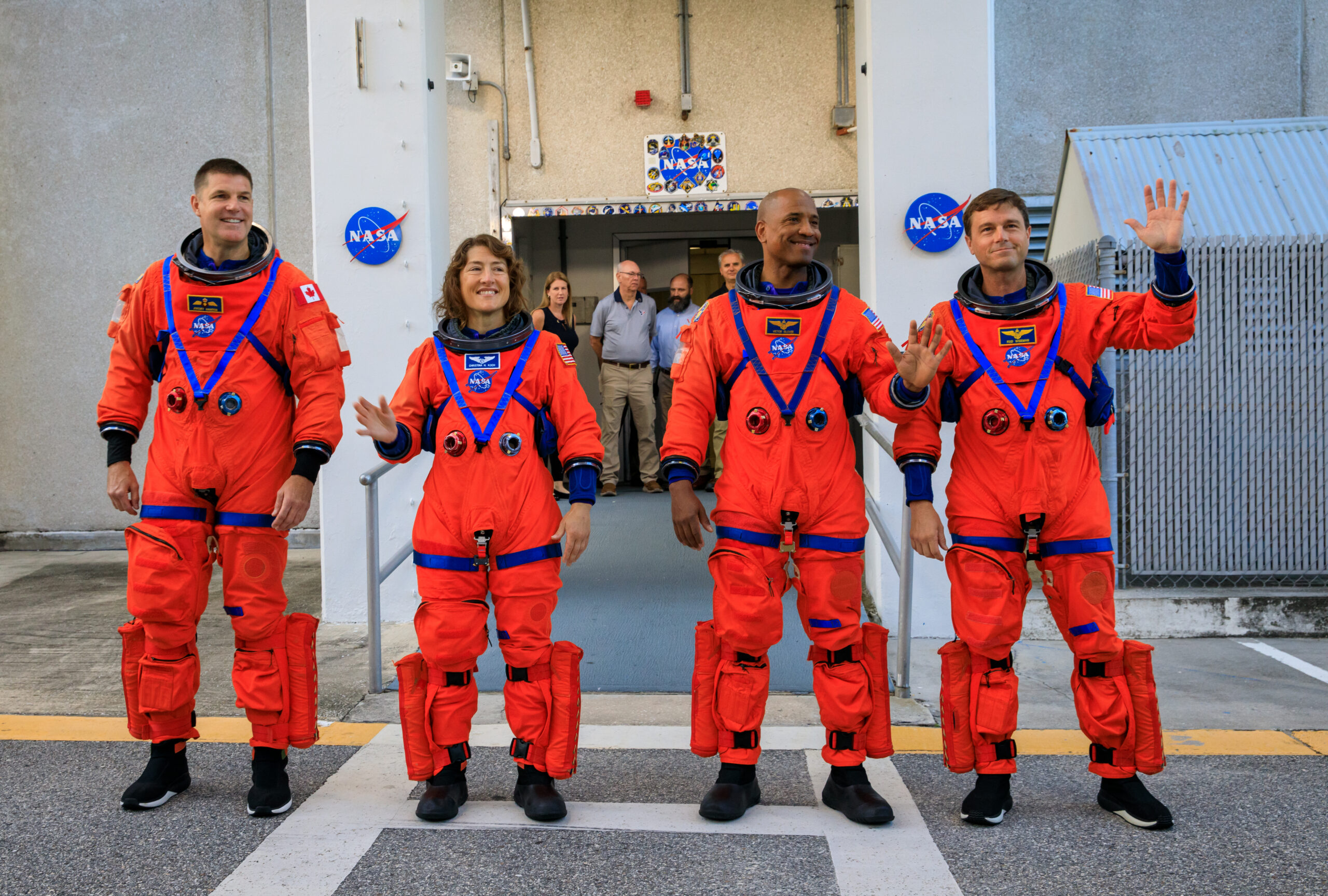
From right to left, NASA astronauts Reid Wiseman, commander; Christina Koch, mission specialist; Victor Glover, pilot; and CSA (Canadian Space Agency) astronaut Jeremy Hansen, mission specialist wave to family and friends as they prepare to depart the Neil A. Armstrong Operations and Checkout Building to board their Orion spacecraft atop NASA’s Space Launch System (SLS) rocket at Launch Complex 39B, Wednesday, April 1, 2026, at NASA’s Kennedy Space Center in Florida. NASA’s Artemis II mission will take Wiseman, Glover, Koch, and Hansen on a 10-day journey around the Moon and back aboard their Orion spacecraft from Launch Complex 39B, with a two hour launch window opening at. (Photo courtesy of NASA/Aubrey Gemignani)
The historic astronauts behind the recent Artemis II mission could soon receive one of the highest civilian awards under a new federal bill from a former astronaut and a retiring Nebraska representative.
Arizona U.S. Sen. Mark Kelly, a former astronaut and a Democrat, and Nebraska U.S. Rep. Don Bacon, a Republican, on Wednesday introduced the “Artemis II Congressional Gold Medal Act.” The bill would honor the four crewmembers aboard the historic Artemis II mission, which was the first crew to leave low Earth orbit and fly near the moon in more than 50 years.
NASA’s Artemis II crew, NASA astronauts Reid Wiseman, Victor Glover, and Christina Koch, and CSA (Canadian Space Agency) astronaut Jeremy Hansen, shared brief remarks with friends, family, and colleagues after they landed at Ellington Airport near the agency’s Johnson Space Center in Houston on Saturday, April 11, 2026, after a nearly 10-day journey around the Moon and back to Earth. (Photo courtesy of NASA/Helen Arase Vargas)
If passed and signed into law, the astronauts would be the first crew to receive a Congressional Gold Medal since 2009. The last honor went to the crew of the Apollo 11 mission, 40 years after that mission.
Kelly, in a statement, said the astronauts “carried human space exploration farther than it has ever gone before” and reminded Americans “what we’re capable of when we work together.”
“I’ve flown on four missions to space, and I know how hard that crew and the teams on the ground worked,” Kelly said. “They made something incredibly complex and difficult look easy.”
The astronauts set a new record distance for human spaceflight from Earth: about 252,756 miles. It was the first crewed mission to travel beyond low Earth orbit and around the moon since the Apollo 17 mission in December 1972.
Bacon said from Apollo to Artemis, America’s “pioneering spirit has long defined our leadership in space exploration.”
“I am grateful to our friends at Space for Humanity for bringing this idea to us, and to Sen. Kelly and our co-leads for working together to recognize these extraordinary astronauts,” Bacon said in a statement.
Nebraska GOP Sens. Deb Fischer and Pete Ricketts are among cosponsors of the effort, which would give each astronaut a gold medal depicting the crew of four astronauts.
The U.S. secretary of the treasury would also be authorized to sell duplicate bronze medals.
The federal bill also names multiple mission contributors who made history of their own from the ground, plus multiple other “firsts” for space travel, such as the first crewed launch of NASA’s Orion spacecraft on the Space Launch System, the first ship-to-ship voice call between a lunar mission and the International Space Station and the first mission to confirm Orion’s life support, navigation, propulsion and reentry systems in deep-space conditions.
“Artemis II laid the groundwork for future lunar landings and missions to Mars, in partnership with United States industry,” the federal bill states.
NASA earlier this month announced the crew of the next Artemis III mission, including three NASA astronauts and another from the European Space Agency. That mission will undertake a “series of challenging tests in Earth orbit” next year, NASA said in a news release, which will be “essential” for Artemis IV, the first planned crewed mission to the lunar South Pole in 2028.
More on each of the Artemis II astronauts, according to the Bacon-Kelly bill:
Wiseman, the first Artemis mission commander and a naval aviator, has spent 175 days in space, including his time as a flight engineer aboard the International Space Station. He is the most experienced astronaut to command a crewed lunar mission.
Glover, the Artemis II pilot, previously piloted the SpaceX Crew-1 aboard the Dragon Resilience in 2018. He has spent 178 days in space, including four spacewalks. He is the first person of color and first Black astronaut to travel beyond low Earth orbit and around the moon.
Koch, a mission specialist, holds the record for the single longest spaceflight by a woman, at 328 days, and participated in the first all-female spacewalk on the International Space Station. She is the first woman to travel beyond low Earth orbit and around the moon.
Hansen, also a mission specialist, was the first Canadian and non-U.S. astronaut to travel beyond low Earth orbit and around the moon.
Said Kelly: “They inspired the next generation of scientists, explorers, and engineers. For pushing the boundaries of human achievement, the Artemis II crew deserves this honor.”
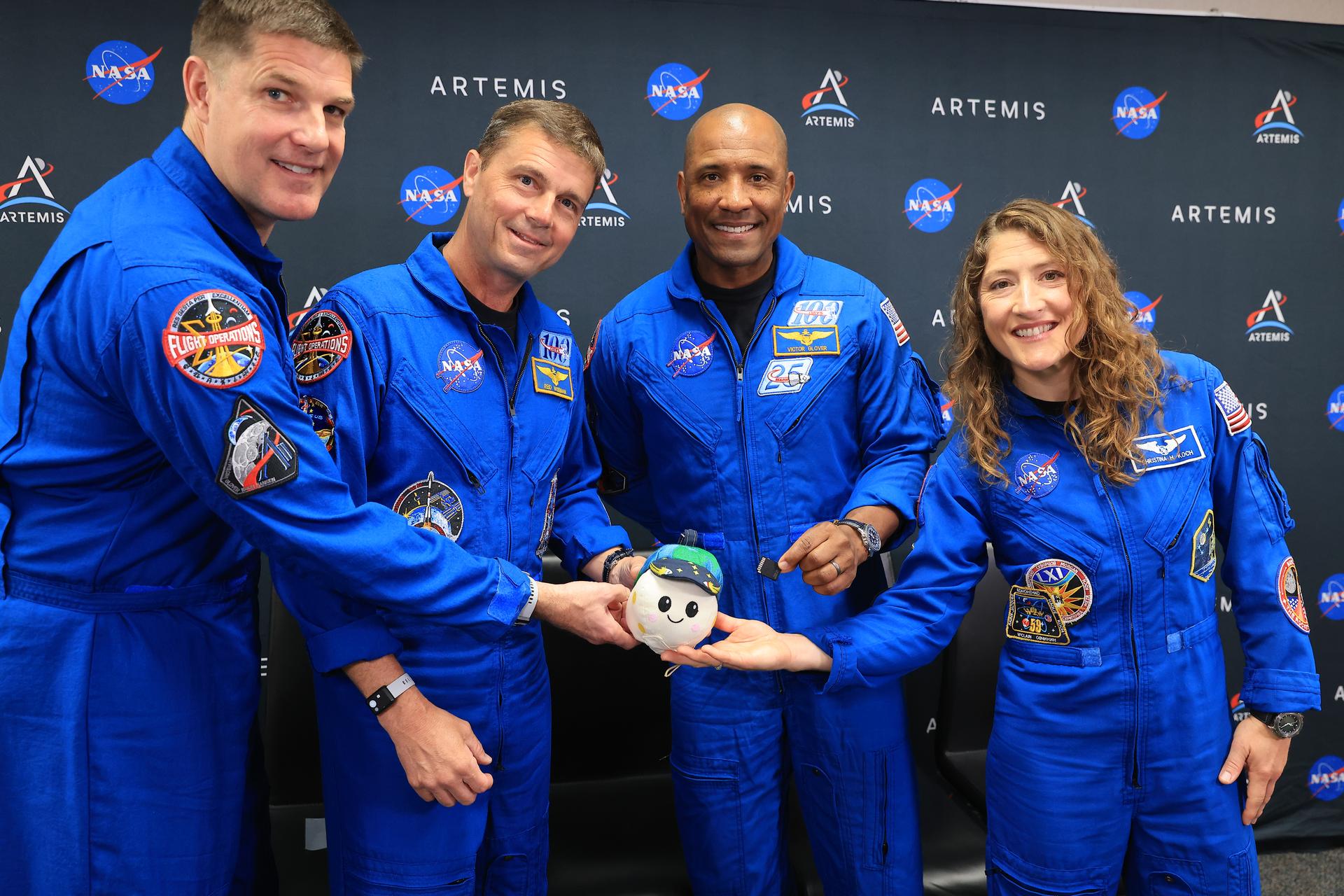
The Artemis II crew pose with the zero gravity indicator named Rise that also holds a SD card containing the names of millions who will fly with the crew around the Moon. “Rise” was inspired by the iconic Earthrise moment from the Apollo 8 mission. A zero gravity indicator is a small plush item that typically rides with a crew to visually indicate when they are in space. The Artemis II mission will take Artemis II Commander Reid Wiseman, Pilot Victor Glover, and Mission Specialist Christina Koch from NASA, and Mission Specialist Jeremy Hansen from the CSA (Canadian Space Agency) on a 10-day journey around the Moon and back aboard NASA’s SLS (Space Launch System) rocket and Orion spacecraft from Launch Complex 39B no earlier than 6:24 p.m. EDT on Wednesday, April 1. (Photo courtesy of NASA/Kim Shiflett)
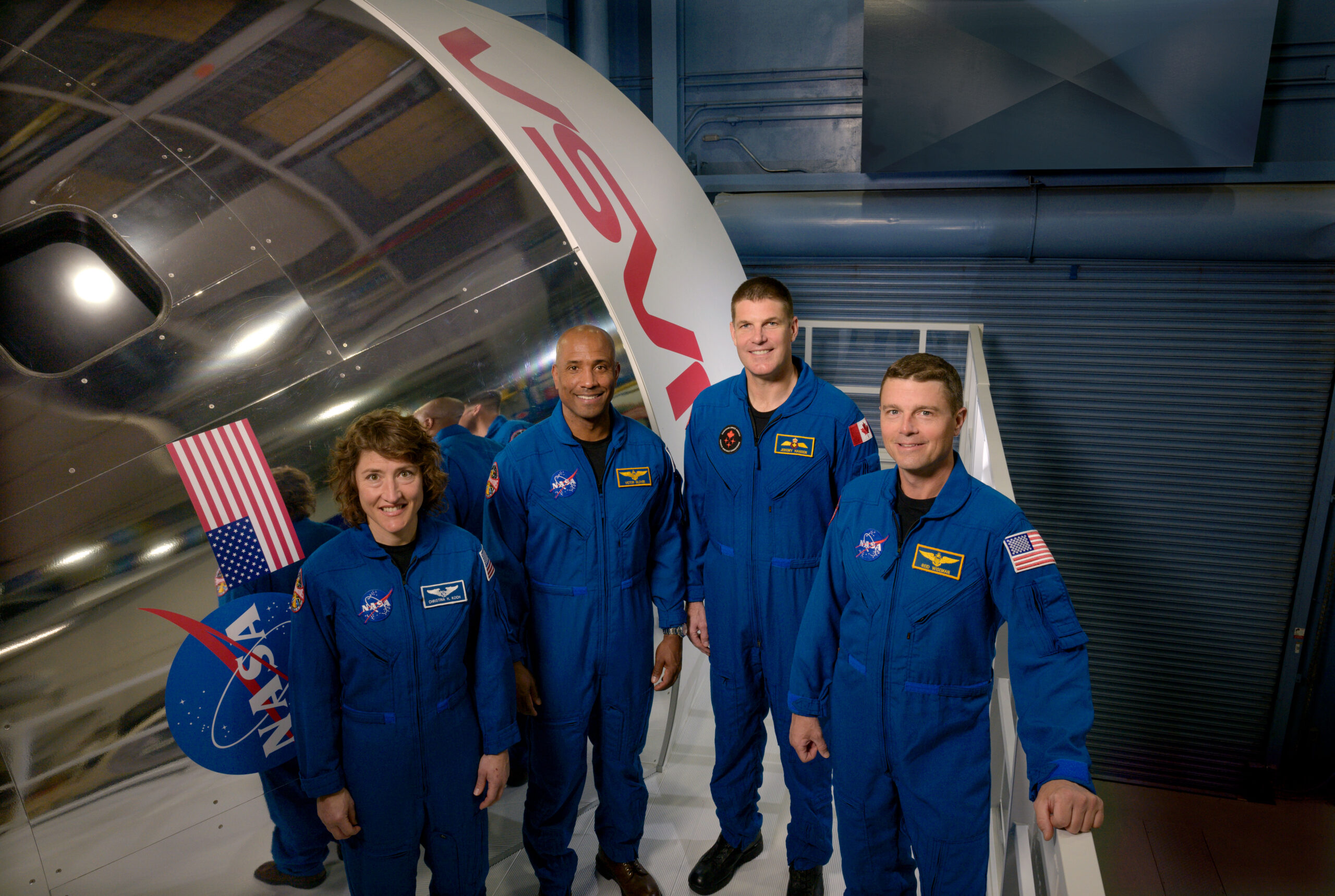
NASA astronauts Reid Wiseman, Victor Glover, and Christina Hammock Koch, and CSA astronaut Jeremy Hansen were announced Monday, April 3 as the four astronauts who will venture around the Moon on Artemis II, the first crewed mission on NASA’s path to establishing a long-term presence at the Moon for science and exploration through Artemis. The crew assignments are as follows: Commander Reid Wiseman, Pilot Victor Glover, Mission Specialist 1 Christina Koch, Mission Specialist 2 Jeremy Hansen. (Photo courtesy of NASA/James Blair)
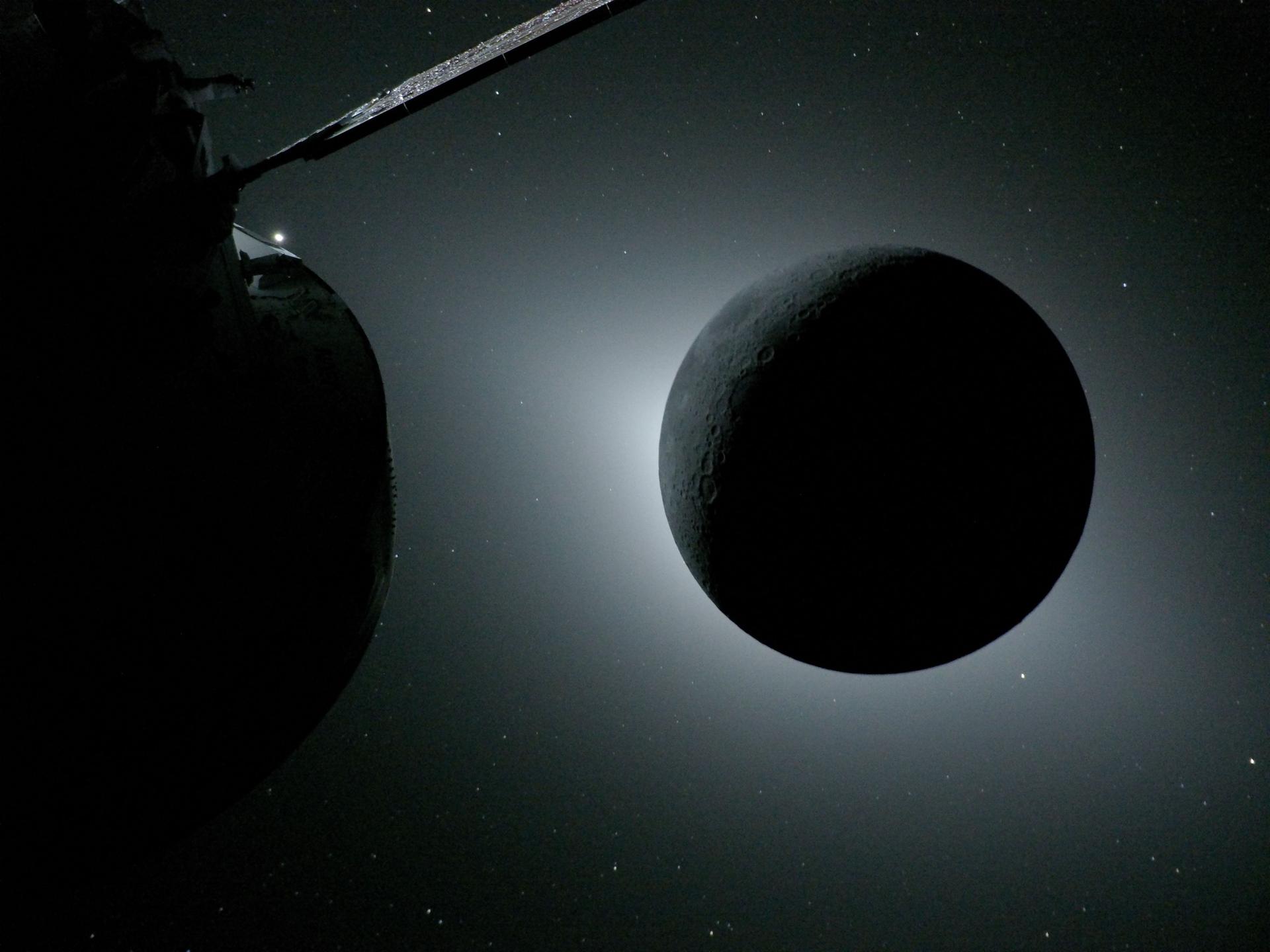
The Moon, backlit by the Sun during a solar eclipse, is photographed by NASA’s Orion spacecraft on Monday, April 6, 2026, during the Artemis II mission. Orion is visible in the foreground on the left. Earth is reflecting sunlight at the left edge of the Moon, which is slightly brighter than the rest of the disk. The bright spot visible just below the Moon’s bottom right edge is Saturn. Beyond that, the bright spot at the right edge of the image is Mars. (Photo courtesy of NASA)
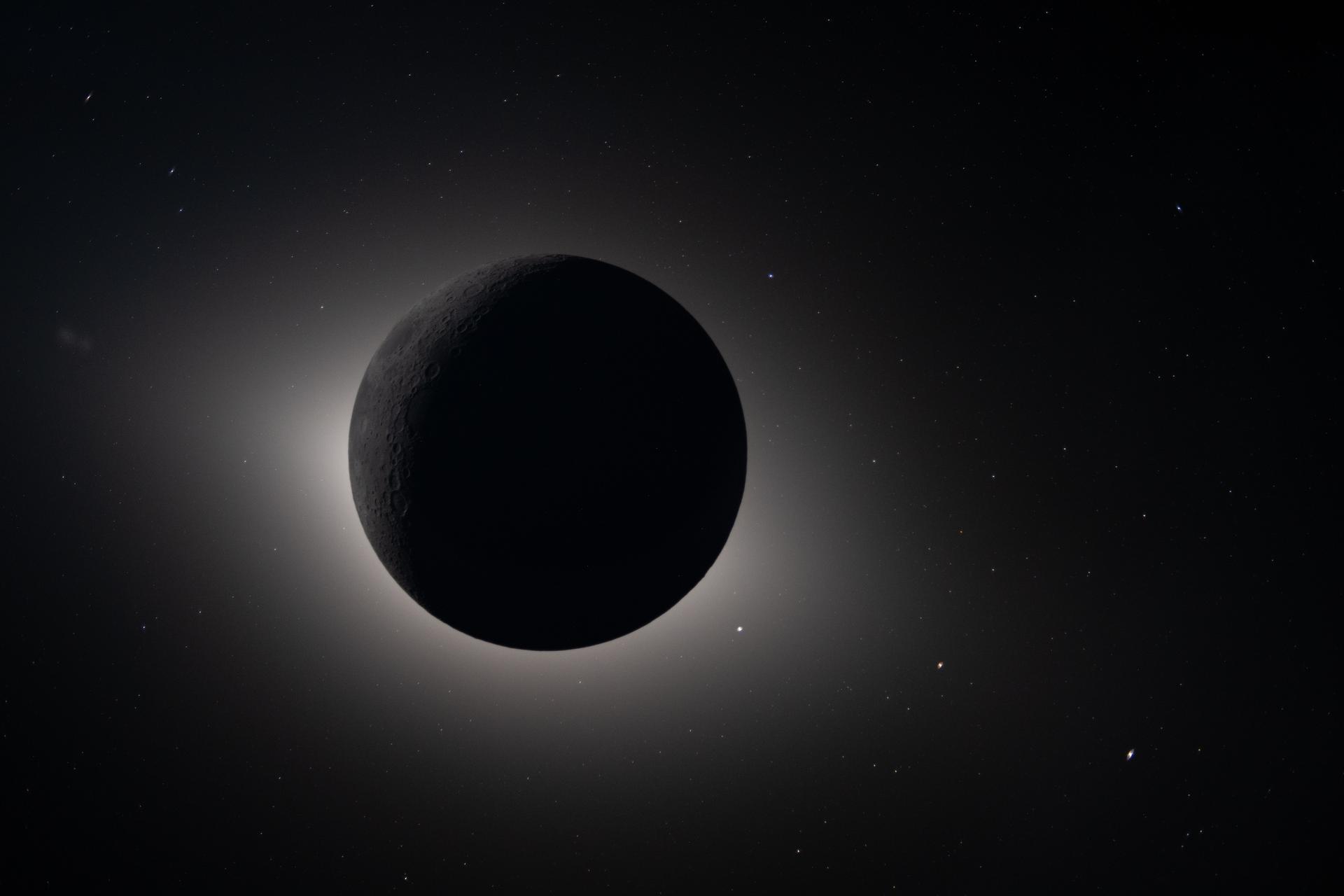
Captured by the Artemis II crew during their lunar flyby on Monday, April 6, 2026, this image shows the Moon fully eclipsing the Sun. From the crew’s perspective, the Moon appears large enough to completely block the Sun, creating nearly 54 minutes of totality and extending the view far beyond what is possible from Earth. We see a glowing halo around the dark lunar disk. The science community is investigating whether this effect is due to the corona, zodiacal light, or a combination of the two. Also visible are stars, typically too faint to see when imaging the Moon, but with the Moon in darkness stars are readily imaged. This unique vantage point provides both a striking visual and a valuable opportunity for astronauts to document their observations during humanity’s return to deep space. The faint glow of the nearside of the Moon is visible in this image, having been illuminated by light reflected off the Earth. (Photo courtesy of NASA)
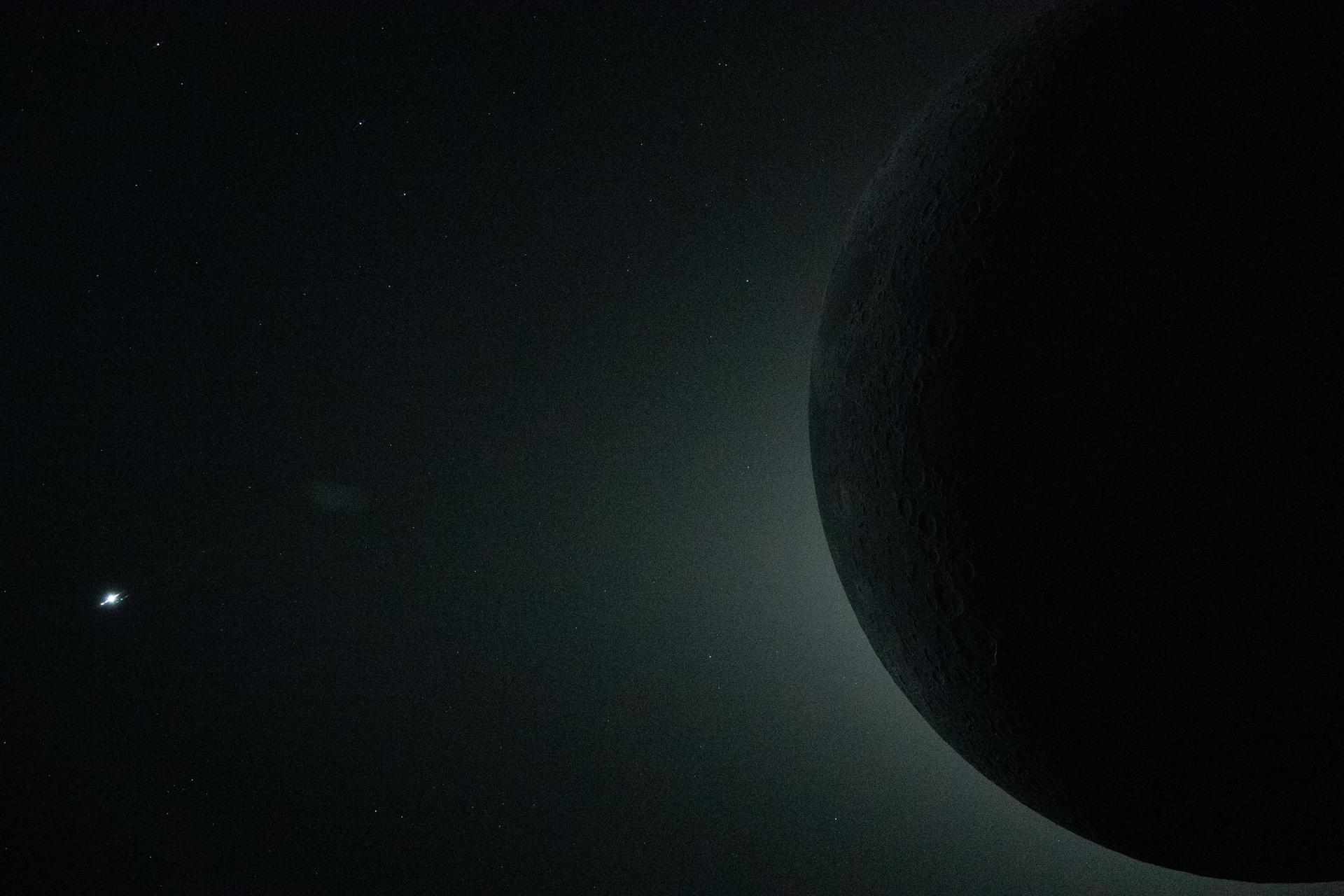
A close-up view from the Orion spacecraft during the Artemis II crew’s lunar flyby on Monday, April 6, 2026, captures a total solar eclipse, with only part of the Moon visible in the frame as it fully obscures the Sun. We see a glowing halo around the dark lunar disk. The science community is investigating whether this effect is due to the corona, zodiacal light, or a combination of the two. From this deep-space vantage point, the Moon appeared large enough to sustain nearly 54 minutes of totality, far longer than total solar eclipses typically seen from Earth. The bright silver glint on the left edge of the image is the plant Venus. The round, dark gray feature visible along the Moon’s horizon between the 9 and 10 o’clock positions is Mare Crisium, a feature visible from Earth. We see faint lunar features because light reflected off of Earth provides a source of illumination. (Photo courtesy of NASA)
The lunar surface fills the frame in sharp detail, as seen during NASA’s Artemis II lunar flyby, while a distant Earth sets in the background. This image was captured at 6:41 p.m. EDT, on April 6, 2026, just three minutes before the Orion spacecraft and its crew went behind the Moon and lost contact with Earth for 40 minutes before emerging on the other side. In this image, the dark portion of Earth is experiencing nighttime, while on its day side, swirling clouds are visible over the Australia and Oceania region. In the foreground, Ohm crater shows terraced edges and a relatively flat floor marked by central peaks — formed when the surface rebounded upward during the impact that created the crater. (Photo courtesy of NASA)
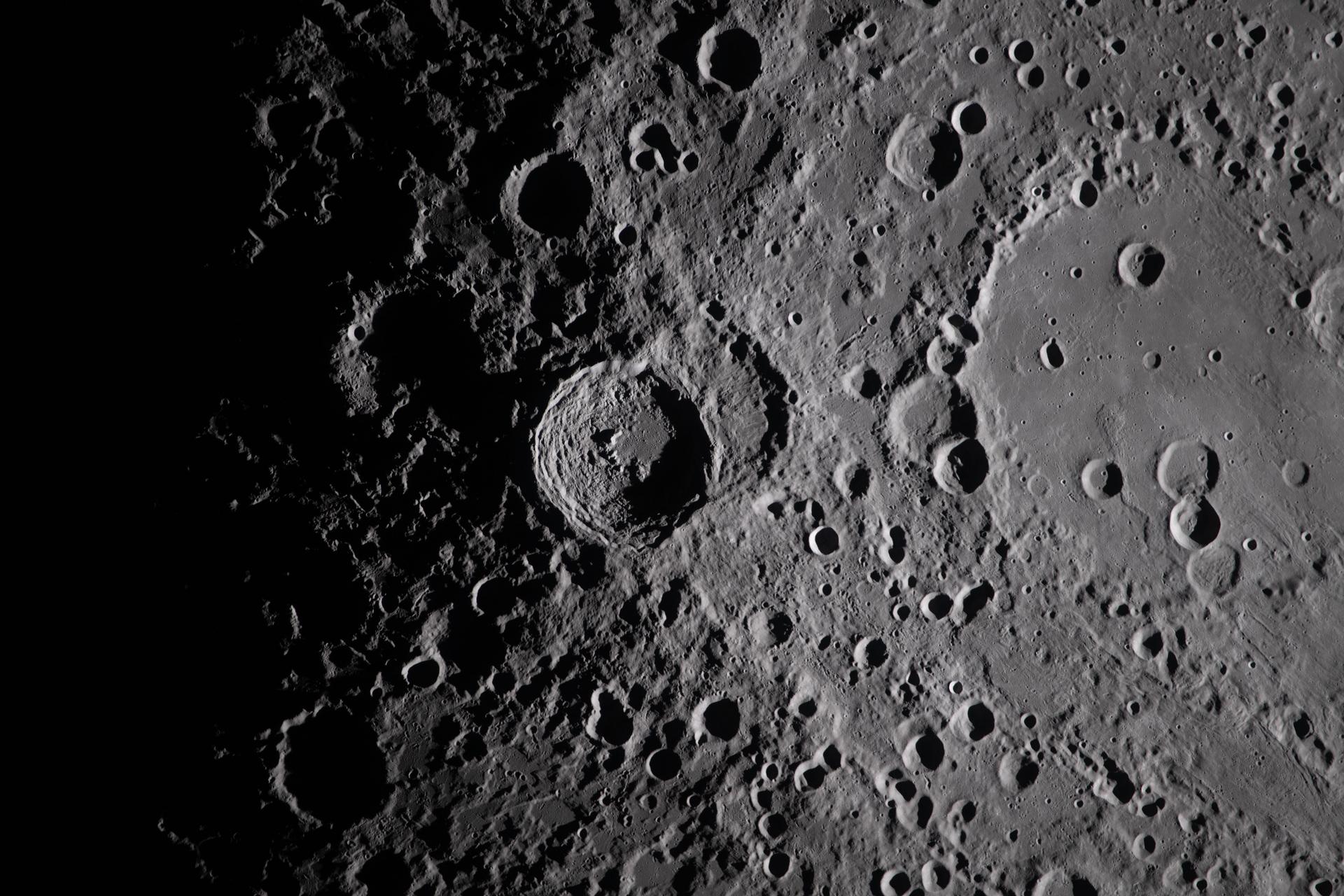
Captured by the Artemis II crew, the heavily cratered terrain of the eastern edge of the South Pole-Aitken basin is seen with the shadowed terminated — the boundary between lunar day and night — at the top of the image. The South Pole-Aitken basis is the largest and oldest basin on the Moon, providing a glimpse into an ancient geologic history built up over billions of years. (Photo courtesy of NASA)
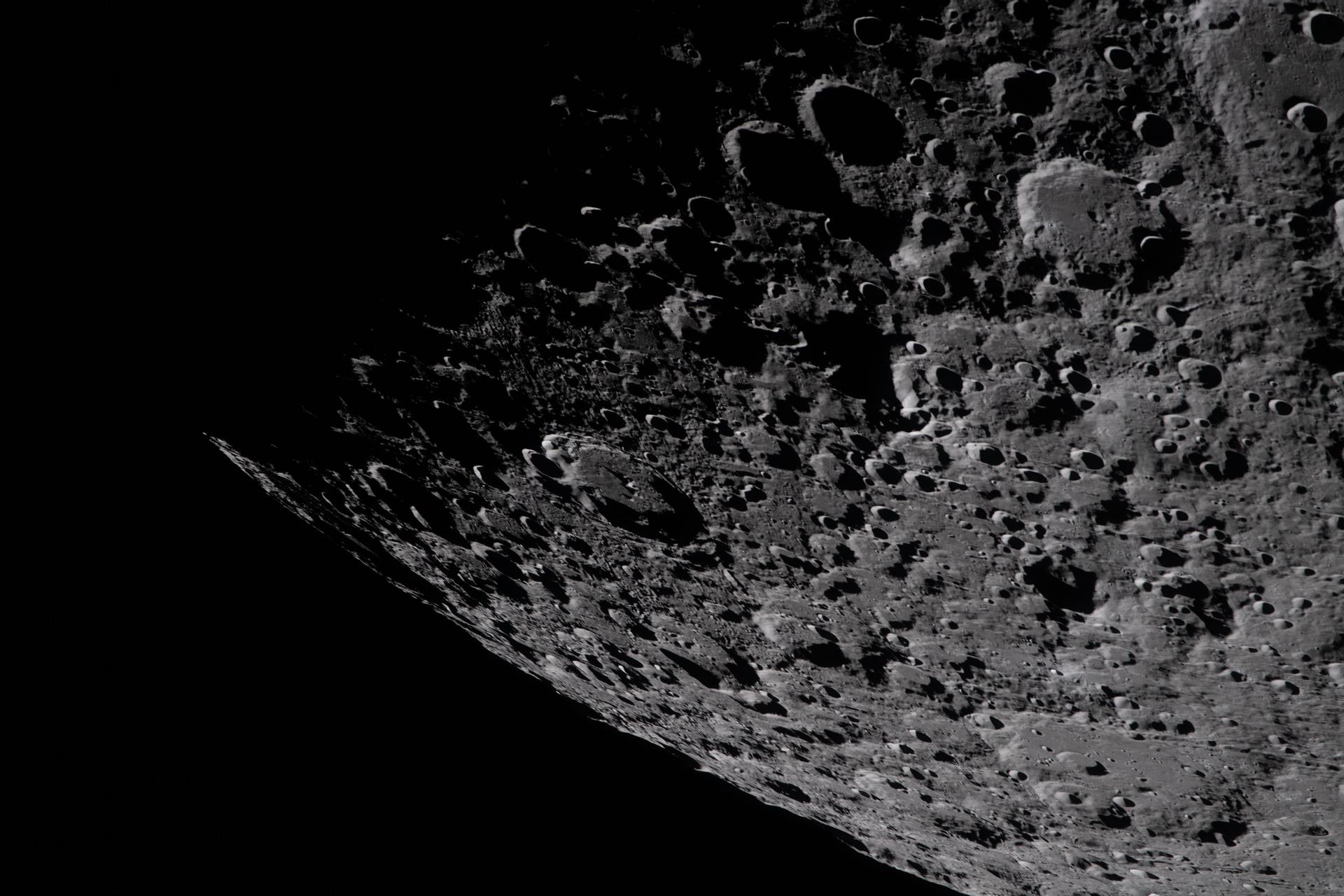
A close-up view taken by the Artemis II crew of Vavilov Crater on the rim of the older and larger Hertzsprung basin on Monday, April 6, 2026. The right portion of the image shows the transition from smooth material within an inner ring of mountains to more rugged terrain around the rim. Vavilov and other craters and their ejecta are accentuated by long shadows at the terminator, the boundary between lunar day and night. The image was captured with a handheld camera at a focal length of 400 mm, as the crew flew around the far side of the Moon. (Photo courtesy of NASA)
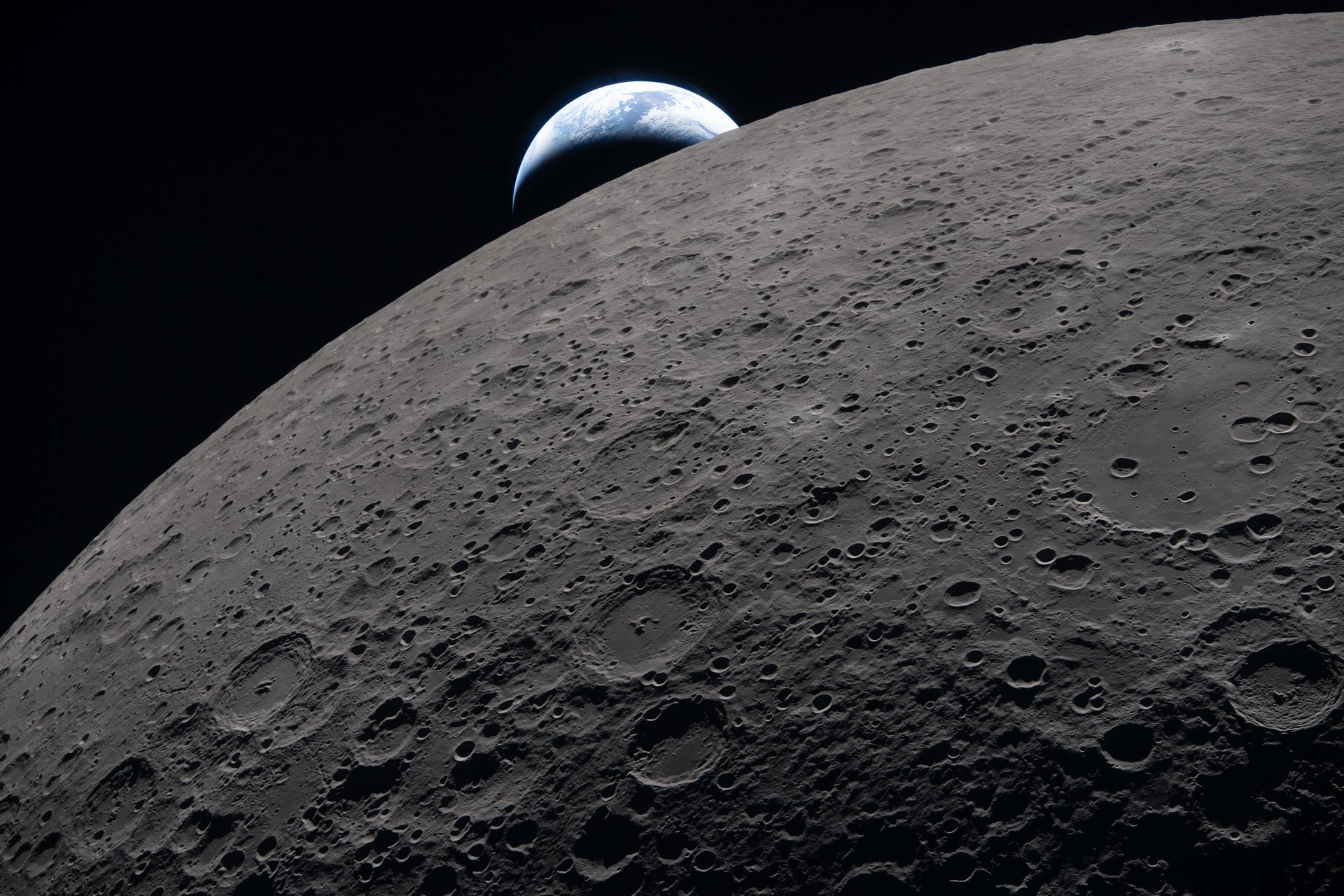
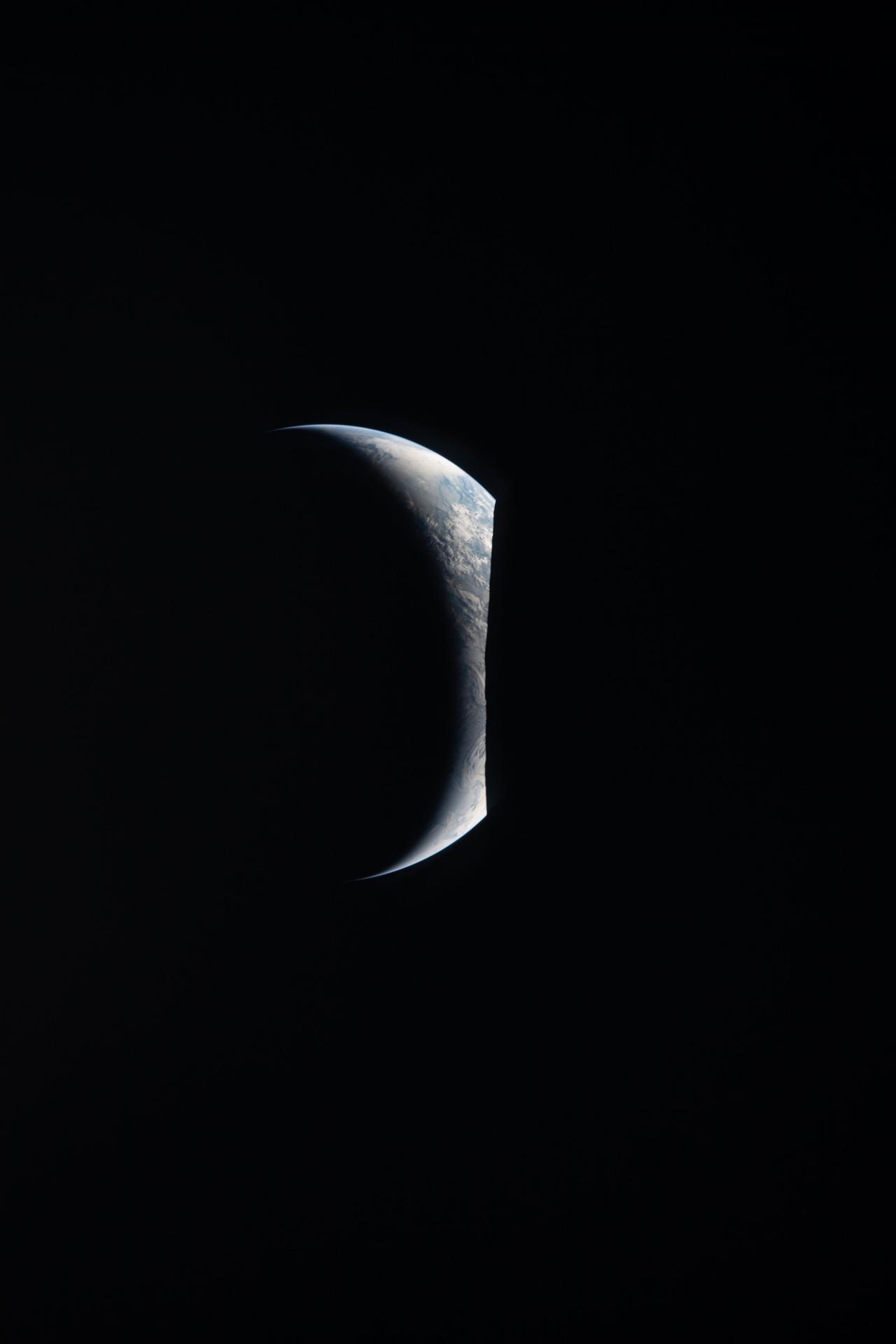
Earthrise captured through the Orion spacecraft window at 7:22 p.m. EDT on Monday, April 6, 2026, during the Artemis II crew’s flyby of the Moon’s far side. Earth appears as a delicate crescent, with only its upper edge illuminated. The planet’s soft blue hue and scattered white cloud systems stand out against the blackness of space, while the lower portion fades into night. Taken with a 400 mm lens, the image, Earthrise, reveals a striking alignment of Earth and Moon, with the Moon in the top foreground and the Earth below. Along the lunar horizon, rugged terrain is silhouetted against the bright crescent Earth. Both bodies are oriented with their north poles to the left and south poles to the right, offering a unique perspective of our home planet from deep space. This photo was rotated 90 degrees clockwise for standard viewing orientation. (Photo courtesy of NASA)
This post was originally published on this site. For nine months, the Rev. Edward Moultrie of St. Paul CME Church and his congregation filled county meetings, urging officials to reject...
This post was originally published on this site. The sporadic “pop!” of gunfire pierced the cool autumn air for hours at the South River Gun Club in Covington on Sept....