

Read the full article on KETV 7
The ongoing war with Iran is now nearing the two month mark, and there’s no end in sight. I think we’re very far away from *** negotiated deal. Among those caught in the middle are consumers. Since the war began February 28th, US gas. Prices have shot up more than 30% as of Saturday. The national average for *** gallon of regular gas was $4.09 according to AAA, *** far cry from the $2.98 drivers were paying at the pump before the war broke out. And originally, President Donald Trump said the spike in gas prices would be short-lived, but when asked again on Friday, he said this Does that mean Americans should anticipate spending more on gasoline? For the foreseeable future, for *** little while, the ongoing war has severely impacted maritime traffic through the Strait of Hormuz. Before the war, roughly 20% of the world’s oil supply traveled through this key waterway. The violence has caused *** massive disruption in the world’s oil supply, sending gas and jet fuel prices soaring. Jet fuel is particularly under pressure right now because of the Strait of Hormuz being closed. Domestic airfare costs are up 18% for summer travelers. International flights up almost 8% compared to last year, according to Goeing.com. People should sort of expect them to stay more expensive, at least as long as fuel prices stay at this level. Several international airlines announced they’re cutting summer flights to save on costs, and that’s leaving travelers with fewer flight options. Other domestic carriers are now charging passengers more for checked bags to help offset the cost of rising jet fuel prices. All this happening ahead of the busy summer travel season. I’m Jen Sullivan reporting.
Advertisement
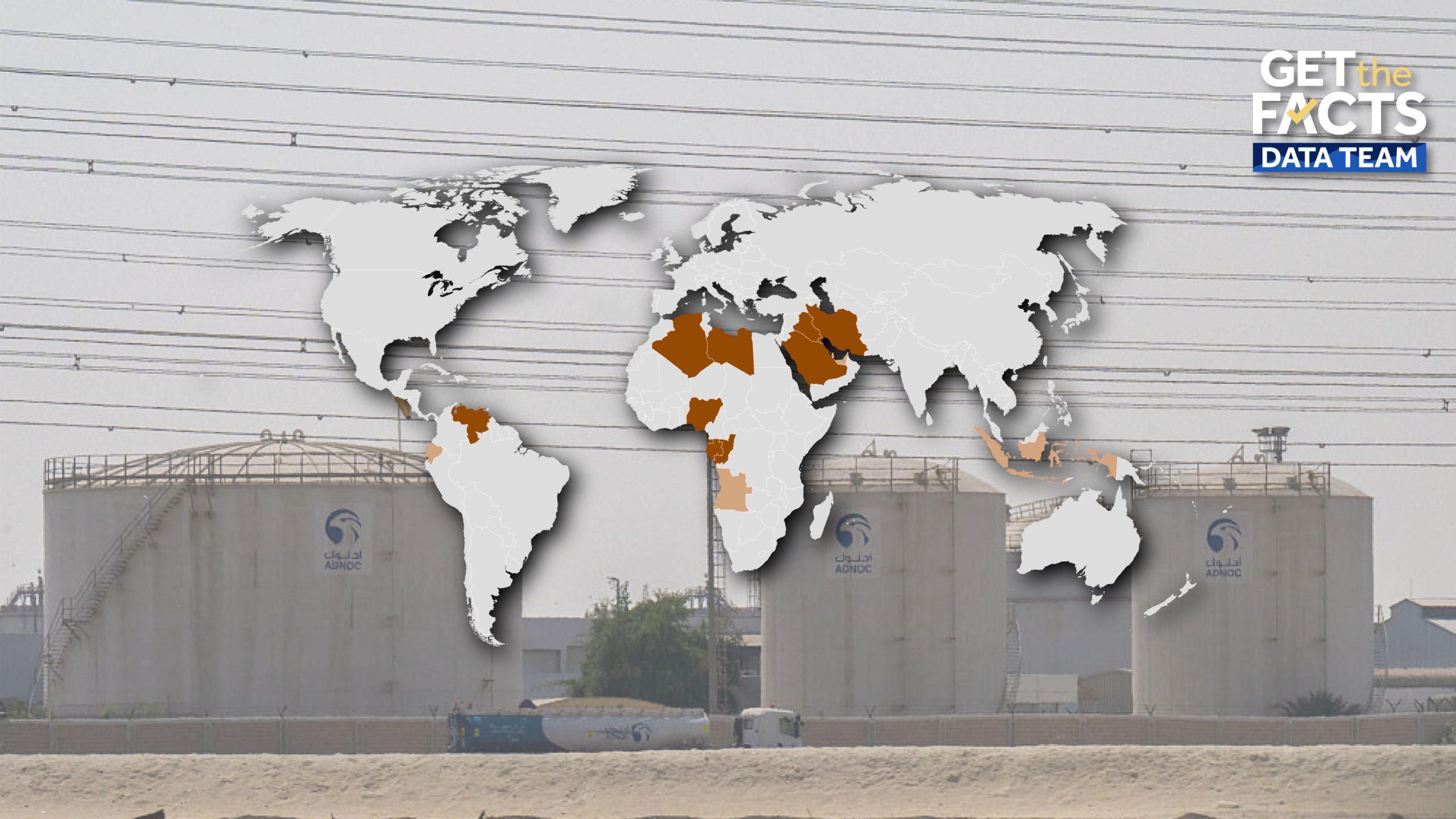
Get the Facts: The UAE is leaving OPEC. What other countries are in it?

The United Arab Emirates announced Tuesday it would leave OPEC and OPEC+ effective May 1. OPEC, or the Organization of the Petroleum Exporting Countries, sets oil production targets to manage global supply and prices. The UAE’s exit comes after rumors of the country leaving due to oil production quotas that are too low, according to the Associated Press.The exit also comes as rising global oil prices have contributed to record surges in gas prices, jet fuel and more in the U.S.Without a cap on oil production, the UAE could increase production and assist with lower oil prices after the war in Iran, the AP reports, but could increase market volatility.OPEC was founded in 1960 with five countries: Iran, Kuwait, Saudi Arabia and Venezuela. The move, effective May 1, brings the total number of active member countries to 11. The larger OPEC+ was formed with OPEC countries as well as 10 non-OPEC countries in 2016. Russia, one of the top oil producers, was among the non-OPEC countries to join the broader agreement in 2016 as oil prices fell. OPEC countries made up about 36% of the world’s oil production in 2024, with the UAE included. When including OPEC+ countries too, both made up about 56% of the world’s oil production, according to the latest data published in 2024 by OPEC.The UAE produces about 4% of the world’s crude oil. After it exits effective May 1, OPEC and OPEC+ will make up about 52% of the world’s oil production.PHNjcmlwdCB0eXBlPSJ0ZXh0L2phdmFzY3JpcHQiPiFmdW5jdGlvbigpeyJ1c2Ugc3RyaWN0Ijt3aW5kb3cuYWRkRXZlbnRMaXN0ZW5lcigibWVzc2FnZSIsKGZ1bmN0aW9uKGUpe2lmKHZvaWQgMCE9PWUuZGF0YVsiZGF0YXdyYXBwZXItaGVpZ2h0Il0pe3ZhciB0PWRvY3VtZW50LnF1ZXJ5U2VsZWN0b3JBbGwoImlmcmFtZSIpO2Zvcih2YXIgYSBpbiBlLmRhdGFbImRhdGF3cmFwcGVyLWhlaWdodCJdKWZvcih2YXIgcj0wO3I8dC5sZW5ndGg7cisrKXtpZih0W3JdLmNvbnRlbnRXaW5kb3c9PT1lLnNvdXJjZSl0W3JdLnN0eWxlLmhlaWdodD1lLmRhdGFbImRhdGF3cmFwcGVyLWhlaWdodCJdW2FdKyJweCJ9fX0pKX0oKTs8L3NjcmlwdD4=
The United Arab Emirates announced Tuesday it would leave OPEC and OPEC+ effective May 1.
OPEC, or the Organization of the Petroleum Exporting Countries, sets oil production targets to manage global supply and prices. The UAE’s exit comes after rumors of the country leaving due to oil production quotas that are too low, according to the Associated Press.
Advertisement
The exit also comes as rising global oil prices have contributed to record surges in gas prices, jet fuel and more in the U.S.
Without a cap on oil production, the UAE could increase production and assist with lower oil prices after the war in Iran, the AP reports, but could increase market volatility.
OPEC was founded in 1960 with five countries: Iran, Kuwait, Saudi Arabia and Venezuela. The move, effective May 1, brings the total number of active member countries to 11.
The larger OPEC+ was formed with OPEC countries as well as 10 non-OPEC countries in 2016. Russia, one of the top oil producers, was among the non-OPEC countries to join the broader agreement in 2016 as oil prices fell.
OPEC countries made up about 36% of the world’s oil production in 2024, with the UAE included. When including OPEC+ countries too, both made up about 56% of the world’s oil production, according to the latest data published in 2024 by OPEC.
The UAE produces about 4% of the world’s crude oil. After it exits effective May 1, OPEC and OPEC+ will make up about 52% of the world’s oil production.