
Read the full article on KETV 7
Nebraska Athletics discusses ‘Big Red Rebuild’ following approval from Board of Regents
Thank you for all being here today. This is truly *** historic day for all Nebraskans. Many generations of Nebraskans from every county, every corner of the state have built *** legacy in Memorial Stadium. We cherish the stadium’s history. We cherish Big Red through thick and thin, and we’ve witnessed *** great history. Memorial Stadium is sacred to Nebraskans, and it’s important that we do that’s right. We, we think it is important that we do what the Nebraska way. This is Nebraska, and Nebraskans do things differently. We want to do it right from the first time. We want to do things in the most fiscally way possible. We want to protect our precious places like Memorial Stadium for future generations, and we want to lead. Our athletic director says the Nebraska athletics should be the standard in which everyone judges themselves by. The Board of Regents agree with him. This is why we are very proud to approve this important initiative today. The rebuild of the Memorial Stadium represents generational opportunity to honor Husker legacy while positioning the University of Nebraska Lincoln in *** broader system of long-term success. Nebraska athletics is *** unique engine and strengthened the entire system. Driving enrollment. Engagement and statewide economic benefit without any academic or taxpayer resources. I’ll repeat that without any academic or taxpayer resources. Quality of athletic programs and facilities create *** great fan experience. *** great fan experience drives higher enrollment and retention. Higher enrollment and retention establish financial security for the entire system. Financial With higher enrollment, class sizes build opportunities for academic programs. More research and more investment in our university. An updated stadium will strengthen Lincoln’s economy by attracting more visitors. Boosting businesses for local residents, hotels, shops, and creating new jobs throughout the tourism and event activities. Facts are clear. The Board of Regents are so proud to approve this historic initiative. We have *** great day ahead for Nebraska football and our entire university. Thank you. Doctor Gold Well, thank you Regen Kenny and thank all of you for being here today. It’s an incredible honor and I can tell you, uh, as your university system president, I’m incredibly proud to be with you today. The results of our Board of Regents meeting and to share *** few thoughts. And I agree with Regent Kenney that today is *** historic day not just for Husker athletics, but for the University of Nebraska and for all of Husker Nation. Memorial Stadium is, as we all know, iconic in Nebraska and across all of college athletics. And this project is both ambitious and strategic. The big red rebuild, as we call it, is *** fan-driven once in *** multi-generation investment that modernizes Memorial Stadium while preserving the legacy and ensuring that it remains *** premier destination for collegiate athletics and other year-round events as you see what’s going on behind us today in preparation for tomorrow night. This project will help us to attract and retain students, faculty, and staff to compete athletically, but in the classroom and in the research labs at the highest level and to generate even more significant economic impact across our city, our region, and our state. The big red rebuild will deliver these long-term benefits without, as you heard, relying on taxpayer or tuition generated dollars and will serve to better support the key aspects of UNL athletics programs in an increasingly competitive world. And I don’t need to tell you folks about the impact of the NIL, the transfer portal, and so many other things. And just as importantly, it will provide an absolute incredible experience for our fans for decades to come. In all, the big red rebuild represents an important step on our odyssey to the extraordinary that we launched across our system nearly 2 years ago. Of interest to you, the University of Nebraska has over *** $12 billion annual economic impact across the state if you include all of our entities, including our healthcare delivery components. We graduate over 11,000 students, and very soon as commencement approaches, it’ll be another crop of 11,000. We support over 50,000 direct and indirect jobs and generate over $175 million in state and local tax revenue, and the reason I point this out is this program will not only create *** unique fan experience and have the impact on recruitment and retention of faculty, students and staff, but will also dramatically favorably the finances and the financial impact that Husker athletics have. And then finally I wish to first of all, excuse me, just thank the entire team and particularly Troy and others uh for their work and their vision and the planning of this project. The detail and the meticulous approach is truly impressive at every possible level. I want to thank our board for undertaking this important project, for discussing, debating, planning, and working hand in hand with our athletics department to get to this point. I want to thank the donors and the philanthropic community in general who have supported this great university for decades and decades and look forward to the future years of partnership ahead. And I wanna thank our student athletes and our coaches and trainers and so many others uh for building our athletic programs. I don’t need to tell you folks we have had what I believe either has been or certainly will be one of the finest years of athletic performance in *** very, very, uh, long time. And above all, and my closing thoughts are to thank our fans. They are the best in the world. You know, I had the pleasure of traveling with our men’s and women’s basketball teams to Durham, to Oklahoma City. And to Houston. And I will tell you that uh there is nothing like the Nebraska fan base and when we were in Oklahoma City, to quote the uh Vanderbilt coach, and I think many of you heard it, uh, it was just like *** home game in Pinnacle Bank Arena, and I would certainly agree with that statement. So with that, I turn it over to you and if you have questions for me, I’d be very honored to take them. Thank you, uh, opening comments from Troy. Next. Thanks, Keith. Uh, big, big day, long time coming. Uh, really I think the first meeting I took when I, when I took this job as athletic director was with the stadium committee that had been formed. And so, uh, this is for me my 2+ years this has been really at the, the focus of, of *** lot of my work. Uh, these things don’t happen. They don’t happen very often at at schools. Uh, they don’t happen without the commitment of, of time, talent, and treasure from *** lot of folks. Uh, we’ve, we’ve all thanked each other, but you know, the, the Board of Regents particularly giving this *** unanimous vote today, uh, you know, this is *** big project. It’s, it’s unprecedented project. It’s *** project that. The board has not been faced with even contemplating, uh, of this magnitude and, and to give it their endorsement, uh, just give them huge credit and huge thanks and, and President Gold, President Gold has some irons in the fire if you don’t know, uh, you know, the president of ***, of *** system like this has, has *** lot to focus on, but his attention and focus and his partnership with me and, and really his entire team who’s who’s committed to being involved in this process, I just, I just can’t thank him and that team enough. Uh, sitting next to me, you know, Courtney’s not gonna give an opening statement. He’ll probably answer *** lot of questions, but Courtney came here with me from Tulane, and we’ve been together for *** while. He is running point on this project. You know, I, I can talk about *** lot of things, but I don’t know why this truck is there and why that pipe is here. Uh, that’s Courtney. And so you’ll see *** lot of Courtney. Uh, we’ll be doing regular updates, you know, one of the things you’ll see in this project, *** lot of transparency from us about what’s going on, when it’s going on, and why it’s going on, and that’s, you’re gonna see *** lot more of Courtney. Uh, stadiums are, are the economic engine of *** Big 10 athletic department. They just are, and we’re about to undertake *** project that, that, uh. Quite honestly, will protect the financial stability that that Husker Athletics has, and, and really it’s been said before, we expect to lead, and no one knows where this college athletics world is going to end. There’s *** lot of tumult, but this is the opportunity for us to lead from *** financial standpoint. And just as importantly though, uh, as, as President Gold said, this project will impact future generations and you know when we’re all done, all we have is the legacy we’ve left behind and hopefully that legacy for all of us as we did something for those who are coming behind us in 1962, the South Stadium was built and it gave us 50 plus years, right, two generations of, of, of, of use, uh, the, the. Tower, the Sweet Tower that was built in 1999, it’s one generation old, but it’s given us really it protected our financial stability since the 2000s, and that’s exactly what this project will do. It, it will, it will be something for our children and their children to look back on, and, and we can claim *** stake in helping, uh, give them what this stadium has given us and given the generations that have preceded us. I’m not sure there’s another athletic department in the country. Uh, that is more tied or woven into the culture of the state than here in Nebraska. It’s frankly what attracted me in the, in the first place, sitting across the border and watching it growing up. Uh, with that said, that privilege comes with responsibilities, and that is protecting the programs and protecting the facilities. And so it, it’s, it’s *** natural and it’s *** very important thing in in what we’re about to do. Some of the nuts and bolts, as you all know the details by now, the south comes down, the west inside the tower, all the seating areas come down immediately upon conclusion of this season, whenever that is. There’s not going to be any fancy explosions. We’re not dynamiting anything. It will be *** very systematic tear down. Just keep in mind one thing on the west side, that bowl, it may have been dressed up on top. It is 100 years old underneath. No one really knows what we’re gonna find when we get underneath of there, so everything will be very systematic and very carefully structured in order to make sure that, that we unpack this thing uh in *** way that doesn’t cause us uh additional heartache, uh. I have great faith that we’ve talked about the timeline some in the last week. I have great faith in the timeline because Kiwit’s involved. Uh, you know, it’s *** Nebraska company. It’s Nebraskans building this thing for Nebraskans. It will come in on budget and it will come in on time, and that is why Keywit is *** part of this project. They estimate to me that 75% of the companies that work on this project will be Nebraska companies. They estimate to me that 95% of the workers who work on this will be Nebraskans. The economic impact, $1.1 billion of this project alone. The athletic department on an annual basis adds $600 million of economic impact. This is *** massive project. It’s 7000 jobs. There’s *** lot of benefits. The benefits will be felt immediately from that economic impact. I think 25 of Kiwitt’s top employees that are assigned to this are Nebraska grads. They’ll have 10 interns working this summer on this project, including 3 student athletes. So again, the Nebraskans building this for Nebraskans, and Nebraskans designed this. HDR is the lead architect. They’ve, you know, we, we’ve unveiled 3 pictures, right? They’re here for you. As we unveil more and more over time, you’re gonna see why we’re so happy with what they’ve been able to bring us from *** design standpoint and *** design standpoint, you know, how it looks, but actually how it functions as *** stadium. You’re gonna be very impressed and very proud of, of, of HDR and their partner HNTB who’s an architectural firm out of Kansas City who, who really specializes in sports facilities, um. We’re gonna add 20,000 chair back seats. Uh, to the, to the south and to the west, everything on the west will be chair back. Uh, the South and the lower two tiers, if you have seen the diagrams, it’s *** four-tier project in the South, the lower two tiers, all students, and I said this last week, uh, in, in the, uh, the initial story that South End zone will be held to play into. And it’s designed to be loud. It’s designed to be strong, and it’s and students have 7 chances *** year to impact the outcome of *** game. They’re going to get their chances to impact the outcome of the game with this design. The the middle section will also have chair backs, and the top section will have bleacher backs. So the reduction in seating capacity that everyone’s talked about from 86,000 to 800, that’s really *** result because in the manifest each bleacher is measured in 14 inch increments. People have to sit sideways. Uh, so the, the chair backs will be 1920 inches and just *** simple math problem as to why the capacity goes to where it goes. Uh, we will increase, uh, clubs in the stadium from 2, you’re in one of them now, to 43 on the west side and, and this one. We’ll increase different seating areas, different tiers of seatings from 3 to 8. The idea is that people, like they can in any stadium in the country, they’ll be able to view it in whatever way they choose to view *** football game. Some will want to sit in the north and watch it from the end zone and watch the plays develop, as Coach Osborne will, as he described to me this week, and some want to sit on the 50 and watch it like it’s on television. But all sorts of options will be available today, about 25% of the tickets in the building do not require *** donation. That will carry forward, uh, that same number of seats in, in the new stadium that will not require *** donation. Uh, there’s *** lot of questions people are already peppering us on, on, on tickets and, and the, the, the number one question on this is what about me? All politics are local. What about my seat? Uh, it’s gonna be months before I, I don’t wanna tell anybody and then change our minds, but we’ve got to get, uh, through more of the construction design before we know exactly do we have 10 seats in this row or do we have 12. Uh, but, uh, for the most part, *** couple of generalities maybe I can address when it comes to ticketing. Uh, every seat in the building right now, the worst seat and the best seat is the same ticket price. The donations are different. Uh, the ticket pricing will be tiered. The cheapest ticket this year, Tyler, is what, 420. Uh, the cheapest ticket in the new stadium will be in the in the low 200s. So there will be tiering of tickets that we do not do right now. One of the, one of the goals from the time I first started talking to the regions about this, every meeting was this has to remain affordable, and, and you heard it today. If you listen to the region’s comments about, uh, this project, it will remain affordable, continuing that those tickets without donations and actually reducing the prices in those sections. Now, the, the, the flip side is true. If you want to sit on the 50 yard line, you want access to the clubs, it’s *** different price point. And, and, but all of that will come out, roll out sometime in the fall. There’s ***, uh, there’s really *** legacy seating, uh, standard here of, of folks who’ve been in seats and haven’t paid the donations. We, we hear *** lot about that. About 40% of the tickets are encompassed in that legacy seating. Uh, that legacy seating goes away. Uh, every seat’s going to be treated as every seat. So the person sitting next to you, if there’s *** donation or *** seat price, that person is paying the same price as you are and paying the same price as the person on the other side of you, so there will be consistency. Uh, honestly, if, if every seat paid its donation this year, it’s over $21 million of revenue. And when you look at how the, how the stadium is going to finance itself, uh, that will more or less pay the debt service that we will take. So when I talk about the stadium growing by revenue of 40%, most of it is capturing revenue that just is not captured in the in in the stadium right now. The project costs $600 million. We’ve talked about *** floor of $250 from *** philanthropy standpoint, $350 million from bonds. The higher that philanthropy number, the lower the bond number. I do not have any signed commitments or part of what from *** process standpoint we have to have is today’s action from the board, which frees us up to do just exactly that. When the board commits, now we’re able to ask our donors to commit. We have had *** lot of conversations and they’ve been incredibly favorable conversations and we feel really good about where we’re going to be at. Finally, *** couple of things uh that I wanna add, uh, that you may not ask me but I think are important. There is going to be *** live camera on this the whole time, so no matter where you’re at, you’re gonna be able to watch and see what’s going on in the stadium. Uh, there’s *** website that’s gonna be, uh, kicked off tonight 7 7:30 p.m. There’s *** video on there that, that is pretty spectacular that introduces this project, but we have *** big event tonight with, with about 400 of our closest friends and top donors, and, and we’re gonna unveil that to them at 7 o’clock and then as soon as that’s done, we’re gonna unveil that to the general public and the media. Uh, we will not be transitioning the stadium to grass. We talked about doing that early. And, and *** couple of things have happened. One, we completely rebuilt the grass practice fields, and, and then we put the Hellas turf in *** year ago. Uh, those two moves really mean we don’t need to do grass in the stadium. That’s *** that’s *** discussion that Coach Rule and I have had, and, and, and, and Coach Coach weighed in strongly on what we were going to do with that, but we feel very good about the surface, uh. Those of you who, who will laugh, those who know what I’m talking about now, but I consider myself to be team trough, however, uh. As you put *** stadium up to code, troughs are not up to code. We will modernize every restroom on the east, west, and south, and troughs will not be *** part of that. Uh, and then finally, uh, naming rights for the stadium are not on the table. This is Memorial Stadium. It was named Memorial Stadium in honor of World War One veterans, and that’s not changing. We’ll find our ways to generate revenue to do this, but you know I think that is one of the most important things that we protect. There’s *** lot of history. There’s all things that have been relocated and we’re we’re preserving them as construction has begun. Memorial Stadium is one of those things though that will not change. We, uh, we have *** lot of work to do. Uh, I can’t wait to do it and thank you for the Board of Regents for licensing that work to begin. Take questions now. Just *** reminder, um, please identify yourself and your affiliation, and then, uh, President Gold and Chairman Kenny will be, um, after we’re done with the formal portion, they depart for other commitments. Troy and Courtney will be available after that, so. Anyone go ahead with questions, Sam, go ahead. Office both of Troy and, and Doctor Gold. This, this project has been on pause for *** little bit of time. What, when was the moment when you’re like, yeah, this, this thing’s gonna go forward, and, and what was maybe the, the moment where it came off of pause and, and to go for both. Well, the moment it came off *** pause is when Jeff said, let’s take it off *** pause. You know, there, there are for us this was ***, this was our deadline in order to procure steel and, and, and concrete, uh, prefabricated concrete that we’re gonna need to get this going, we have to order it now. So we had, we could have done this at any time. I would tell you I think we were probably ready last June. We could have done this at any point in time, uh, but. I will tell you there’s *** lot of things at *** university that happen and, and all these things need to be coordinated, you know, we don’t operate in an athletics vacuum, and so when it was time, it was time. Uh, we, uh, that time actually served us very well. Just the how in the, in the first several months of uh post-house settlement. The importance of the financial model has been magnified by 5. the, there was tweaks here and there we continue to find, and that goes back to the, the, uh, 100 year old stadium. Uh, we’ve done *** lot of work already. You, you see some trailers, we, we’ve taken the old kitchen out and, and the, the old, if, if you were in the academic center or, or in the last year, the, the, uh, development house, that’s already been gutted. Uh, so work is being done. We’re doing micro piles underneath of the west to stay on time, but, and that that was approved by the board in December, so we’ve been able to do things along the way to keep us on time, but really it’s just *** matter of sequencing. And when the timeline got to the point where we needed to come to the board and and we were ready with all other, I would, I would say rails had all aligned and we were ready to go, is that fair, Jeff? Yeah, no, I think it’s *** great description. You know, you may not remember this, but I certainly do that I was announced as the priority candidate for your university president the same day that Troy was announced, and I remember that first meeting that we had with the stadium planning group. And an opportunity to really rethink this and I would say over that time, uh, and I do believe this is the right time for all the reasons that that Troy mentioned. But I think the project has gotten better. Uh, I think there’s been much more energy generated across the broader community, meaning the whole fan base. I think there’s been *** bigger and better understanding of the true deferred maintenance that will make the that will bring us up to standards on all parts of the stadium, uh, which I’m not gonna get into the rough discussion, but, uh, uh, leave that leave that to Troy Courtney, but, uh. Uh, clearly, uh, that has to be addressed. There were considerations that had to be made regarding the season, and, uh, and, and, and, you know, Troy and others can address those if you have questions about it, but I think the project itself has gotten better, and I couldn’t agree more, you know, as some of you may know, I have the honor of serving on the president’s roundtable on quote saving intercollegiate athletics and uh. Challenges that we face regarding the future of intercollegiate athletics. Uh, first of all, there obviously needs to be some changes and some guard rails put into place, but more importantly, it’s very different than it was previously, and we needed to have *** business model that not only got the stadium up to par, but could also support the future of what we need. And, uh, and this dots the I’s and cross the T’s. Well, I want to add one more thing to that we have one chance to do this right. One chance. And this is, this is, this isn’t personal for any of us. This is about giving Nebraska and Nebraskans something special. And I will tell you the last few months have been making sure that we do this right. Uh, I think we all, everybody’s *** part of this project, and there’s probably 60 people that have been working together at one time or another, uh, uh, every day that went by, every refinement felt, we felt more comfortable that this is right. Sean, that’s right. Sean Calley Carolina, what will the challenges be of the one year where you have 65,000 seats just to kind of navigate that knowing that you have more fans than that that would want to be in for some of these games? Yeah, just the, the magnitude of that challenge. We have 66,000 season tickets. We have 7000 students who have tickets. Uh, we’re required by the Big 10 to give 3000 tickets to the visiting team. Add those numbers up. That’s *** lot more than 65, which is what I expect we will be in 2027. And I hate to say, not that we haven’t planned for that, but we have 8 home games this year. This is part of why we, we dropped the Tennessee series and everybody got mad we dropped the Tennessee series is because we foresaw that potential problem. Get 8 games because one, we have to, we have to make our own budget, and, and *** football game is is uh 8 to $9 million each game toward the budget, so we needed that extra game. Uh, we’re going to have to have *** lot of conversations with those in the South because that’s where the changes are going to be. It may be, can we get by *** year with, with mini packs? It may be, uh, we may well take the first game of the season on the road. We may go to Kansas City again. I would love to do that. And if we could, there may be make good opportunities for some of our ticket holders, you know, we’re, and Jeff said this, we got to take care of our fans. We got to take care of our ticket holders. And and there is going to be inconvenience. There’ll be inconvenience that entire season, not just the people who don’t have their tickets. Parking lots are going to have this fall, parking lots in the north are going to have materials laid down and maybe it’s where somebody parked. It’s going to be inconvenient for two years. And that’s why part of this is transparency. We’re gonna tell everybody what the convenience is, and I understand. I know what my email’s gonna look like, uh, and, and I know what the phone calls are gonna sound like, but it is just *** part of progress, *** price, part of the price of progress. I don’t have an absolute answer for how we’re gonna handle being down 15,000 people, uh, but I know this, we gotta find *** way to not give them an option to not have tickets and get used to not being here. So we’ll do something, um, uh, something unique, I’m sure. Tyler’s working on it. Uh, we’ve got, yeah, it is Tyler’s fault. We, we just went through some reseeding in the volleyball and it, it’s really been, it has really informed us for with, with great lessons about how we need to proceed even though the scale is so much larger in the, in Memorial Stadium. Mitch Uh, Mitch Sherman from the athletic, uh, Troy, as, as you and Doctor Gold have suggested, it’s, it’s *** challenging time in college athletics, and there’s already *** lot asked of your donors. How do you characterize separating the discussions as you go to them? Tonight and moving forward in funding third party NIL and the challenge of of this stadium project, yeah, you know. I don’t think people realize what NIL is today. It isn’t the days of everybody writing *** check and how many people give us money and we’ll go to 1890, deposit that, and then money’s paid. That is, that’s not even legal anymore. NIL, the third party NIL, the above the rev share cap NIL, those are actual corporate relationships with the athletes. So this isn’t *** matter of, hey, I’m going to the donor now and I instead of 18, you can’t even do that anymore. So one, there is *** distinction. Secondly Donors don’t care for NIL. And, and they’re doing it because they want our coaches to have success. And, and that’s, that’s what’s happened up till now. What the stadium does though is I would tell you to look at it almost as an endowment. The investment made by our donors in the stadium is going to produce revenue above debt. You know, 15 to $20 million of that revenue early on and then growing from there as the increased costs of college athletics continue, and I will tell you the number one increase in costs is going to come from player compensation in whatever form it takes, and I’ve got my ideas, but they aren’t, it’s not what it is today. It’s going to continue to grow. That’s how we fund player compensation moving forward. Matt Rhule has to have every bullet in his holster. And the ability to fund the player compensation piece, I would guess he would tell you that is the silver bullet. It is the most important bullet in his holster. So the idea that that we have to fund this through our department, we have to find partnerships with companies for our athletes to get above the cap, but we got to be prepared for whatever’s ahead. I will tell you, we will be prepared for an uncapped world. Because if we’re prepared for an uncapped world, we’ll be prepared for anything in between, but that’s internal. The days of going to ask *** donor to support NIL by writing *** check are gone, it’s illegal. And so part of it, there’s misnomers as to what can really happen and, and, and I don’t blame anybody because the doggone rules change by the day. And so that’s where we sit today, but we’re trying to prepare for whatever the inevitability of tomorrow is. Randy, go ahead. Randy Silver, MTV News. You brought up earlier about the vangan reconstruction. What have you learned from that that you can use for Memorial Stadium? I’m sorry, uh, you guys talked about the vanny earlier in the reconstruction. What have you learned from there? I’ll help you with Memorial Stadium and maybe redid your plans as the vanity has gotten underway. Well, the number, the number one thing is, is I think Tyler Kai put together and his team put together the reseating plan. The communication was extraordinary. It was often, it was detailed, and he got those emails and he got those calls, and there is no way you do this without individuals, you know, feeling aggrieved, uh, but I think the, the way we learn to communicate, how we need to communicate, the things that people told us that they didn’t know or didn’t hear, I think all of those things, we’ll have *** sales, we’ll have *** sales center downstairs in the old radio uh space. Uh, that’ll be up and running this fall. So one, people can come in and see their seats and, and, and view through, uh, uh, AI what it looks like from their seat to the stadium. The more that people can put themselves in *** position to understand what it’s going to look like, the more we can communicate with them. That’s the lesson we’ve learned. Uh, it is not structural and it is not *** void of, of, of grief coming. And we, we may be the only school in the country that doesn’t recede on *** regular basis. Uh, Most people are used to that grief on *** 7 to 10 year basis. We’re just catching it all at once. Jake, go ahead. Troy. How much can this also for Jake Bartei News Channel, Nebraska, Troy, how much will, will this stadium being *** little more modern, the look of it, all that kind of help recruiting as *** whole as well? Well, I hope it helps. I hope it helps student recruiting. You know, the athletic department has *** lot of responsibilities to itself, but it also has one to the university. It is the strongest marketing arm this university has. The more success we have, the more students that come, and, and we talked about this place being *** front porch, you know, we build business buildings, uh, we build engineering buildings. We build ag buildings so that we can educate best in them. But, but when kids wanna come to campus, they see that building and that they know that you’re investing in their outcome. Same thing’s gonna happen here. This is this is an educational building, and I know the academics will be mad at me for saying it’s an educational building, but guess what? Our coaches are teachers, and they’re preparing our athletes to be successful through the rest of their lives. And when *** student comes to the game, my son was in 4th grade last year and he learned the rite of passage in 4th grade when he came and toured the stadium. When young kids come in here. They need to see this and say, wow, Nebraska. I wanna be here so I think it’s *** dual responsibility. It’s not just gonna help Matt, you know, we, you know, we build *** lot of facilities. Everybody says recruiting is about money today. Recruiting is still about more than money. Recruiting is still about the bonds you have and the relationships you have, the facilities you’re gonna play in. Money is important, but for the, for the university, uh, I think this is *** great opportunity for us to help the university from *** marketing standpoint. Troy, were there *** few stadiums that you were able to get around and tour, and, and what were some of the places, or Courtney, you know, that you went around and looked at that you took some of the ideas to put in this project? It’s *** very good question. Uh, we actually have taken the last year, year and *** half to really go and talk to some of the industry’s best. Uh, uh, we took *** delegation to, to Penn State, uh, Texas, uh, Notre Dame, Florida State, in particular some of those projects were going on. Right now, uh, one of the things that you will hear from us as we’ve aligned ourselves with Chris Nations and, and Legends Global, uh, who’s one of the premier owners’ reps in the industry right now, and, uh, not only were they doing Florida State’s project, but they were, uh, working on Northwestern Stadium as well. And so again it was very comprehensive from that perspective, uh, some of the most elite college programs, uh, but also *** couple of NFL venues and those relationships. That we built in the planning process not only with H&TB and HDR, our design team, but also with our team at KeyWIT so we did those things in unison so we got ideas around how quickly we could do the construction but also to make sure that again it is *** generational project and that we can sustain not only 7 football games *** year but all of the other entertainment elements that make this the epicenter, quite frankly for our state.
Advertisement
Nebraska Athletics discusses ‘Big Red Rebuild’ following approval from Board of Regents

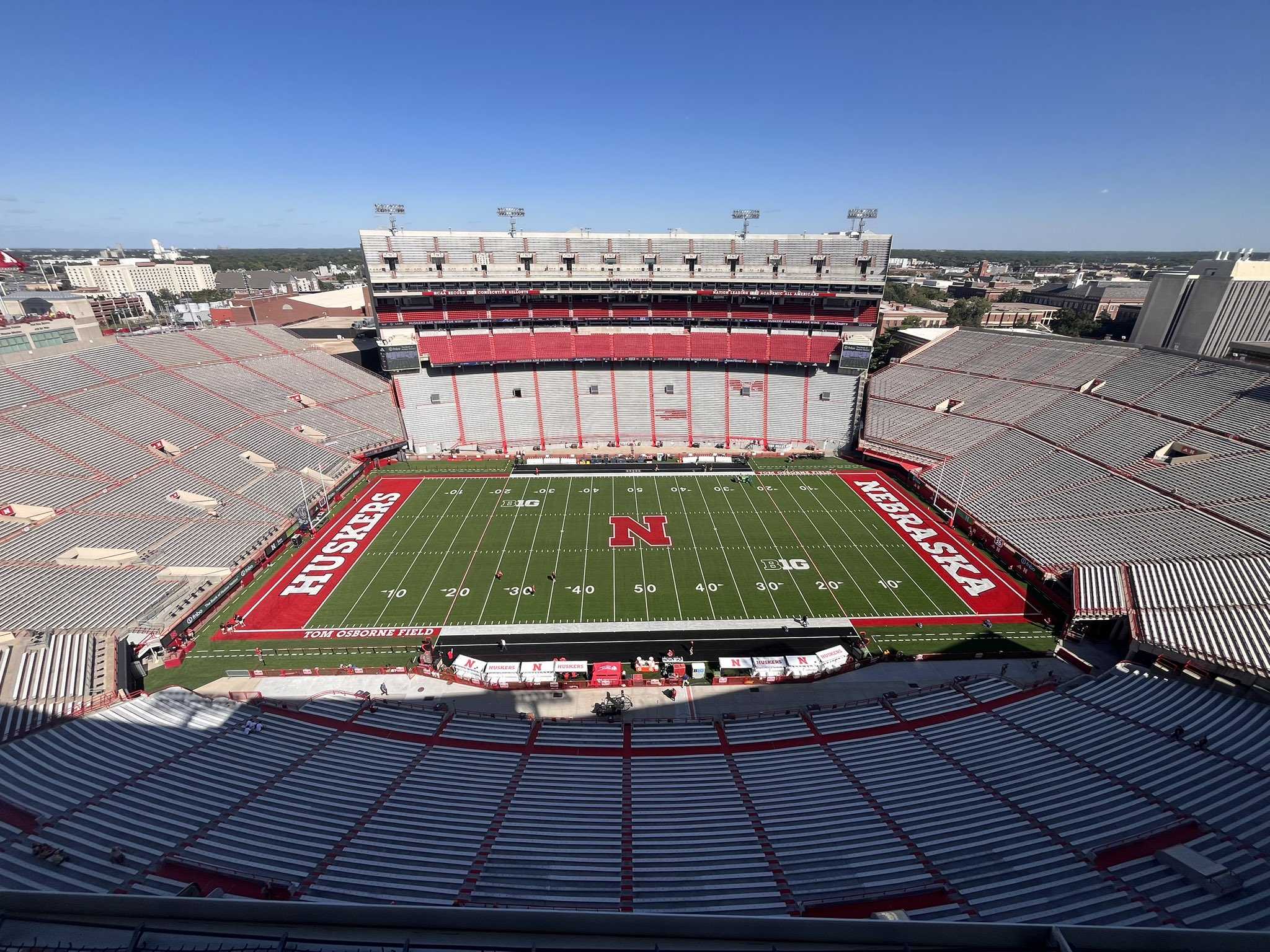
The NU Board of Regents approved the ‘Big Red Rebuild’ plan for Memorial Stadium.The Regents voted on the matter on Friday afternoon.Nebraska Athletics held a news conference following the Regents’ meeting to discuss the project.READ MORE: NU Board of Regents approves ‘Big Red Rebuild’ plan for Memorial StadiumNU System President Dr. Jeffrey Gold referred to the project as “fan-driven, once in a multi-generation investment that modernizes Memorial Stadium while preserving its legacy, ensuring that it remains a premier destination for college athletics and other year-round events.”Nebraska Athletic Director Troy Dannen called the project “unprecedented.”He said it will “protect the stability” of the athletic program while impacting future generations of students and Husker fans. “It’ll be something for our children and their children to look back on,” Dannen said.He addressed the economic value of the project, including over 7,000 jobs that will be mostly held by Nebraska residents. “Nebraskans building this for Nebraskans,” Dannen said. See the whole news conference in the video above.Make sure you can always see the latest news, weather, sports and more from KETV NewsWatch 7 on Google search.NAVIGATE: Home | Weather | Local News | National | Sports | Newscasts on demand |
The NU Board of Regents approved the ‘Big Red Rebuild’ plan for Memorial Stadium.
The Regents voted on the matter on Friday afternoon.
Advertisement
Nebraska Athletics held a news conference following the Regents’ meeting to discuss the project.
READ MORE: NU Board of Regents approves ‘Big Red Rebuild’ plan for Memorial Stadium
NU System President Dr. Jeffrey Gold referred to the project as “fan-driven, once in a multi-generation investment that modernizes Memorial Stadium while preserving its legacy, ensuring that it remains a premier destination for college athletics and other year-round events.”
Nebraska Athletic Director Troy Dannen called the project “unprecedented.”
He said it will “protect the stability” of the athletic program while impacting future generations of students and Husker fans.
“It’ll be something for our children and their children to look back on,” Dannen said.
He addressed the economic value of the project, including over 7,000 jobs that will be mostly held by Nebraska residents.
“Nebraskans building this for Nebraskans,” Dannen said.
See the whole news conference in the video above.
Make sure you can always see the latest news, weather, sports and more from KETV NewsWatch 7 on Google search.
NAVIGATE: Home | Weather | Local News | National | Sports | Newscasts on demand |