
Read the full article on KETV 7

Recent rainfall has helped ease dry conditions in eastern Nebraska, but much of the state remains in drought, raising concerns about wildfire risk and challenging farmers during spring planting.More than half of Nebraska is experiencing drought conditions, with about 56% of the state classified in extreme drought, according to climatologists. The contrast is especially stark between eastern and western regions.”If you’re in the far southeast corner of the state, you’re going to say, ‘what drought?'” said Brian Fuchs, a climatologist with the National Drought Mitigation Center at the University of Nebraska-Lincoln. “But you pretty much get to about highway 81 in the state, give or take a few miles either way. And if you’re west of that line all the way to the Wyoming and Colorado borders, it’s pretty poor.”Despite localized relief, Fuchs said the broader picture shows long-term moisture deficits continuing to build.”It’s kind of the bank account that hasn’t been replenished this last year for much of the state,” he said. “You go down to the deeper soil layers and there just isn’t any moisture at all.”The dry conditions come as farmers across Nebraska are in the middle of spring sowing, with many planting corn and soybeans into parched soil. Agricultural leaders say the uneven precipitation highlights ongoing volatility.”We have a really strong case of feast or famine,” said Jordan Dux, of the Nebraska Farm Bureau. “Farmers are always used to being at the mercy of Mother Nature. This is going to be one of those years again.”The drought is also contributing to an increased risk of wildfires, particularly in western Nebraska, where vegetation remains dry.Near the village of Brady, volunteer firefighter and rancher Cody Runner has been dealing with the effects firsthand. Over the past month, he has split his time between managing his ranch and battling wildfires.”I started fighting Cottonwood Fire on my birthday, March 12,” Runner said.He said he manned his post for sixty hours at a time.”I might have went over those couple hours here and there,” he said. “It’s the fact of the livelihoods, the people that are in danger.”He recently joined efforts on the Pressey Fire, which is now about 75% contained, as part of a mutual aid response.”If they hadn’t been there, I would have been fighting it alone,” Runner said. “So I was very thankful, and we owed it to them.”Officials say this year has already been the worst for wildfires in Nebraska’s history, with dry conditions expected to persist. “Until those areas green up, there’s a high risk for fire,” Fuchs said.Make sure you can always see the latest news, weather, sports and more from KETV NewsWatch 7 on Google search.NAVIGATE: Home | Weather | Local News | National | Sports | Newscasts on demand |
Recent rainfall has helped ease dry conditions in eastern Nebraska, but much of the state remains in drought, raising concerns about wildfire risk and challenging farmers during spring planting.
More than half of Nebraska is experiencing drought conditions, with about 56% of the state classified in extreme drought, according to climatologists. The contrast is especially stark between eastern and western regions.
Advertisement
“If you’re in the far southeast corner of the state, you’re going to say, ‘what drought?'” said Brian Fuchs, a climatologist with the National Drought Mitigation Center at the University of Nebraska-Lincoln. “But you pretty much get to about highway 81 in the state, give or take a few miles either way. And if you’re west of that line all the way to the Wyoming and Colorado borders, it’s pretty poor.”
Despite localized relief, Fuchs said the broader picture shows long-term moisture deficits continuing to build.
“It’s kind of the bank account that hasn’t been replenished this last year for much of the state,” he said. “You go down to the deeper soil layers and there just isn’t any moisture at all.”
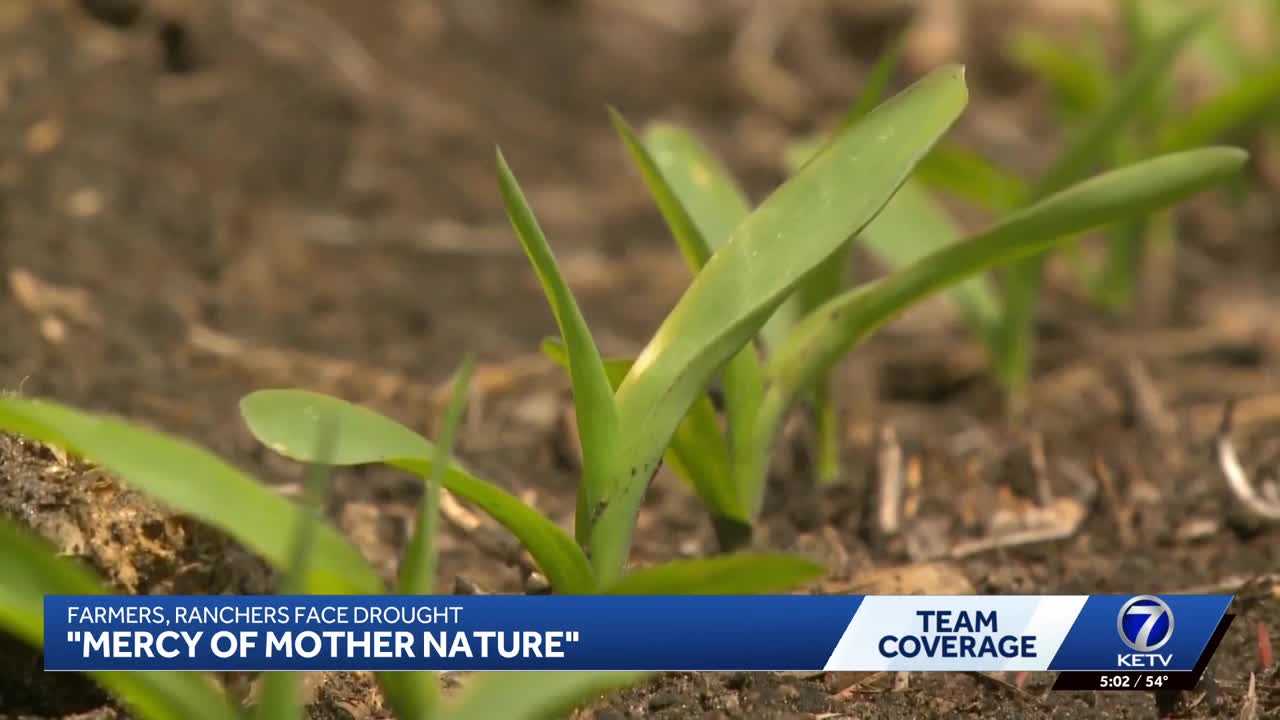
The dry conditions come as farmers across Nebraska are in the middle of spring sowing, with many planting corn and soybeans into parched soil. Agricultural leaders say the uneven precipitation highlights ongoing volatility.
“We have a really strong case of feast or famine,” said Jordan Dux, of the Nebraska Farm Bureau. “Farmers are always used to being at the mercy of Mother Nature. This is going to be one of those years again.”
The drought is also contributing to an increased risk of wildfires, particularly in western Nebraska, where vegetation remains dry.
Near the village of Brady, volunteer firefighter and rancher Cody Runner has been dealing with the effects firsthand. Over the past month, he has split his time between managing his ranch and battling wildfires.
“I started fighting Cottonwood Fire on my birthday, March 12,” Runner said.
He said he manned his post for sixty hours at a time.
“I might have went over those couple hours here and there,” he said. “It’s the fact of the livelihoods, the people that are in danger.”
He recently joined efforts on the Pressey Fire, which is now about 75% contained, as part of a mutual aid response.
“If they hadn’t been there, I would have been fighting it alone,” Runner said. “So I was very thankful, and we owed it to them.”
Officials say this year has already been the worst for wildfires in Nebraska’s history, with dry conditions expected to persist.
“Until those areas green up, there’s a high risk for fire,” Fuchs said.
Make sure you can always see the latest news, weather, sports and more from KETV NewsWatch 7 on Google search.
NAVIGATE: Home | Weather | Local News | National | Sports | Newscasts on demand |