Read the full article on Nebraska Examiner
Three thoughts …
The dubious drama of the mid-decade redistricting follies now afoot nationally has mostly spared Nebraskans. Our foray into the principle of winning-with-something-other-than-ideas is an ongoing effort in the Legislature to do away with the state’s “Blue Dot,” the method of awarding Electoral College votes by congressional district which lets the 2nd Congressional District in Omaha sometimes cast one of reliably red Nebraska’s Electoral College votes for a Democrat, a bridge too far for many in the GOP.
The latest round of state gerrymandering comes after six members of the nation’s Supreme Court recently ruled that redistricting rules that protected the designs of some districts to avoid diluting districts led by a majority from minority groups based on race is unconstitutional, setting off at least four states to rush a recalibration of their playing fields by redrawing their Congressional districts based on … you guessed it … race. Jim Crow, say hello to 2026. Go Figure.
We’re hearing the usual patter from the gerrymanderers. They argue it is about partisanship and not race. That “packing” and “cracking” is a time-honored tradition. That the Supremes’ decision was well within the original intent of the Voting Rights Act of 1964, which was designed to enforce the 15th Amendment and be a bar against local and state barriers to voting such as literacy tests or poll taxes being used to disenfranchise Black Americans.
SUPPORT: YOU MAKE OUR WORK POSSIBLE
The problem with those arguments is the eventual pudding … what the results of the race to redraw will leave us: fewer Black representatives in Washington and a Congress that will look less and less like America. For a nation where we tout big tents, seats at the table or whatever metaphor you choose, it is a sorry picture.
Ballroom funding question
Speaking of Congress, we should insist Nebraska’s Congressional delegation give us five clear rationales if they vote for a bill that includes $1 billion (yes, that’s a “b”) for the president’s ballroom, originally to have been built with private funds. Or so we were told. The “b” makes the ballroom’s sticker price twice what it was before, apparently a nod to added security infrastructure.
Seriously? How will a billion-dollar ballroom enhance the lives of Nebraskans who, like taxpayers in the other 49 states, will be picking up the check. Even before we started a war from which we apparently cannot extricate ourselves, we were already paying higher prices tainted by tariffs. A trip to the grocery store, replacing a household appliance or even a date-night meal were jarring experiences indeed.
Add to those numbers war-induced gas prices over $4 a gallon, inputs for farmers astronomically high or simply unavailable and food staples continuing to rise.
We have other problems, too. The shifting purpose and aim of the war with Iran has wobbled markets and destabilized a region of the planet already fraught with danger. An immigration plan that polls show most Americans do not support. An economy sending consumers ever-increasing prices. And a Congress mostly unwilling or incapable of doing much of anything to address these issues.
So tell us, please, how a ballroom, inside of which the rare Nebraskan will ever revel, makes sense.
Voting Tuesday
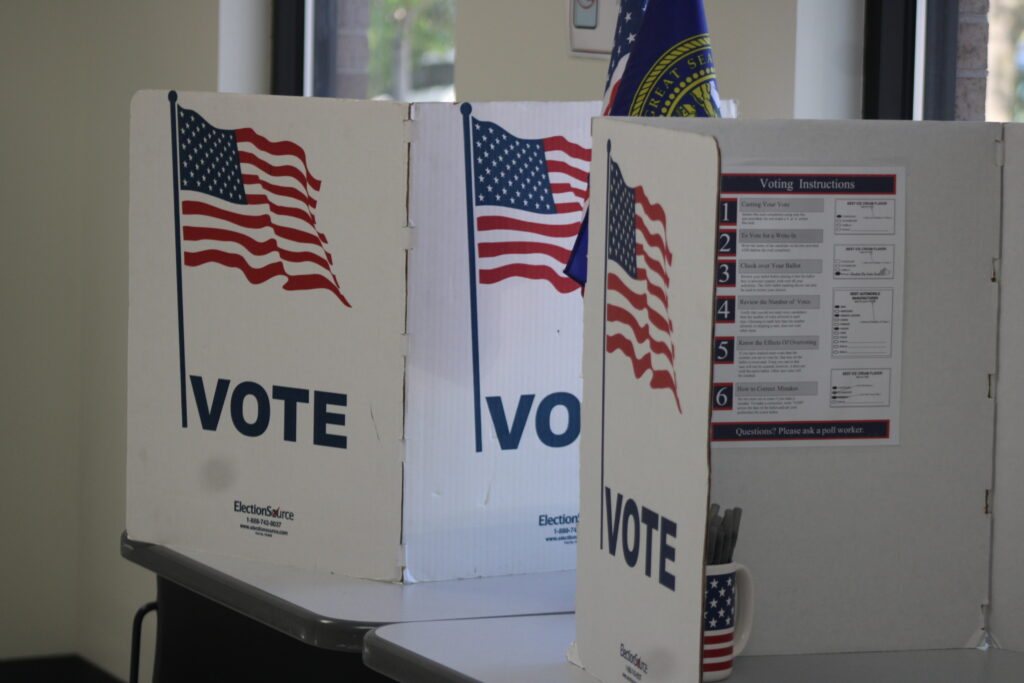
While some early Nebraska voters have already Xed their ballots, many will go to the polls on Tuesday for the primary, our political exercise in sorting. Primaries in non-presidential election years have notoriously low turnout. Nor does the nonsense mentioned above do much to increase those numbers.
While it appears modern methodology such as PACs, podcasts and talk radio have become the preferred modes of political engagement, voting remains the last best hope for a democratic republic. Otherwise, why would so many go to such lengths to tilt the vote in their direction without actually offering solutions to problems, answers to questions or real progress on real issues, the kind that affect most Americans?
Someone once said the solution to problems in a democracy isn’t less democracy but rather more. So, too, is it the antidote to gerrymandering and other feats of contorted, geopolitical gymnastics. This particular antitoxin requires voters to show up and vote in numbers that diminish the impact of new maps drawn for advantage.
Between 1840 and 1900, voter turnout in the U.S. hovered around 80%. By our last election, 2024, that number was just over 63%, which, compared to elections since 2000, was actually on the high side with only 2020 topping it at 66%. In 2002 it was only a tick above 40%. For international context, in 2025 Australians checked in at 90%, and in 2024, 87% of Belgian voters showed up at the polls.
Staying home is obviously not a vote, but it has a direct impact on the results. In other words, it counts, and — as we are reminded every day — has consequences.
SUBSCRIBE: GET THE MORNING HEADLINES DELIVERED TO YOUR INBOX.